

An actuary resignation letter is a formal document. It informs an employer of your intention to leave your job. The letter officially marks the end of your employment. It is a crucial step in the process.
Feeling overwhelmed about writing it? Don’t worry, we’ve got you covered. We understand it can be tough. We’ll share several templates. These templates will help you craft your own letter.
Need to keep it simple? Want to express gratitude? Need to resign immediately? We’ve got examples for all scenarios. Find the perfect fit and personalize it.
Actuary Resignation Letter
Below is a sample of a Actuary Resignation Letter:
[Your Name]
[Your Address]
[Your Phone Number]
[Your Email Address]
[Date]
[Hiring Manager Name] (If known, otherwise use title)
[Hiring Manager Title]
[Company Name]
[Company Address]
Dear [Mr./Ms./Mx. Last Name],
Please accept this letter as formal notification that I am resigning from my position as Actuary at [Company Name]. My last day of employment will be [Your Last Day of Employment].
I would like to thank you for the opportunity to work at [Company Name]. I have enjoyed my time here and have learned a great deal. I am grateful for the experiences and professional development I have received during my time with the company.
I am committed to ensuring a smooth transition during my departure. I am happy to assist in training my replacement and completing any necessary handover tasks before my last day. Please let me know how I can best support the team during this time.
I wish you and [Company Name] all the best in the future.
Sincerely,
[Your Signature]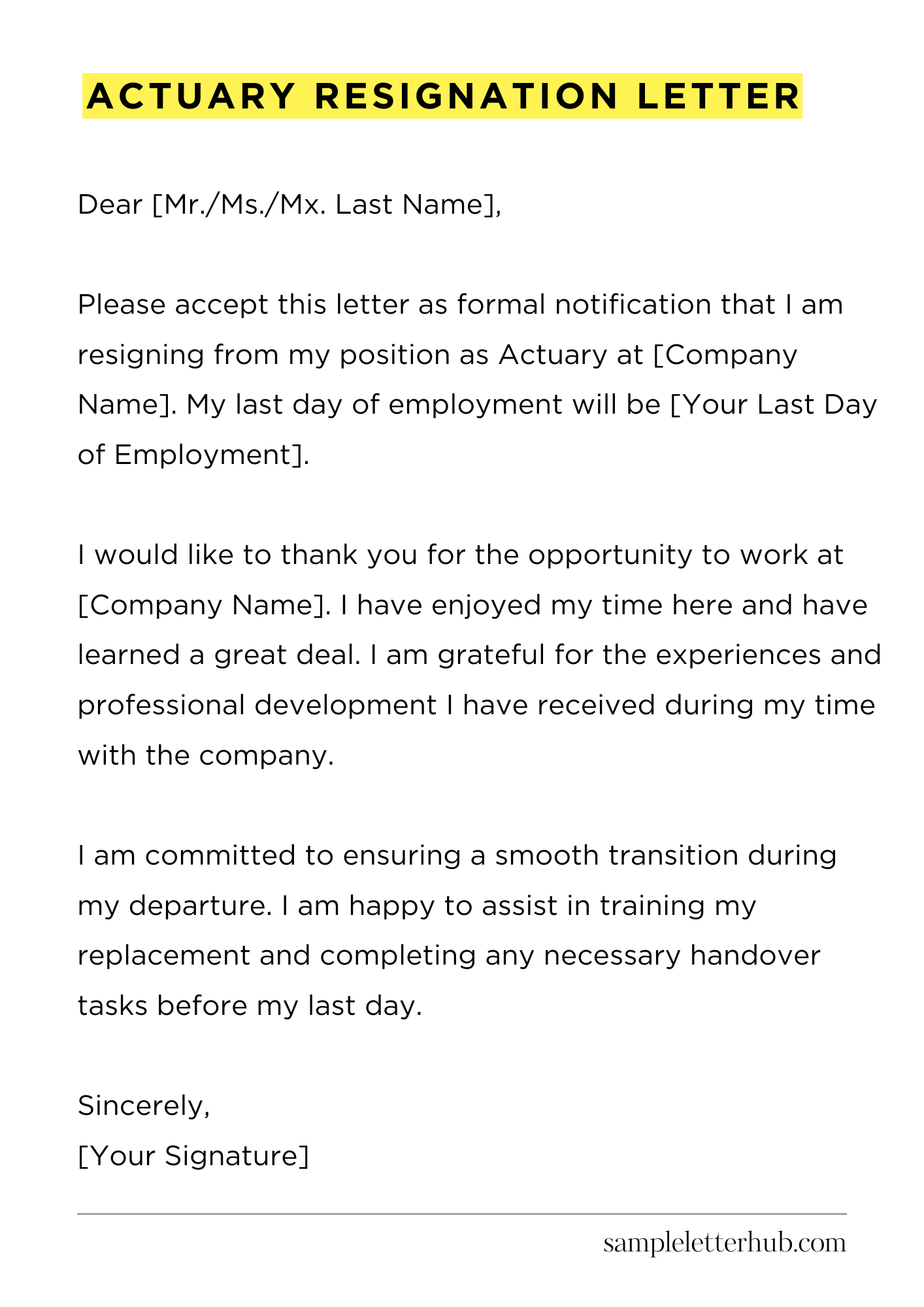
How to Write Actuary Resignation Letter
Getting Started: The Essentials
So, you’re moving on from your actuarial role. It’s a big decision, right? That means it’s time to craft a resignation letter. This is more than just a formality; it’s a professional statement.
It should be clear, concise, and leave a positive impression. Before you start typing, make sure you know your company’s policy. Do you have to hand it in, or is email sufficient? Find out about this first, it’s an important step.
Gather some information. You’ll need your manager’s name, the official date of your last day, and the name of the company. These details are important. Always use a professional tone and appropriate language. Keep it brief – no need to write a novel.
Structuring Your Letter: The Basic Format
You’ll need a standard format for your letter. Start with your contact information. This may be followed by the date, and then the contact details of your manager.
Then, the body! First things first, state your intention to resign. Simply and clearly state that you are resigning from your position. Don’t be vague. Be direct and avoid beating around the bush. You can include the specific job title you are leaving. Next, you must include your last day of employment. This needs to match the date you’ve discussed with your employer.
Then, follow up with a brief expression of gratitude. Mentioning that you’ve enjoyed your time there can’t hurt. Keep it simple. Avoid over-the-top praise or anything negative.
A brief statement of appreciation can be really beneficial. Lastly, include a closing. Something like “Sincerely” or “Respectfully” is perfectly suitable. You’ll then sign your name, physically if you’re handing in a hard copy, or by typing it. Keep your tone neutral, and professional.
What to Include: Key Points
The core of your letter should be clear and to the point. The most important elements are the intention to resign, your job title, and the end date. Remember to express your gratitude for the opportunity.
If there’s anything you would like to include to assist the company during your departure, you can include that information here. Offer to assist with the transition. Be professional in every aspect.
Think about things like training. If it’s appropriate, you can offer assistance in training your replacement. If applicable, also mention any outstanding tasks you’re working on and your plan to finalize them.
Be prepared to be flexible, but stay positive! Don’t include your reasons for leaving unless you have to, and keep those reasons short and very professional. Stick to the basics. No need to bring personal stuff into it.
What to Avoid: Common Mistakes
There are some things you definitely want to steer clear of when writing your resignation letter. Avoid being overly emotional or negative. Don’t use the letter as a way to vent your frustrations or complaints. This letter is not the time or place for drama. Remember, you want to leave on good terms!
Don’t go into excessive detail about your new job or career plans. Avoid rambling or including unnecessary information. Also, be careful with humor; what you think is funny might not come across well in writing. Proofread carefully. Check for any typos or grammatical errors. Before you submit it, get another person to look it over.
Final Thoughts: Polishing and Sending
Before submitting, review your letter one last time. Make sure it is clear, concise, and professional. Ensure all dates and names are correct. Proofread it one last time, very carefully!
Once you’re happy with it, you can send it according to your company’s protocol. If you are submitting a physical letter, make a copy for your records. Consider giving your manager a copy in person. Prepare to discuss your resignation in person too.
Good luck with your new endeavors!
FAQs about Actuary Resignation Letter
What is the essential information to include in an actuary resignation letter?
An effective actuary resignation letter should include your formal resignation, the effective date of your departure, a concise statement of gratitude for the opportunity, and any necessary information regarding the handover of your responsibilities. It’s also wise to adhere to any specific company policies regarding resignation procedures.
How far in advance should an actuary submit a resignation letter?
The standard practice is to adhere to the notice period specified in your employment contract. This typically ranges from two weeks to a month. Providing ample notice allows for a smoother transition, the completion of ongoing projects, and the organized transfer of your duties.
Should I include a reason for leaving in my actuary resignation letter?
While not strictly required, you may choose to briefly state your reason for leaving. This can be as simple as “pursuing other opportunities” or “seeking a new challenge.” Avoid overly negative or detailed explanations. A brief, positive, and professional tone is generally advisable.
What is the recommended tone and style for an actuary resignation letter?
Maintain a professional and courteous tone. Express gratitude for the experience and opportunities provided. Keep the language clear, concise, and respectful. Proofread carefully for any errors in grammar or spelling.
What should I do after submitting my actuary resignation letter?
After submitting your letter, follow up with your supervisor to discuss the transition plan. Cooperate fully with the handover process, assist in training your replacement if applicable, and maintain a positive and professional demeanor until your last day. Be sure to collect any necessary documents, such as your final paycheck or benefits information.
Related:
Resignation letter due to rude boss
Resignation letter moving to another state
Resignation letter due to illness of family member
Resignation letter due to study