

You’ve decided to move on from your help desk role. A help desk resignation letter is how you formally tell your employer. It’s a professional document. Its main purpose is to announce your departure. It also serves as a record of your resignation.
This article can make writing your letter simple. We’ll give you a variety of templates. These will help you craft your own resignation letter. Need to say goodbye gracefully? We’ve got you covered. Want to leave on a positive note? Consider it done.
We’ve prepared multiple samples. Choose one that fits your situation. Adapt it to your needs. This way, you can submit your letter with confidence. Consider it your guide to a smooth transition.
Help Desk Resignation Letter
Below is a sample of a Help Desk Resignation Letter:
[Your Name]
[Your Address]
[Your Phone Number]
[Your Email Address]
[Date]
[Recipient’s Name]
[Recipient’s Title]
[Company Name]
[Company Address]
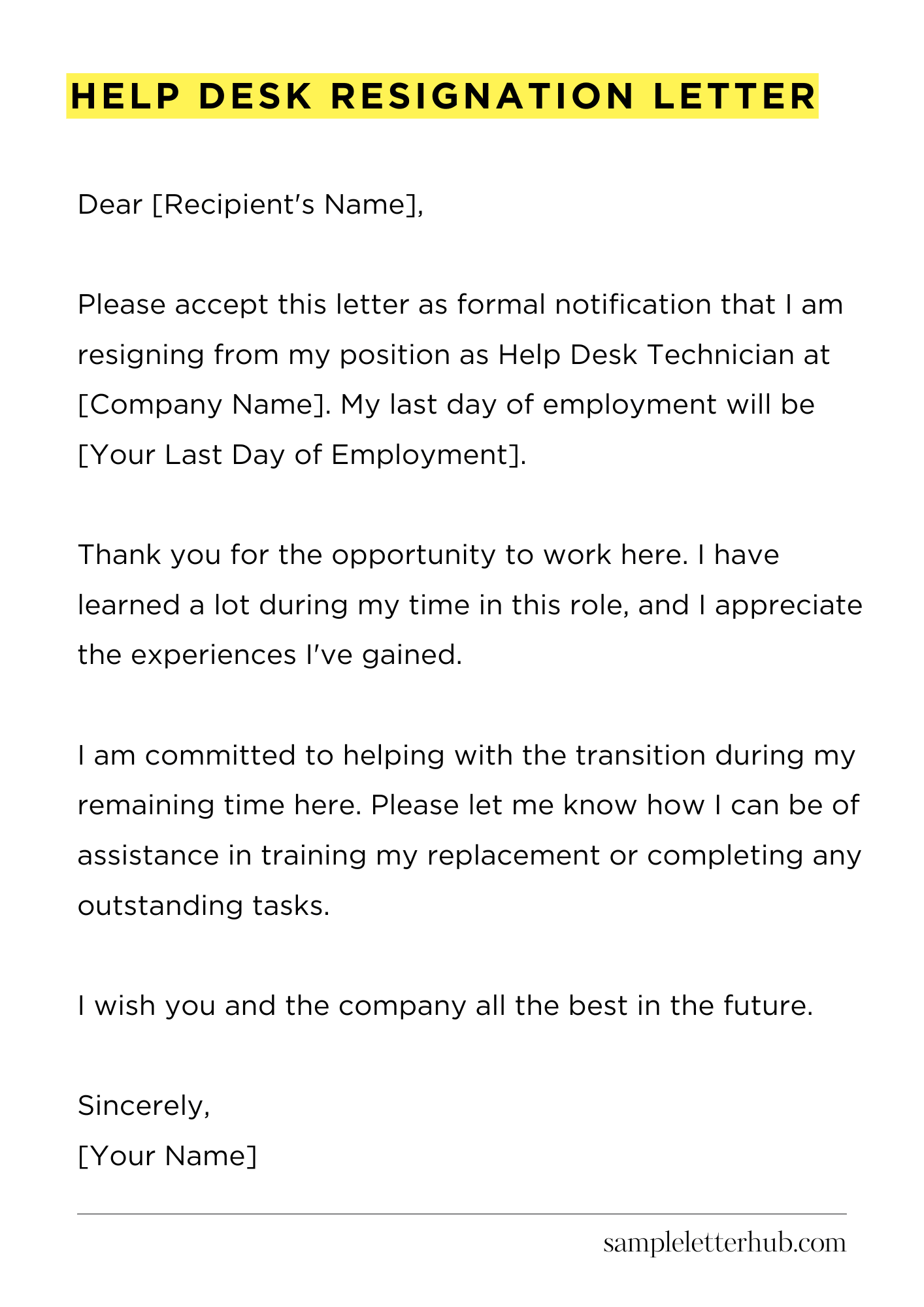
Dear [Recipient’s Name],
Please accept this letter as formal notification that I am resigning from my position as Help Desk Technician at [Company Name]. My last day of employment will be [Your Last Day of Employment].
Thank you for the opportunity to work here. I have learned a lot during my time in this role, and I appreciate the experiences I’ve gained.
I am committed to helping with the transition during my remaining time here. Please let me know how I can be of assistance in training my replacement or completing any outstanding tasks.
I wish you and the company all the best in the future.
Sincerely,
[Your Name]
How to Write a Help Desk Resignation Letter
1. Why Bother with a Letter Anyway?
Leaving a job is a big deal, right? You might think a quick chat with your boss is enough. Think again. A formal resignation letter is absolutely essential, especially when you are leaving a role such as a Help Desk position. It’s professional. It’s proper. And let’s face it, it’s polite. A written letter provides a clear and official record of your departure.
This can protect you from potential misunderstandings later down the road. It ensures a smooth transition for your team. It can also help you maintain a positive relationship with your employer. Always leave on good terms!
2. What to Include – The Must-Haves
So, what exactly *should* you put in this important letter? First and foremost, you need to state your intention to resign. That’s the entire point. Be direct and concise. Include your official resignation date. This is crucial for both you and your employer for planning purposes. You’ll also want to include a brief statement of gratitude.
Thank your employer for the opportunity to work there, or for a specific opportunity you benefited from. Mentioning any training or support will work well. Don’t forget to keep it positive.
3. Formatting is Your Friend
How you present your letter matters. Use a professional format. Start with your name, address, and contact information. Then, add the date. Next, include the recipient’s name and title, and the company’s address. Keep the tone formal but friendly. Use a clear and easy-to-read font, like Arial or Times New Roman.
Ensure your letter is well-spaced with proper paragraphs. Proofread everything. Twice. Nobody wants to see mistakes in their farewell note.
4. Keeping it Positive: What to Avoid
While you are free to be honest, try to keep it positive. Avoid negativity or complaints about your job or colleagues. This is not the time to air grievances. Steer clear of being overly critical, or making demands. Focus on your future and the reasons for your departure, rather than dwelling on the negatives.
Keep it simple and focused on the future. Remember, you want to leave a good impression.
5. After the Letter: What Comes Next
Once you’ve written and sent your letter, what happens? First, you may want to discuss your resignation with your supervisor. They may have questions for you. Cooperate with any handover process. Offering to assist in the transition can be incredibly valuable to your team. Always be professional.
Remember that final impressions count. You might want to ask about any outstanding final paychecks or any company property that you need to return. This is an important part of wrapping up your role. Good luck in your future endeavors!
FAQs about Help Desk resignation letter
How do I start a Help Desk resignation letter?
Begin your resignation letter professionally. You should start with a clear statement of your intent to resign, including your name, the position you are resigning from (e.g., Help Desk Technician), and the effective date of your resignation. Ensure that the effective date aligns with any notice period requirements outlined in your employment contract or company policy.
What should I include in the body of my Help Desk resignation letter?
The body of your letter should be concise and professional. Express your gratitude for the opportunity to work at the company and any specific experiences or skills you gained while in the role.
Briefly explain your reason for leaving, if you choose to include one (it’s not always required), and keep it positive, focusing on future opportunities or personal circumstances. Avoid negative comments or complaints.
What tone should I use in my Help Desk resignation letter?
Maintain a professional and respectful tone throughout your resignation letter. Express your gratitude, appreciation, and any positive experiences you’ve had. Avoid being overly emotional, negative, or critical. The tone should reflect your professionalism and desire to leave on good terms.
Is it necessary to provide a reason for leaving in my Help Desk resignation letter?
It’s not always mandatory to provide a reason for leaving. However, it can be helpful to offer a brief and positive explanation if you are comfortable doing so. Common reasons include pursuing a new career opportunity, personal circumstances, or relocation. Keep it brief and avoid going into extensive detail. If you prefer, you can simply state that you’re pursuing other opportunities.
How should I end my Help Desk resignation letter?
Conclude your letter by expressing your willingness to assist with the transition. Offer to help train your replacement, complete outstanding tasks, or provide any necessary support during your notice period.
Thank your employer one last time for the opportunity and express your best wishes for the company’s future. It’s also a good idea to include your contact information for any follow-up questions.
Related:
Resignation letter due to rude boss
Resignation letter moving to another state
Resignation letter due to illness of family member
Resignation letter due to study