

A Project Engineer resignation letter is a formal document. It informs your employer of your intention to leave. This letter initiates the official departure process. It’s a crucial step in ending your employment professionally.
Crafting the perfect resignation letter can feel tricky. We’ve got you covered. We’ll share several templates and examples. They are specifically tailored for Project Engineers. These samples make writing your own letter simple.
You’ll find various formats and options. Each is designed to help you. Choose the one that best suits your situation. Make your resignation clear and concise. Get ready to move on with ease.
Project Engineer Resignation Letter
Below is a sample of a Project Engineer Resignation Letter:
[Your Name]
[Your Address]
[Your Phone Number]
[Your Email Address]

[Date]
[Employer’s Name]
[Employer’s Title]
[Company Name]
[Company Address]
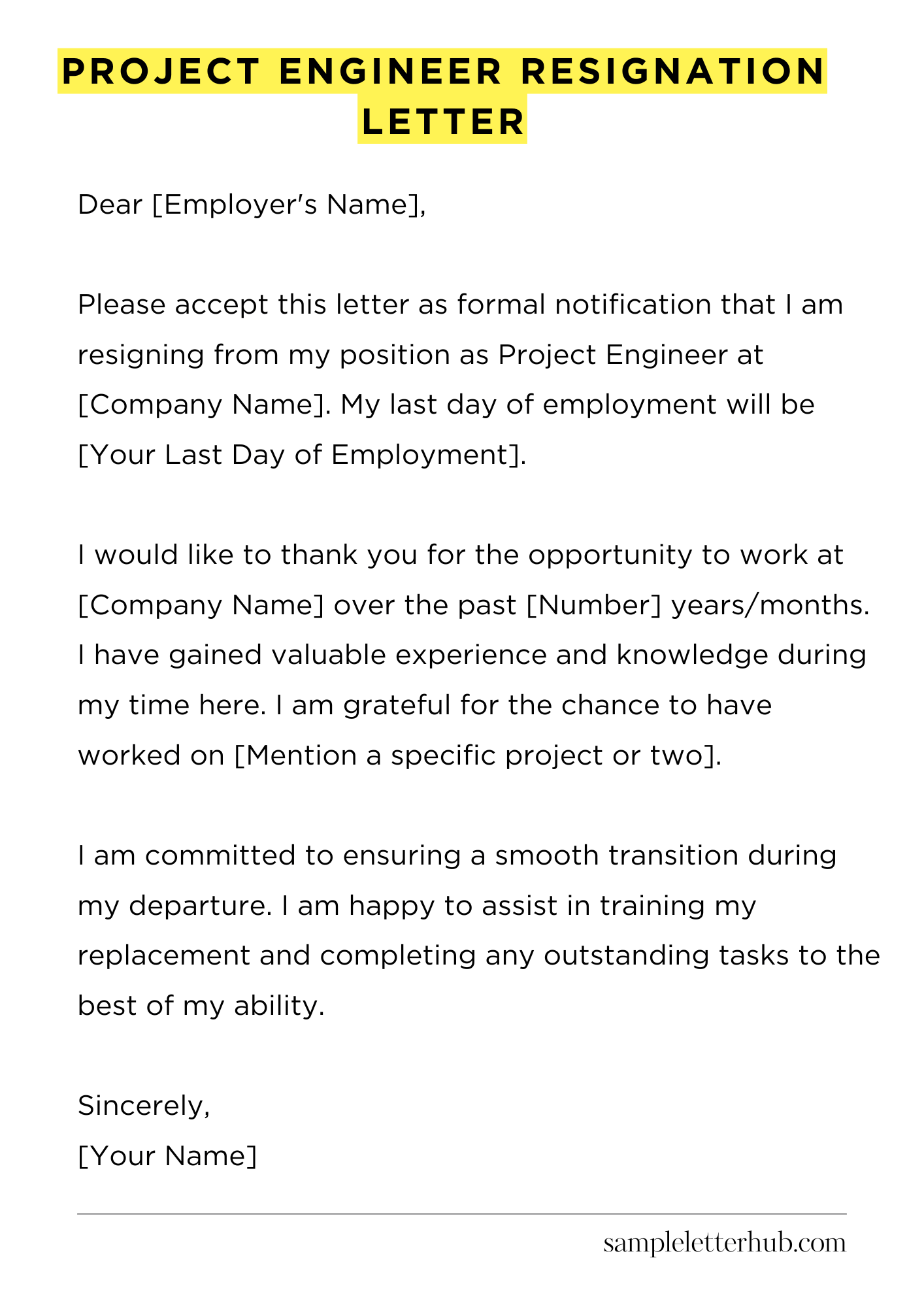
Dear [Employer’s Name],
Please accept this letter as formal notification that I am resigning from my position as Project Engineer at [Company Name]. My last day of employment will be [Your Last Day of Employment].
I would like to thank you for the opportunity to work at [Company Name] over the past [Number] years/months. I have gained valuable experience and knowledge during my time here. I am grateful for the chance to have worked on [Mention a specific project or two].
I am committed to ensuring a smooth transition during my departure. I am happy to assist in training my replacement and completing any outstanding tasks to the best of my ability. Please let me know how I can be of assistance in the coming weeks.
I wish you and [Company Name] all the best for the future.
Sincerely,
[Your Name]
How to Write a Project Engineer Resignation Letter
Resigning from a job can feel like a monumental task. Especially when you’re a Project Engineer! It’s important to make the process as smooth and professional as possible. This is where a well-crafted resignation letter comes into play. It’s not just about quitting; it’s about leaving a positive lasting impression. Here’s a guide to help you do it right.
1. Start with the Basics: Your Contact Information and Date
First things first: you need to set the stage. Your letter should begin with your contact information. Include your full name, address, phone number, and email address. This makes it easy for your employer to reach you if they need to. Below that, on the left side, put the date. Keep it formal and clear.
For example:
[Your Name] [Your Address] [Your Phone Number] [Your Email Address] [Date]
Make sure this is at the top left of the document. Getting the basics right is crucial for professionalism.
2. The Salutation and Direct Statement of Resignation
Next comes the most critical part: the salutation and the actual announcement. Address your letter to the appropriate person, usually your direct supervisor or the Human Resources department. Always use a formal greeting like “Dear [Manager’s Name]” or “Dear Human Resources.”
The first sentence should state your intention to resign. Be direct and clear. Avoid beating around the bush. Something like “Please accept this letter as formal notification that I am resigning from my position as Project Engineer, effective [Your Last Day of Employment]” works perfectly. Simplicity and clarity are key here.
3. Expressing Gratitude and Briefly Explaining the Reason (Optional)
It’s always a good idea to show some gratitude. Briefly acknowledge the opportunities you’ve been given. It’s a good move! You could say something like, “I am grateful for the opportunities I have been given during my time at [Company Name].” Keep it brief and sincere. This maintains a professional tone.
You can also briefly mention the reason for your resignation, if you feel comfortable doing so. Keep it concise. For instance, “I am pursuing a new opportunity that aligns better with my long-term career goals.” or “I’ve decided to relocate for personal reasons.” Avoid negativity. Focus on the positive aspects of your decision.
4. Providing Assistance and Offering Transition Support
This is where you showcase your professionalism. Offer your assistance during the transition period. State your willingness to help train your replacement, complete any ongoing projects, or provide any necessary documentation. This demonstrates your commitment and willingness to ensure a smooth handover.
Examples: “I am committed to ensuring a smooth transition and am happy to assist in any way possible to train my replacement.” or “I am available to assist in completing any pending projects and will do my best to ensure a seamless handover.” This is a significant aspect of a good resignation letter.
5. Closing and Formalities
Finally, end with a professional closing and your signature. Use a formal closing, such as “Sincerely,” “Best Regards,” or “Yours truly,” followed by your handwritten signature (if submitting a physical copy) and your typed name below it. Remember to keep it clean and professional. That’s the key!
For example:
Sincerely,

[Your Signature]
[Your Typed Name]
Remember to keep a copy of your resignation letter for your records. Good luck!
FAQs about Project Engineer Resignation Letter
Understanding the nuances of a Project Engineer’s resignation letter is crucial for a smooth transition. Here are some frequently asked questions about this important document:
What essential information should a Project Engineer’s resignation letter include?
A well-crafted resignation letter should include: the formal announcement of your resignation, the effective date of your departure, a concise statement of gratitude for the opportunity, and any necessary information regarding handover of duties or ongoing projects. You should also include your contact information for any follow-up.
How far in advance should a Project Engineer submit their resignation letter?
The standard practice is to provide at least two weeks’ notice, but this can vary based on your company’s policy and your employment contract. Some senior positions may require a longer notice period. Always review your employment agreement to clarify the required timeframe.
Should a Project Engineer explain the reasons for leaving in their resignation letter?
While not mandatory, it’s generally a good practice to briefly and professionally mention the reason for your departure. This can be as simple as stating you’ve accepted a new opportunity or are pursuing a different career path. Avoid overly negative or detailed explanations; keep it concise and positive.
What is the appropriate tone for a Project Engineer’s resignation letter?
Maintain a professional and respectful tone throughout the letter. Express gratitude for the opportunities you’ve been given. Avoid negativity or making personal criticisms. Focus on a smooth transition and your willingness to assist during the handover period.
How should a Project Engineer handle the handover of projects and responsibilities?
Outline your willingness to assist in a smooth handover. Offer to train your replacement, complete any outstanding tasks, and provide comprehensive documentation. Being proactive and organized during this transition reflects positively on your professionalism and leaves a lasting positive impression.
Related:
Resignation letter due to rude boss
Resignation letter moving to another state
Resignation letter due to illness of family member
Resignation letter due to study