

A medical resignation letter is a formal document. It is written by a healthcare professional. Its main purpose is to officially inform an employer of their intention to leave their job. This letter confirms the resignation date. It helps ensure a smooth transition.
So, you need to resign from a medical position? You’re in the right place. We understand the importance of a clear and professional letter. We are here to help. We’ve compiled various templates. These include examples and samples.
These templates will cover a range of situations. You can customize them. This makes it easier for you to craft your own medical resignation letter. We’ll simplify the process for you. Let’s get started.
Medical Resignation Letter
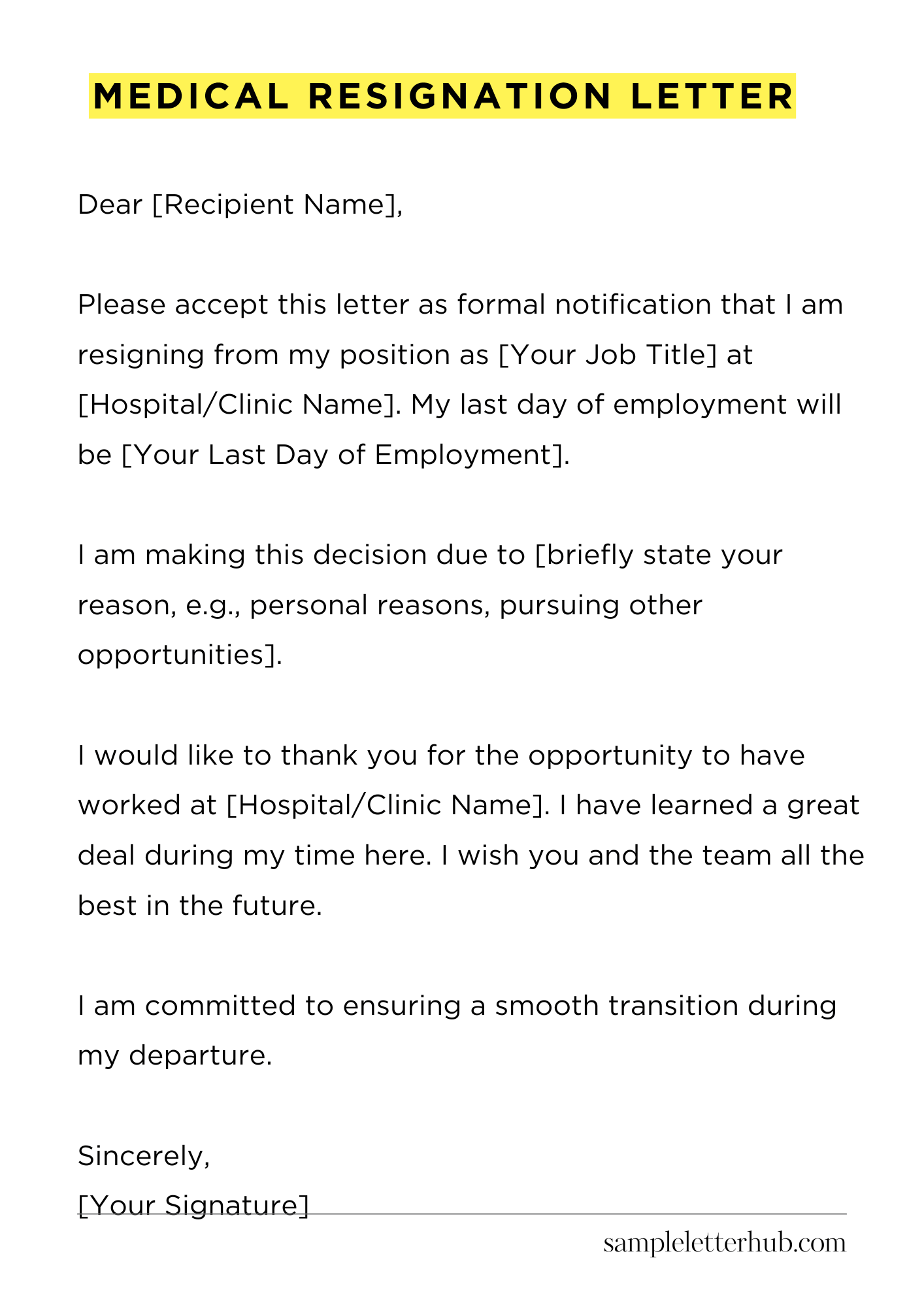
Below is a sample of a Medical Resignation Letter:
[Your Name]
[Your Address]
[Your Phone Number]
[Your Email Address]
[Date]
[Recipient Name]
[Recipient Title]
[Hospital/Clinic Name]
[Hospital/Clinic Address]
Dear [Recipient Name],
Please accept this letter as formal notification that I am resigning from my position as [Your Job Title] at [Hospital/Clinic Name]. My last day of employment will be [Your Last Day of Employment].
I am making this decision due to [briefly state your reason, e.g., personal reasons, pursuing other opportunities].
I would like to thank you for the opportunity to have worked at [Hospital/Clinic Name]. I have learned a great deal during my time here. I wish you and the team all the best in the future.
I am committed to ensuring a smooth transition during my departure. I am happy to assist in any way possible to help with the handover of my responsibilities.
Sincerely,
[Your Signature]
How to Write a Medical Resignation Letter
Know the Basics Before You Start
Resigning from any job, especially in the medical field, requires careful consideration. Before you even think about putting pen to paper (or fingers to keyboard), you should know the necessary components. This is not a casual email! Your letter is a formal document.
Ensure you’ve discussed your intentions with your supervisor or the appropriate department head *before* submitting your letter. This is just a polite thing to do.
Also, understand the terms of your contract and any notice period required by your employment agreement. This will help you avoid any potential issues later. Check your handbook too! Finally, you need to be professional at all times. Resignation letters are a serious thing.
Crafting the Core of Your Letter
The core of your medical resignation letter needs to be clear, concise, and professional. Begin with a formal salutation, using the correct title of your supervisor (e.g., “Dear Dr. Smith”). Next, state your intention to resign unequivocally. Make it plain and straightforward.
Specify your last day of employment. This is crucial for payroll and handover purposes. You are ending your job here, so be precise and correct.
For example: “Please accept this letter as formal notification that I am resigning from my position as a Registered Nurse, effective October 27, 2024.”
Simple, right?
Expressing Gratitude and Professionalism
While you might be thrilled to be leaving, remember to maintain a professional tone. Express gratitude for the opportunities and experiences you gained during your employment. This demonstrates class and respect for your colleagues and the organization. It’s a small gesture that can leave a lasting positive impression.
Mentioning anything specific that you appreciated about the job is always a good idea. This is also the time to add your thank you. For example: “I am grateful for the opportunities I’ve had to learn and grow within this hospital over the past five years.” Consider this carefully.
The Importance of a Smooth Handover
One of the most important aspects of a medical resignation is a smooth handover of your responsibilities. Offer your assistance in facilitating the transition.
This includes training a replacement, documenting procedures, or completing any pending tasks. This demonstrates your commitment to your patients and colleagues and leaves a positive legacy. This is what you should always do. This may involve listing the tasks you will complete before you go.
For example: “I am committed to ensuring a smooth transition and am happy to assist in training my replacement and completing all outstanding patient care documentation.”
Finalizing and Proofreading Your Letter
Before sending your letter, proofread it meticulously. Check for any grammatical errors, spelling mistakes, or typos. Double-check the dates, names, and titles to ensure accuracy. This is a must-do before sending anything to your boss. Consider having a colleague or friend read it over for you.
Once you are certain the letter is perfect, sign it. Then, make a copy for your records. Deliver your letter in the way your employer prefers – usually by email or hard copy. You’re done!
FAQs about Medical Resignation Letter
What information should I include in my medical resignation letter?
Your medical resignation letter should include your formal resignation, the effective date of your resignation, and a brief statement expressing your reason for leaving (if you choose to include one).
It’s also professional to express gratitude for the opportunities you’ve been given, and you should provide your forwarding address for final paychecks and any other important communications.
How much notice should I give when resigning from a medical position?
The amount of notice required varies depending on your employment contract and local regulations. However, it’s generally recommended to provide at least 30-60 days’ notice, especially in roles involving patient care, to allow for a smooth transition and ensure continuity of care. Always review your contract to ensure compliance.
Should I provide a reason for my resignation in the letter?
While it’s not mandatory, providing a reason can be beneficial. It allows your employer to understand why you’re leaving, which may help them improve working conditions or address issues. Keep the reason concise and professional, focusing on the future and being positive is a safe strategy.
How should I handle patient communication and handover when resigning?
Your resignation letter should not directly address patients. Coordinate with your employer regarding communication. Your employer or the practice will determine how to notify patients of your departure and arrange for the transfer of care. Ensure that you adhere to all patient confidentiality regulations and maintain professional standards throughout the handover process.
What are some common mistakes to avoid when writing a medical resignation letter?
Avoid burning bridges. Refrain from including negative comments about your employer, colleagues, or the work environment. Do not overshare personal details that are not pertinent. Ensure the letter is concise, professional, and grammatically correct. Always keep a copy for your records.
Related:
Resignation letter due to rude boss
Resignation letter moving to another state
Resignation letter due to illness of family member
Resignation letter due to study