


A CEO resignation letter is a formal document. It announces a CEO’s departure from a company. Its primary purpose is to officially inform the board of directors and the company of the CEO’s intention to resign. The letter also often outlines the effective date of the resignation.
So, you need to write one? Don’t worry. We’ve got you covered. We’ll share various templates and examples. These samples will make the process simple. Crafting your own letter will be easy.
Whether you need a short and sweet notice or something more detailed, you’ll find help here. These samples will guide you. Writing your letter just got easier!
Ceo Resignation Letter
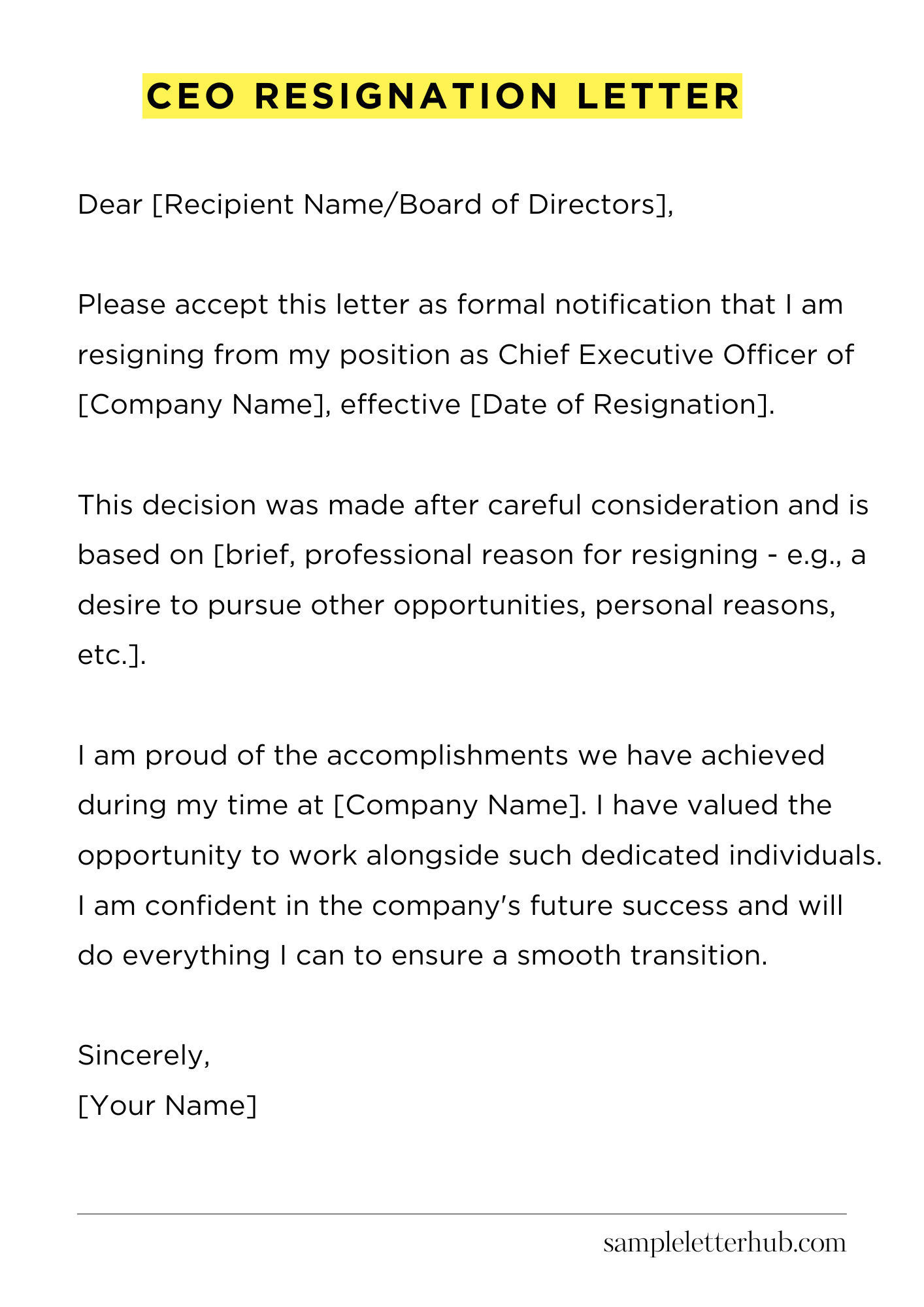
Below is a sample of a Ceo Resignation Letter:
[Your Name/Company Letterhead]
[Your Address]
[Your Phone Number]
[Your Email Address]
[Date]
[Recipient Name/Board of Directors]
[Recipient Title/Company Name]
[Recipient Address]
Dear [Recipient Name/Board of Directors],
Please accept this letter as formal notification that I am resigning from my position as Chief Executive Officer of [Company Name], effective [Date of Resignation].
This decision was made after careful consideration and is based on [brief, professional reason for resigning – e.g., a desire to pursue other opportunities, personal reasons, etc.].
I am proud of the accomplishments we have achieved during my time at [Company Name]. I have valued the opportunity to work alongside such dedicated individuals. I am confident in the company’s future success and will do everything I can to ensure a smooth transition.
I am available to assist with the handover process in any way possible. I am happy to meet with the Board to discuss the transition plan and answer any questions.
I wish [Company Name] continued success in the future.
Sincerely,
[Your Name]
How to Write a CEO Resignation Letter
1. Getting Started: The Crucial First Steps
So, you’re stepping down as CEO. It’s a big deal, and your resignation letter needs to reflect that. Before you even type a single word, take a moment. Deep breaths. You’ve got this. The initial step is to familiarize yourself with any company policies regarding resignations.
These might dictate the required notice period or the formal channels for submission. Do your research. This is very important. Next, consult your employment contract. It usually contains specific stipulations. Failure to follow company policy could have consequences, so be thorough.
Then, and this is crucial, schedule a meeting with the appropriate people, like the board of directors. A heads-up shows respect and professionalism.
2. Drafting the Core Content: What to Include
Now, let’s get into the meat of your letter. The opening should clearly state your intention to resign and the effective date. Keep it clear and concise. State it as a fact. Then, you’ll want to express gratitude. Acknowledge your tenure and the opportunities the role has provided. Reflect on your experience.
Mention some positive achievements. Briefly explain your reason for leaving. This can be short and simple, but provide some context. Now it’s important to offer your assistance during the transition period. This shows commitment to a smooth handover. Offer to help train your replacement.
You can offer a few lines of contact details to help in the future. Lastly, end with a professional closing. Use a formal and respectful tone.
3. Choosing Your Tone: Professionalism is Key
Your tone is critical. It should be professional, respectful, and positive. Avoid negativity. Avoid any complaints or grievances. No matter what happened, maintain a calm, measured approach.
Steer clear of sarcasm or any inflammatory language. This letter is your legacy. Make sure it has a positive light. Acknowledge any colleagues or employees that helped you. This shows you valued them too. Show gratitude.
4. Formatting and Delivery: Polishing Your Letter
Format your letter professionally. Use a standard business letter format. The document should be easily readable. Use a clean font like Times New Roman or Arial. Keep the font size at 12. Proofread your letter meticulously for any grammatical errors or typos. Have someone else read it over too; fresh eyes can catch mistakes you missed.
Ensure the letter is printed on company letterhead (if applicable) and addressed correctly to the board or the designated recipient. Submit your letter according to company protocol. Keep a copy for your records.
Consider the delivery method. Email is common now. However, depending on company culture, a physical copy might be preferred. Always get confirmation of receipt.
5. After the Letter: Wrapping Up and Moving Forward
Once you’ve submitted your letter, your work is not quite finished. Prepare for the transition. If you offered assistance, be prepared to follow through. Be responsive and helpful to ensure a smooth handover. Maintain a positive attitude during your final weeks. This is your chance to show the company your commitment till the very end.
The way you depart shapes your legacy. You will need to prepare to leave. Make sure you clear your desk. Complete any remaining tasks. Your departure will set the tone for what others can do.
FAQs about CEO Resignation Letters
Why is a CEO resignation letter important?
A CEO resignation letter serves as a formal declaration of intent to leave the company. It’s a crucial document because it officially communicates the CEO’s departure to the board of directors and, often, the wider company.
The letter sets the tone for the transition process, outlines the effective date of resignation, and may also address the reasons for leaving, the handover plan, and any expectations for post-employment involvement. It provides a clear and legally sound record of the CEO’s decision.
What key elements should a CEO resignation letter include?
A well-crafted CEO resignation letter should include: (1) a formal statement of resignation; (2) the effective date of resignation; (3) the reasons for resigning (optional, but often included); (4) a statement of gratitude to the board and/or company; (5) a plan for the transition of responsibilities, including potential support during the transition.
How should a CEO approach writing the reasons for resignation?
The approach to addressing the reasons for resignation depends on the context and the CEO’s personal preferences. The reasons can be as simple as stating “to pursue other opportunities,” or they can be more detailed, such as explaining a difference in strategic vision or personal reasons.
It is generally advisable to keep the statement concise and professional. If there are contentious issues, seeking legal counsel before including them in the letter is important. Focusing on future opportunities, personal growth, or achievements during their tenure can be a positive and diplomatic approach.
What is the typical process after a CEO submits a resignation letter?
After the CEO submits the resignation letter, the board of directors will typically convene to acknowledge the resignation. The board will then begin the process of succession planning, which may involve appointing an interim CEO, searching for a permanent replacement, and/or assigning responsibilities to other executives.
The CEO will likely be involved in a handover period, during which they transfer their knowledge and responsibilities to the successor or the designated team. Communications to employees, shareholders, and other stakeholders will follow. Depending on agreements, exit interviews or post-employment consultation may take place.
Are there legal considerations a CEO should be aware of when resigning?
Yes, several legal considerations are important. These include: (1) reviewing employment contracts to understand notice periods, non-compete clauses, and any severance agreements; (2) ensuring compliance with company policies and relevant laws related to their departure; (3) considering potential liabilities such as those related to company information and trade secrets.
Understanding stock options, benefits, and retirement plans, as well as any other contractual obligations, is very important.
Related:
Resignation letter due to rude boss
Resignation letter moving to another state
Resignation letter due to illness of family member
Resignation letter due to study