

A military resignation letter is a formal document. It officially states your intent to leave the military. This letter starts the process of ending your military service.
Writing this letter can seem daunting. Where do you even begin? Don’t worry, we’re here to help. We’ll give you a variety of templates. These templates include examples and sample letters.
Use these to craft your own perfect resignation letter. Make the process clear and straightforward. Say goodbye to guesswork. Say hello to clear communication.
Military Resignation Letter
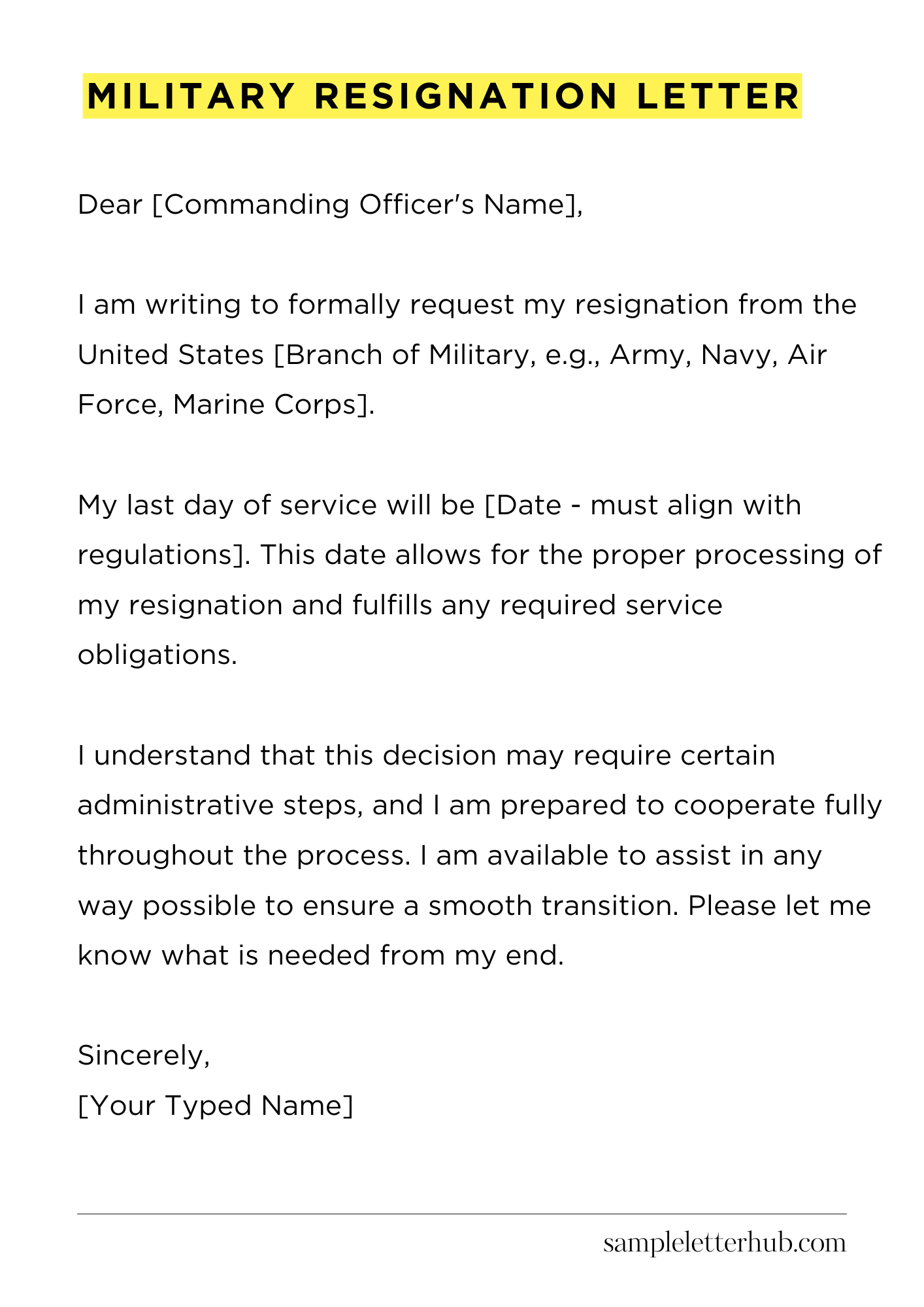
Below is a sample of a Military Resignation Letter:
[Your Name]
[Your Address]
[Your Phone Number]
[Your Email Address]
[Date]
[Commanding Officer’s Name]
[Commanding Officer’s Rank]
[Unit Name]
[Unit Address]
Subject: Resignation from Military Service
Dear [Commanding Officer’s Name],
I am writing to formally request my resignation from the United States [Branch of Military, e.g., Army, Navy, Air Force, Marine Corps].
My last day of service will be [Date – must align with regulations]. This date allows for the proper processing of my resignation and fulfills any required service obligations.
I understand that this decision may require certain administrative steps, and I am prepared to cooperate fully throughout the process. I am available to assist in any way possible to ensure a smooth transition. Please let me know what is needed from my end.
I have greatly valued the experiences and training I have received during my time in the [Branch of Military]. I am thankful for the opportunities I have been given.
Thank you for your understanding and support.
Sincerely,
[Your Typed Name]
How to Write a Military Resignation Letter
Serving in the military is a demanding commitment, and the decision to resign requires careful consideration. Writing a military resignation letter is a critical step, and doing it correctly is essential.
It’s the official document that begins the process of your separation from service. Don’t take it lightly! This guide will help you navigate the process and craft a letter that’s both professional and effective.
1. Understanding the Purpose and Importance
Your resignation letter is more than just a formality. It’s a formal request to be released from your military obligations. The content matters. It triggers the official procedures for your discharge and affects your future. This document is a crucial piece of your military record, and it can influence everything from your final pay to future benefits.
A poorly written letter can lead to delays or even complications. Think of it as your final formal communication within the military system before moving on.
2. Essential Elements: What to Include
There are some key components that must be present. Always start with your full name, rank, social security number, and contact information. This ensures your chain of command can readily identify you. Next, clearly state your intent to resign. Be direct and avoid ambiguity. Then, specify the date you wish your resignation to be effective.
This is your desired last day in service, so choose wisely. Include a brief, professional statement of the reason for your resignation. While you don’t need to go into excessive detail, providing a concise explanation can be helpful. Finally, express your gratitude for the opportunity to serve. A respectful closing is always a good idea.
3. Formatting and Tone: Keep it Professional
Professionalism is paramount. Use a clear and concise tone throughout your letter. Avoid slang or overly emotional language. Keep your writing style straightforward and respectful, even if you’ve had disagreements or frustrations. Use standard business letter format. The letter should be typed, not handwritten.
The military values precision, so proofread your letter carefully for any errors in grammar or spelling. Ensure there are no typos! The format will often vary depending on the branch of service, so research the correct formatting guidelines.
4. Seeking Guidance and Legal Considerations
Before submitting your letter, consider seeking advice. Talk to your chain of command. They can provide guidance on the specific procedures within your unit. If necessary, consult with a legal professional or a military legal aid office. This is important if you have any doubts or concerns about your specific circumstances.
They can review your letter and provide feedback on how to protect your rights. Familiarize yourself with the regulations and procedures related to resignation within your branch of service. Some branches have specific forms or requirements you must follow. Ignorance is no excuse!
5. Submitting and Following Up: The Final Steps
Once you are satisfied with your letter, submit it through the proper channels. This typically involves giving the letter to your immediate superior. Always keep a copy of your resignation letter for your personal records. After submission, track the status of your resignation. Ask about the processing timeline.
If you don’t receive acknowledgement within a reasonable timeframe, follow up with your chain of command. Make sure you fully understand your responsibilities and obligations during the transition period. Be prepared for briefings and meetings regarding your separation from service. Your letter is the beginning, but it’s not the end! Be ready for the next steps.
FAQs about Military Resignation Letter
What is the proper format for a military resignation letter?
The proper format typically includes a clear and concise statement of your intent to resign, your rank and full name, your military identification number, the date, and the date you wish your resignation to be effective.
It’s often beneficial to state the specific reason for your resignation, adhering to any regulations your branch requires. Ensure you maintain a professional and respectful tone throughout the letter.
What are the key elements to include in a military resignation letter?
Essential elements include your full name, rank, and military identification number; a formal statement of your intent to resign; the specific date your resignation takes effect; the reason for your resignation (if required or desired); any acknowledgements of gratitude for your service, and your contact information.
Adhering to the specific guidelines of your branch’s regulations is crucial.
How far in advance should I submit my military resignation letter?
The required notice period varies depending on your branch of service, your rank, and the circumstances surrounding your resignation. However, generally, officers are expected to give a longer notice period than enlisted personnel.
It is best to consult your chain of command or relevant military regulations to determine the required lead time for your specific situation. Planning and submitting your letter in advance will help smoothen the transition and adhere to the military guidelines.
What happens after I submit my military resignation letter?
After submitting your resignation letter, the process typically involves an official review by your chain of command. This often includes interviews or meetings, verification of the information provided, and, if required, an investigation.
Further steps include processing of discharge paperwork, final physical exams, and out-processing procedures. You will be provided with necessary instructions for separation. It’s important to be cooperative and follow all instructions provided throughout this process.
Can I withdraw my military resignation letter?
Withdrawing your resignation letter depends on the timing of your request and the status of your resignation process. Once your resignation is accepted, it can be extremely difficult, if not impossible, to reverse the process.
Before submitting your letter, carefully consider your decision. Generally, withdrawing a letter is best done before it has been fully processed and approved by the necessary authorities.
Related:
Resignation letter due to rude boss
Resignation letter moving to another state
Resignation letter due to illness of family member
Resignation letter due to study