

A chemical engineer resignation letter is a formal document. Its purpose is to officially inform an employer of your departure. This letter initiates the process of ending your employment. It’s a crucial step in maintaining a professional relationship.
Planning your exit can feel overwhelming. Many things need attention. The resignation letter is the first step. You’ll want to craft a letter that is easy to write. It should also be clear, professional, and reflects your circumstances.
We’re here to help. We’ve compiled various templates. We’ll share samples to help you. These are tailored for chemical engineers. Use these examples as your guide. You can adapt them to fit your specific needs.
Chemical Engineer Resignation Letter
Below is a sample of a Chemical Engineer Resignation Letter:
[Your Name]
[Your Address]
[Your Phone Number]
[Your Email Address]
[Date]
[Employer’s Name]
[Company Name]
[Company Address]
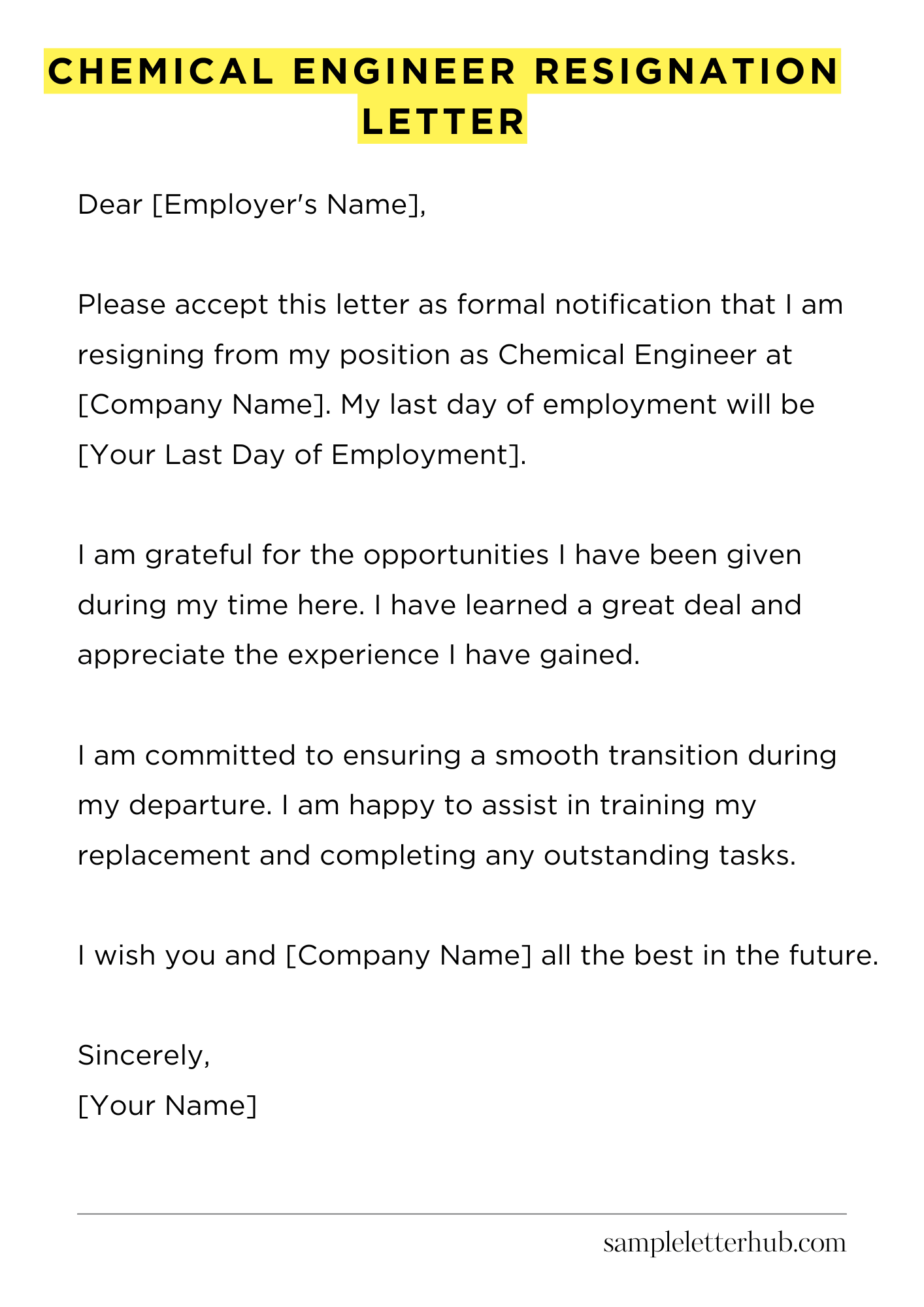
Dear [Employer’s Name],
Please accept this letter as formal notification that I am resigning from my position as Chemical Engineer at [Company Name]. My last day of employment will be [Your Last Day of Employment].
I am grateful for the opportunities I have been given during my time here. I have learned a great deal and appreciate the experience I have gained.
I am committed to ensuring a smooth transition during my departure. I am happy to assist in training my replacement and completing any outstanding tasks.
I wish you and [Company Name] all the best in the future.
Sincerely,
[Your Name]
How to Write a Chemical Engineer Resignation Letter
Leaving a job is a big decision, and doing it professionally is crucial. For chemical engineers, a well-crafted resignation letter reflects your skills and attention to detail. This guide will walk you through the process, ensuring you leave a positive impression.
1. Start with the Basics: Format and Information
Your resignation letter needs a professional look. Begin with your contact information (name, address, phone, and email). Next, include the date of the letter. Then, add the recipient’s information: their name, title, and the company’s address. It might seem obvious, but accuracy matters. Keep the tone formal but polite throughout the letter.
Then, the most important part! State your intention to resign. Clearly state your position and the date of your last day of employment. This is usually determined by your employment contract or company policy. Be sure to double-check that date.
2. Express Gratitude: Showing Appreciation
A simple “Thank you” goes a long way. Briefly express your appreciation for the opportunity to work at the company. Mention any specific experiences, skills you’ve gained, or people you’ve worked with that you valued. This is a chance to leave a positive lasting impression. This demonstrates maturity and professionalism.
Think about what you’ve enjoyed or learned. This should be sincere.
3. Address the Transition: Offer Assistance
Offer your assistance during the transition period. This shows consideration for your colleagues and the company. You might offer to help train your replacement, complete ongoing projects, or document your processes. However, be realistic about what you can offer. Do not overpromise.
Mention that you will do all you can to make the transition smooth. This can prevent bad feelings in the future.
4. Keep it Concise: Focus on the Essentials
Resignation letters should be brief and to the point. Avoid lengthy explanations for leaving. The letter’s primary purpose is to formally notify your employer. Don’t be too verbose. A few well-crafted paragraphs are enough.
Stick to the facts. The letter is not the place for venting grievances, unless a very specific legal issue is involved. Maintain professionalism, even if you are not happy.
5. Review and Revise: Proofread Carefully
Before submitting your letter, proofread it thoroughly. Check for any grammatical errors, spelling mistakes, or typos. This reflects your attention to detail. Have someone else read it too! This can catch errors you may have missed.
Be sure all the critical information is correct. Then, make sure your tone is appropriately professional. Finally, keep a copy of your letter for your records. Good luck with your future endeavors!
FAQs about Chemical Engineer resignation letter
How do I start a chemical engineer resignation letter?
Begin your resignation letter by clearly stating your intent to resign. Include your name, the date, and the recipient’s name (your supervisor or HR representative). State your formal resignation, specifying your last day of employment. Keep the opening concise and direct.
What should I include in the body of a chemical engineer resignation letter?
The body should include the reason for your resignation (optional, but can be brief), an expression of gratitude for the opportunities you’ve received, and details regarding the handover of your responsibilities. If you have any ongoing projects, offer to assist in their transition. Provide contact information if you’re willing to be contacted after your departure (optional).
Should I provide a reason for resigning in my letter?
Providing a reason is optional. If you choose to, keep it brief and professional. Common reasons include accepting a new job, pursuing further education, or personal reasons. Avoid negativity or complaints. If you have a good relationship with your employer, you could briefly state why you are leaving, but it’s not required.
How do I address the handover of responsibilities in a chemical engineer resignation letter?
Address the handover by offering your assistance in training a replacement or documenting your work. List any ongoing projects you’re involved in, and propose a plan for their transition. This can include preparing documentation, training others, or staying in contact for a limited time to address questions.
What tone should I use in a chemical engineer resignation letter?
Maintain a professional and respectful tone throughout the letter. Express your gratitude and appreciation for the opportunities you’ve received. Avoid negativity, complaints, or overly emotional language. Keep your language clear, concise, and courteous to maintain a positive relationship with your employer.
Related:
Resignation letter due to rude boss
Resignation letter moving to another state
Resignation letter due to illness of family member
Resignation letter due to study