

So, you’re stepping down as chair? You’ll need a “Chair Resignation Letter”. This is a formal document. It officially announces your departure from the role. The letter informs relevant parties of your decision. It also states your last day of service.
Need help crafting your own letter? We’ve got you covered. We’re sharing helpful templates. You’ll find different examples here. They will cover various situations. You can adapt them to your specific needs.
Writing this letter doesn’t have to be hard. We’ve made it easier. Find the perfect wording with our sample letters. They’re designed to make the process simple. Let’s get started.
Chair Resignation Letter
Below is a sample of a Chair Resignation Letter:
[Your Name]
[Your Address]
[Your Phone Number]
[Your Email Address]
[Date]
[Recipient Name]
[Recipient Title]
[Organization Name]
[Organization Address]
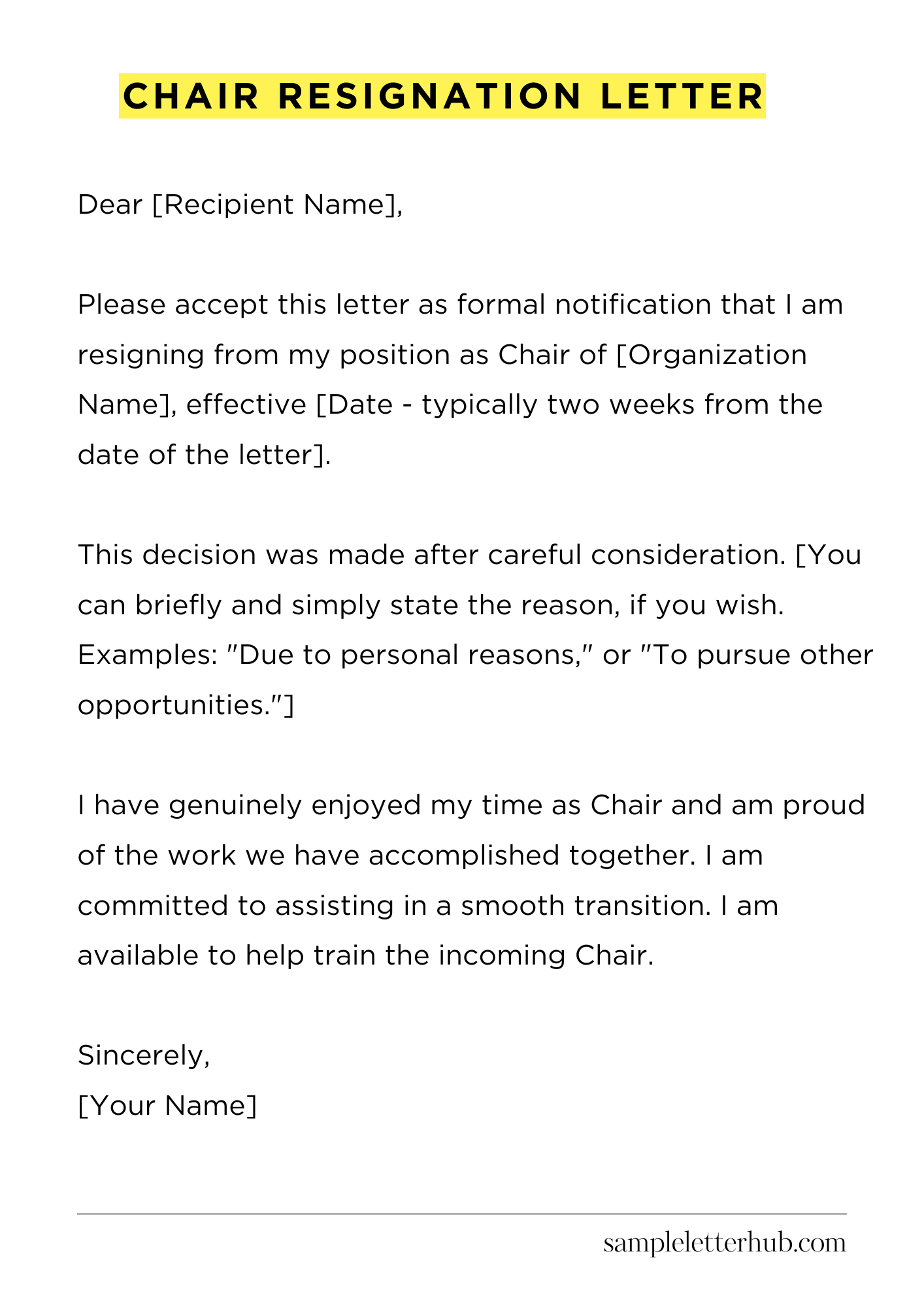
Dear [Recipient Name],
Please accept this letter as formal notification that I am resigning from my position as Chair of [Organization Name], effective [Date – typically two weeks from the date of the letter].
This decision was made after careful consideration. [You can briefly and simply state the reason, if you wish. Examples: “Due to personal reasons,” or “To pursue other opportunities.”]
I have genuinely enjoyed my time as Chair and am proud of the work we have accomplished together. I am committed to assisting in a smooth transition. I am available to help train the incoming Chair or assist in any other way possible to ensure a seamless handover of responsibilities.
I wish the organization continued success in the future.
Sincerely,
[Your Name]
How to Write a Chair Resignation Letter
1. Preparation is Key: Knowing Your Stuff
Before you even begin typing, take a moment. Deep breaths. Think carefully about your reasons for resigning from your role as chair. This letter is important. It is a formal declaration. Be specific. It’s time to gather your thoughts. Jot down key reasons. Think about any relevant dates, like your last day in the position.
Check your organization’s bylaws or any governing documents. They often have specific requirements for resignations. Knowing these details upfront will save you time and potential headaches down the road. Remember, clarity is the goal. Get your facts straight!
2. Structure and Tone: Keeping it Professional
The structure of your resignation letter matters. Begin with a clear and concise statement of your resignation. State your name and the position you are resigning from (Chair of [Organization Name]). Mention the effective date of your resignation. Be sure to use proper business letter format.
Your tone should be professional and respectful, even if you’re leaving on less than ideal terms. Avoid emotional language. Keep it neutral. Keep it brief. Address the letter to the appropriate person or committee. This is usually the organization’s secretary, board president, or a designated contact. Proofread everything. Twice.
3. Providing a Reason (or Not): The Delicate Balance
Whether or not to include a reason for your resignation depends on your situation and your comfort level. You’re not always obligated to give a detailed explanation. If you do choose to provide a reason, keep it brief and professional. It could be something as simple as “due to personal reasons” or “to pursue other opportunities.”
If you have any outstanding tasks or projects, briefly mention your willingness to assist with the handover process. This shows consideration and professionalism. However, keep the explanation succinct; a long list is not usually necessary. If you are leaving because of a conflict, you should consider omitting your reasons.
4. The Handover: Ensuring a Smooth Transition
A good resignation letter isn’t just about saying goodbye; it’s about making sure your departure doesn’t leave a mess behind. If possible, offer to assist in the transition. This might include training your replacement or helping to document ongoing projects. You could offer to be available for a limited time to answer questions.
Providing contact information (like your personal email) can be helpful but not required. This demonstrates that you care about the organization’s success even after you’ve left. Be prepared to cooperate with the transition.
5. The Final Touches: Polishing and Delivery
Before you send your letter, reread it. Does it accurately reflect your intentions? Check for any typos or grammatical errors. Ensure you have the correct contact information for the recipient. Consider how you will deliver the letter.
A physical copy (delivered in person or sent via mail) is often the preferred method, although email may be acceptable depending on your organization’s practices.
If sending by email, make sure your subject line clearly states “Resignation – [Your Name].” Once you’re satisfied, sign and date your letter. That’s it! You’ve successfully composed a professional resignation letter. Now, on to your next adventure.
FAQs about Chair Resignation Letter
What is the purpose of a chair resignation letter?
The primary purpose of a chair resignation letter is to formally communicate your decision to step down from the position of chair. It serves as an official record of your departure and provides essential information such as the effective date of your resignation.
It also allows you to express your gratitude, offer any assistance with the transition, and maintain a professional relationship with the organization.
What key elements should be included in a chair resignation letter?
A comprehensive chair resignation letter should include: your formal announcement of resignation; the specific date your resignation takes effect; a statement of gratitude for the opportunity; a brief summary of your contributions (optional); an offer to assist with the transition.
How should I deliver my chair resignation letter?
The method of delivery often depends on the organization’s norms and the level of formality. Typically, a hard copy delivered in person or sent via certified mail is considered the most formal.
An email submission is also often acceptable, provided that you have a confirmation or receipt. Always adhere to the organization’s policies, and consider sending a copy to the appropriate individuals, such as the board of directors and your direct supervisor.
What should I do after submitting my chair resignation letter?
Once you’ve submitted your letter, be prepared to assist with the transition. This may involve training your successor, providing documentation, or attending meetings to ensure a smooth handover of responsibilities. Stay professional and cooperative during this period. Follow up as needed, and clarify any questions that arise.
Also, make sure that you formally collect any information like the final pay check, the details of the benefits, or any important document that the organization has to give you as an employee.
Can I rescind my chair resignation letter?
Rescinding a resignation is generally possible, but it depends on the circumstances and the organization’s policies. You should immediately notify the appropriate individuals in writing if you change your mind.
The decision to accept your rescission rests with the organization, which may consider factors like the progress made in finding a replacement and the impact on operations. It’s best to discuss this with them and see how it goes.
Related:
Resignation letter due to rude boss
Resignation letter moving to another state
Resignation letter due to illness of family member
Resignation letter due to study