

A veterinarian resignation letter is a formal document. It is how a veterinarian officially informs their employer about leaving their job. The letter clearly states the veterinarian’s intention to resign. It also specifies the last day of employment.
Thinking of moving on? Drafting a resignation letter can feel tricky. We’ve got you covered. This article offers helpful templates. You’ll find different examples. These samples are designed to make the process easier.
We provide a variety of options. Choose the best fit for your situation. Adapt the templates to your specific needs. Writing a professional resignation letter becomes much simpler with our guide.
Veterinarian Resignation Letter
Below is a sample of a Veterinarian Resignation Letter:
[Your Name]
[Your Address]
[Your Phone Number]
[Your Email Address]
[Date]
[Veterinarian Clinic Name]
[Clinic Address]
Dear [Veterinarian Clinic Manager/Owner Name],
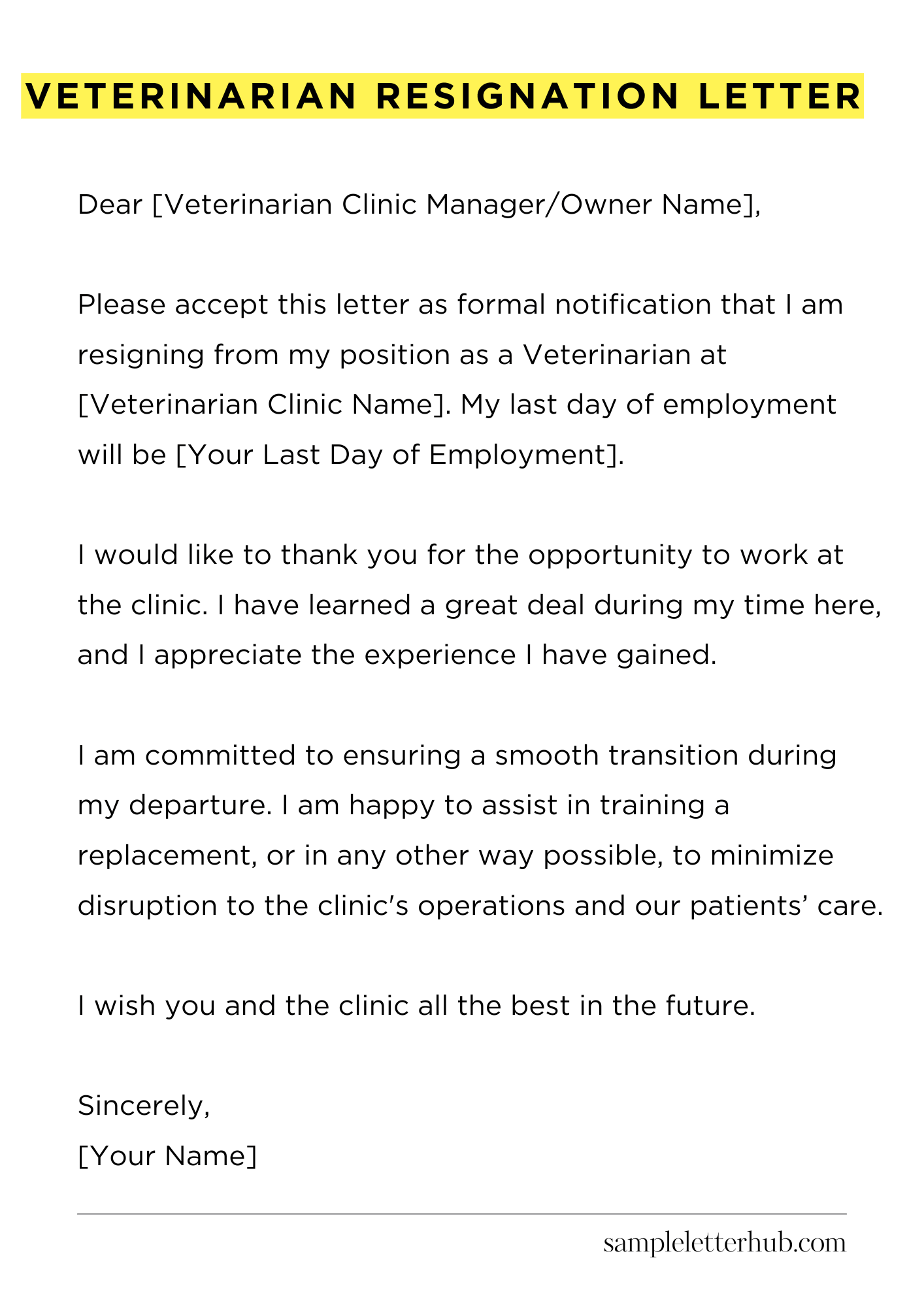
Please accept this letter as formal notification that I am resigning from my position as a Veterinarian at [Veterinarian Clinic Name]. My last day of employment will be [Your Last Day of Employment].
I would like to thank you for the opportunity to work at the clinic. I have learned a great deal during my time here, and I appreciate the experience I have gained.
I am committed to ensuring a smooth transition during my departure. I am happy to assist in training a replacement, or in any other way possible, to minimize disruption to the clinic’s operations and our patients’ care.
I wish you and the clinic all the best in the future.
Sincerely,
[Your Name]
How to Write a Veterinarian Resignation Letter
Leaving a veterinary practice is a big decision. It’s a step filled with new possibilities, but also one that requires careful planning. One of the most crucial parts of this transition is writing your resignation letter. It is vital for maintaining a professional relationship, even as you move on.
1. Know the Basics: Why a Letter Matters
Why bother with a letter at all? You might ask. Well, there are several key reasons. Firstly, a well-written resignation letter formally informs your employer of your decision. This starts the process of your departure in a clear and documented way. Secondly, it allows you to express your gratitude for the opportunity.
It shows respect and courtesy. This can also help you later on if you need references or want to maintain connections in the veterinary community. Finally, a professional letter helps avoid any misunderstandings and ensures a smooth handover of your responsibilities. Think about it: it’s the responsible thing to do.
2. The Essential Ingredients: What to Include
Your resignation letter should be concise, professional, and to the point. Start with the date and your employer’s name and address. Then, begin with a clear statement of your intention: “I am writing to formally resign from my position as Veterinarian at [Clinic Name], effective [Your Last Day of Employment].”
Next, keep it simple. Express your thanks for the opportunity to work there, mentioning any specific experiences you appreciated. You could briefly mention a reason for leaving, but you are not obligated to go into extensive detail. Finally, state your willingness to assist with the transition.
Offer to help train a replacement or complete any unfinished tasks. End with a polite closing, such as “Sincerely,” or “Respectfully,” followed by your signature.
3. Keeping It Professional: Tone and Language
Your tone is very important. This is not the time to air grievances or burn bridges. Maintain a positive and professional tone throughout the letter. Stick to the facts. Avoid negativity or personal attacks. Use clear, concise language. Proofread carefully for any typos or grammatical errors.
This demonstrates your attention to detail and respect for your employer. Remember that this letter is a reflection of you and your professionalism, even when leaving your job. Consider this your final impression.
4. Time is of the Essence: Timing and Delivery
Timing matters! Ideally, provide your employer with sufficient notice, usually two to four weeks, depending on your employment contract. Check your contract for any specific requirements. Submit the letter to the appropriate person, usually your direct supervisor or the practice manager.
Deliver the letter in person if possible. This shows respect. If not possible, send it via email. Get a confirmation that they have received it. Consider keeping a copy of the letter for your records. Remember, promptness and professionalism are key here.
5. Beyond the Letter: Next Steps
Once you have submitted your letter, the process doesn’t end. Be prepared for discussions about your departure. Be willing to answer any questions your employer may have. Follow through on your offer to help with the transition. Begin to prepare for your new role.
Remember to remain professional and respectful until your final day. Your goal is a clean break, allowing you to move forward confidently. The veterinary world is small. Maintaining good relationships is crucial for your professional future.
FAQs about Veterinarian resignation letter
How do I write a veterinarian resignation letter?
A veterinarian resignation letter should be professional, concise, and respectful. Start by stating your intention to resign and your last day of employment. Express gratitude for the opportunity to work there and mention any positive experiences. It’s often helpful to offer assistance with the transition process.
Briefly state the reason for your departure (optional, but it can be brief and positive, like “pursuing other opportunities”). Include your contact information and close with a professional sign-off like “Sincerely” or “Best regards.”
What should I include in a veterinarian resignation letter?
Your resignation letter should include your clear intention to resign, your last day of employment, a statement of gratitude (e.g., for the opportunity, experience, or training), and an offer to assist with the transition. You may optionally include a brief reason for leaving, but it is not mandatory. Ensure your contact information is up-to-date.
When should I submit my veterinarian resignation letter?
The timing of your resignation letter depends on your employment agreement and any company policies. However, it’s generally recommended to provide at least two weeks’ notice.
Consider the impact on the practice and give as much notice as possible. Refer to your employment contract for specific requirements regarding the notice period. Deliver the letter to your immediate supervisor or the practice owner in person if possible, or send it via email if an in-person meeting is not feasible.
What are some common reasons for resigning from a veterinarian position?
Common reasons for veterinarian resignations include seeking higher pay or better benefits, pursuing a new career opportunity or specialty, relocating to a different area, feeling burned out or stressed, or having a better work-life balance. Other factors may include conflicts with colleagues or management, a desire for career advancement, or a change in personal circumstances.
Should I provide a reason for resigning in my letter?
Providing a reason for resigning is optional. If you choose to include a reason, keep it brief and professional. Avoid negativity or making complaints. Focus on your future plans or a general statement, such as “pursuing other opportunities.”
You can always discuss the details in person with your supervisor if you feel comfortable, but the letter’s primary purpose is to inform them of your resignation and final date.
Related:
Resignation letter due to rude boss
Resignation letter moving to another state
Resignation letter due to illness of family member
Resignation letter due to study