

So, you’re a Process Analyst, and you’re moving on? A “Process Analyst resignation letter” is your official goodbye. It’s a professional document. Its purpose is to formally notify your employer of your departure. It outlines your last day of work.
This is where we come in. We get it – writing a resignation letter can be tricky. We have crafted helpful templates and examples. Need a simple, straightforward letter? We have that. Want to express gratitude? We’ve got you covered.
Consider this your quick guide. You’ll find a range of samples. Use them as inspiration. Adapt them to fit your specific situation. Writing your resignation just got a whole lot easier.
Process Analyst Resignation Letter
Below is a sample of a Process Analyst Resignation Letter:
[Your Name]
[Your Address]
[Your Phone Number]
[Your Email Address]
[Date]
[Recipient Name]
[Recipient Title]
[Company Name]
[Company Address]
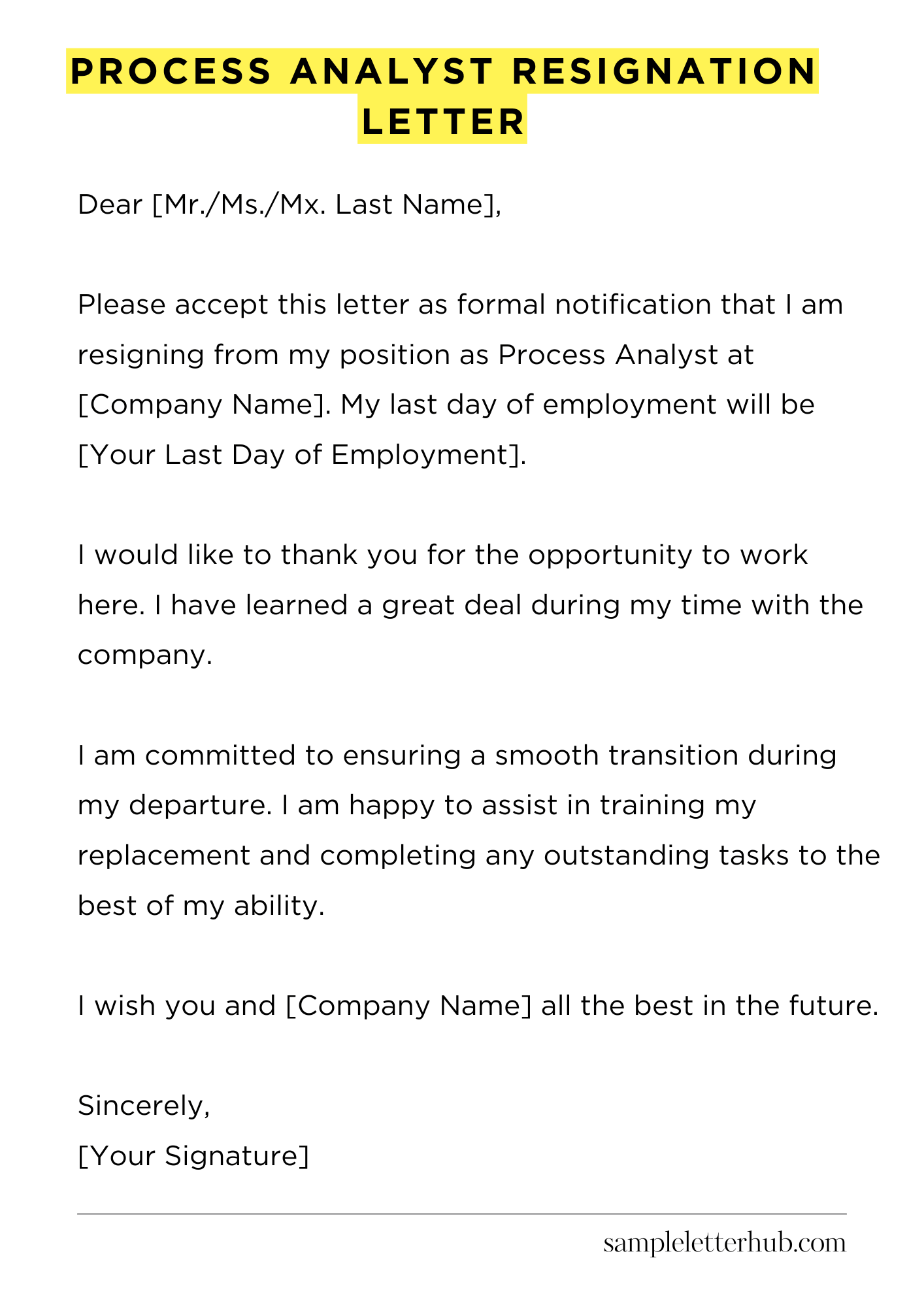
Dear [Mr./Ms./Mx. Last Name],
Please accept this letter as formal notification that I am resigning from my position as Process Analyst at [Company Name]. My last day of employment will be [Your Last Day of Employment].
I would like to thank you for the opportunity to work here. I have learned a great deal during my time with the company.
I am committed to ensuring a smooth transition during my departure. I am happy to assist in training my replacement and completing any outstanding tasks to the best of my ability.
I wish you and [Company Name] all the best in the future.
Sincerely,
[Your Signature]
How to Write a Process Analyst Resignation Letter
Resigning from a job is a big step, and doing it professionally is crucial. You want to leave a positive lasting impression. Especially when you work as a process analyst. This is particularly important for your future career prospects. Your resignation letter is the formal document that starts this process.
It is the first step you take. Let’s break down how to craft a solid resignation letter, specifically tailored for a process analyst position.
1. The Essential Elements: What to Include
Every good resignation letter needs a few key ingredients. First, state your intention clearly and directly. Don’t beat around the bush. Use simple, direct language. Make sure to specify your official last day of employment. Also, you need to express your gratitude for the opportunity. Briefly mention the time you spent in the role.
Lastly, consider including a brief sentence offering assistance during the transition period. These are the basic necessities for a good resignation letter.
2. Tailoring Your Letter: Process Analyst Specifics
As a process analyst, you’re all about detail and efficiency. This should reflect in your letter. Acknowledge your specific contributions to the company. Briefly mention projects you worked on, processes you improved, or any significant achievements.
This is important to highlight your accomplishments. Show that you valued your time and the tasks you performed. Be specific, but keep it concise. Remember, brevity is a virtue!
3. Format and Tone: Keeping it Professional
The format of your letter is just as important as the content. Use a professional business letter format. Include your name, address, the date, and the recipient’s information. Keep the tone positive and professional throughout.
Avoid negativity or any unnecessary complaints. Your letter should reflect your professionalism. Proofread carefully before sending it. Check for spelling and grammatical errors!
4. Sample Letter: A Template to Guide You
Here’s a sample letter that you can adapt for your needs:
    [Your Name]
    [Your Address]
    [Your Phone Number]
    [Your Email Address]

    [Date]

    [Recipient's Name]
    [Recipient's Title]
    [Company Name]
    [Company Address]

    Dear [Recipient's Name],

    Please accept this letter as formal notification that I am resigning from my position as Process Analyst at [Company Name]. My last day of employment will be [Your Last Day].

    I am grateful for the opportunities I've had during my time here. I especially appreciate the experience of [mention a specific project or accomplishment].

    I am happy to assist in the transition of my duties during my remaining time here.

    Thank you again for the opportunity.

    Sincerely,

    [Your Signature]
    [Your Typed Name]
Adapt this template with your specific details. It will help you get started.
5. After the Letter: The Next Steps
Once you’ve submitted your letter, what’s next? Be prepared for a conversation with your manager. Follow their instructions regarding exit procedures, such as returning company property. Maintain a positive and helpful attitude until your last day. This is your chance to solidify your professional reputation. Keep the process simple and easy.
FAQs about Process Analyst resignation letter
What is the essential information to include in a Process Analyst resignation letter?
A Process Analyst’s resignation letter should include your formal resignation, the effective date of your departure, a concise statement of your reason for leaving (optional but often included for professional courtesy), and a brief expression of gratitude to the company or your manager.
Contact information, such as an email address, is beneficial for future communications, and it’s essential to comply with any company-specific guidelines for submitting a resignation.
How much notice should a Process Analyst give when resigning?
The standard notice period is typically two weeks, but this can vary depending on your employment contract, company policy, or local labor laws. It’s crucial to review your employment agreement to determine the required notice period.
Giving more than the minimum notice period is always a professional courtesy and can help maintain a positive relationship with your employer.
Should a Process Analyst explain their reasons for resigning in the letter?
While not mandatory, it is often beneficial to briefly state your reason for leaving. This can be as simple as stating you’re pursuing another opportunity or that it’s time for a career change. If the reason is negative, such as a difficult work environment, it’s advisable to be diplomatic and avoid overly critical language. Focus on facts rather than emotions.
However, if the situation involves harassment or illegal activity, it’s advised to consult with an attorney on how to proceed.
What tone and style are most appropriate for a Process Analyst resignation letter?
Maintain a professional and respectful tone throughout the letter. The language should be clear, concise, and courteous. Avoid using overly emotional language, complaints, or negativity. Express gratitude for the opportunities you’ve been given, and express your willingness to assist in the transition process. Proofread carefully to ensure there are no grammatical or spelling errors.
How should a Process Analyst handle the handover of their responsibilities?
Offer your assistance in the transition process. This might involve creating a handover document that details your ongoing projects, current status, and relevant contacts. You can also offer to train a replacement or assist in any handover meetings. The goal is to ensure a smooth transition of your duties and maintain a positive professional image.
Related:
Resignation letter due to rude boss
Resignation letter moving to another state
Resignation letter due to illness of family member
Resignation letter due to study