

So, you’re leaving your security job? That’s when a “Security Resignation Letter” comes into play. It’s a formal document. Its purpose? To officially notify your employer about your departure. This letter outlines your last day. It helps ensure a smooth transition.
Writing a good resignation letter can be tricky. It needs to be clear and professional. That’s where we come in. We’ll give you a helping hand.
We’ve got you covered. We’re sharing different templates. They’ll help you craft the perfect letter. Need a simple, straightforward letter? We have that. Want something more specific? We have it too.
Security Resignation Letter
Below is a sample of a Security Resignation Letter:
[Your Name]
[Your Address]
[Your Phone Number]
[Your Email Address]
[Date]
[Employer’s Name]
[Security Company Name]
[Company Address]
Dear [Employer’s Name],
Please accept this letter as formal notification that I am resigning from my position as a Security Officer at [Security Company Name]. My last day of employment will be [Your Last Day of Employment].
I would like to thank you for the opportunity to work at [Security Company Name]. I have gained valuable experience during my time here.
I will do my best to ensure a smooth transition during my departure. Please let me know if there is anything I can do to assist with the handover of my duties.
I wish you and the company all the best in the future.
Sincerely,
[Your Signature]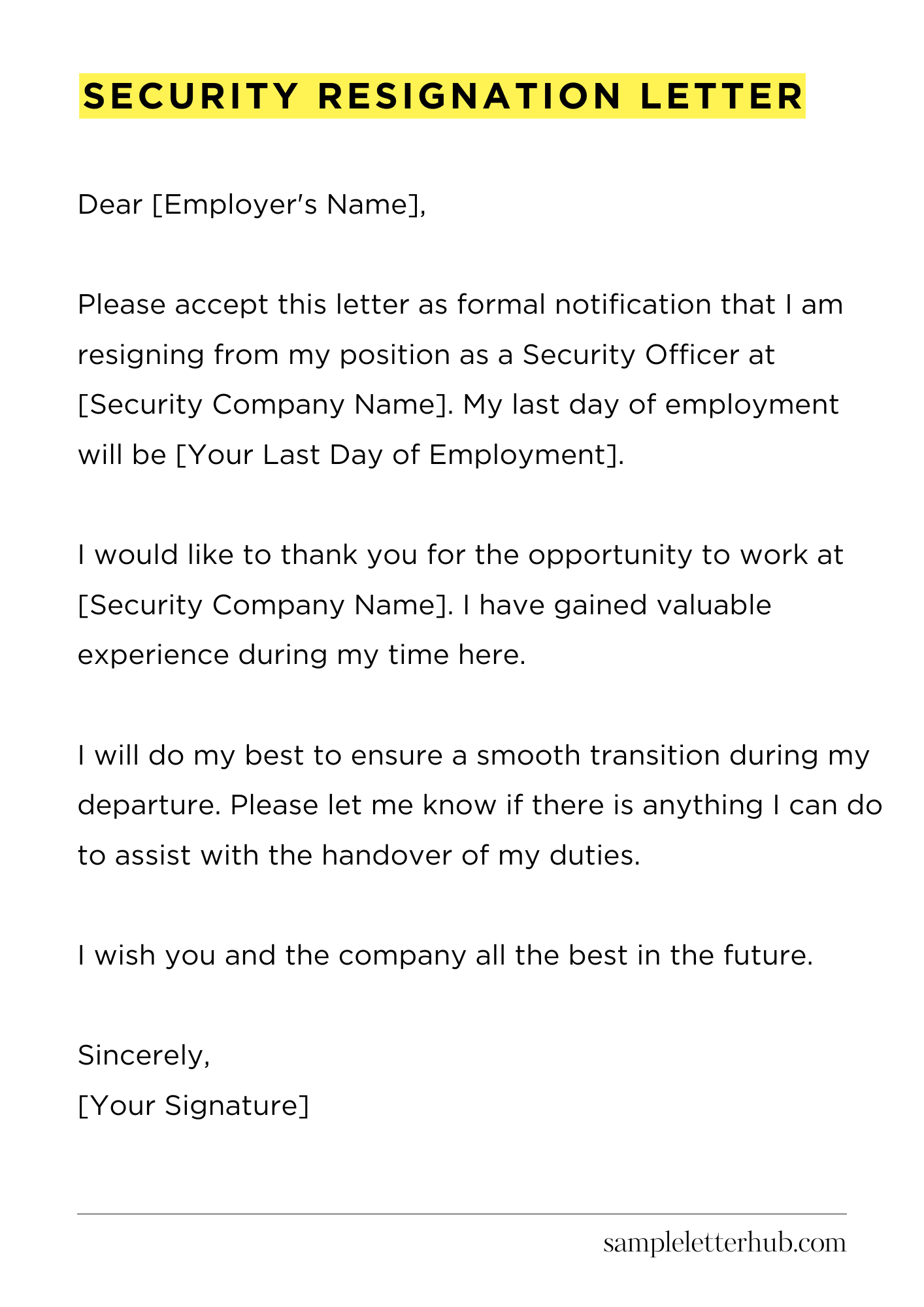
How to Write a Security Resignation Letter
Leaving a security role? You’ll need a resignation letter. Don’t worry; it’s a straightforward process. This guide will walk you through crafting a professional and effective security resignation letter. You want to leave a good impression, right? Absolutely!
Step 1: Get the Basics Right
First things first: the format. Your letter should be clear, concise, and professional. Start with your name, address, phone number, and email address at the top. Follow this with the date. Then, add the recipient’s information. This includes their name, title, and the company’s address. Use a standard business letter format. Keep it clean and easy to read.
Step 2: State Your Intent (and Be Clear!)
The core of your letter is a clear statement of your resignation. Simply state that you are resigning from your position. Include your job title and the effective date of your resignation.
For instance, you might write: “Please accept this letter as formal notification that I am resigning from my position as Security Officer, effective October 27, 2024.” This is crucial. It leaves no room for misunderstanding.
Step 3: Show Gratitude (It Goes a Long Way)
Expressing gratitude is always a good idea. Even if you’re not thrilled about leaving, acknowledge the opportunities you’ve had. Briefly mention anything positive about your experience. You could say something like: “I want to thank you for the opportunities I’ve been given during my time here.” A short thank-you can make a big difference in how you’re remembered.
Step 4: Wrap it Up: The Finishing Touches
Consider offering assistance with the transition. If you are willing, offer to help train your replacement. This is not mandatory, but it demonstrates your professionalism. It shows you care about the company’s continued success. End the letter with a professional closing, such as “Sincerely” or “Respectfully,” followed by your typed name and your signature above it.
Step 5: Review and Submit
Before sending your letter, proofread it carefully. Check for any errors in grammar or spelling. Ensure all the information is accurate. Once you are satisfied, submit your letter according to your company’s procedures. Most companies prefer it in writing. Keep a copy for your records. Done! You’ve successfully written a security resignation letter.
FAQs about Security Resignation Letter
Understanding the nuances of a security resignation letter is crucial for a smooth transition. The following are the most frequently asked questions on the topic:
What should be included in a security resignation letter?
A security resignation letter should include: your official resignation, the date of your last day of employment (typically based on your contract or notice period), a professional and courteous tone, a brief expression of gratitude for the opportunity (optional), and your signature. If required by your company, specify the handover procedure and contact details for questions or assistance.
How much notice should I give when resigning from a security role?
The notice period is usually determined by your employment contract, local labor laws, or company policy. Typically, security roles require at least two weeks’ notice, but some may require longer, especially for supervisory or management positions. Always refer to your contract or employee handbook for the precise requirement.
Should I provide a reason for resigning in my security resignation letter?
You are not generally obligated to provide a reason for your resignation. However, depending on your company’s policy and your personal preference, you may choose to briefly state your reason. Keep it concise and positive, focusing on moving on to new opportunities. Avoid negative comments about the company or colleagues.
How should I handle sensitive information in my security resignation letter?
Your resignation letter should not include any confidential or sensitive information. Avoid discussing details about security protocols, vulnerabilities, or internal investigations. If necessary, these matters should be addressed in separate communications following company guidelines. Maintain confidentiality and professionalism.
What happens after I submit my security resignation letter?
After submitting your resignation letter, you should expect to receive confirmation from your employer. Your supervisor or HR department will likely schedule an exit interview to discuss your departure. They may also discuss your final pay, benefits, and the handover of your responsibilities. Follow all company procedures for a clean and professional exit.
Related:
Resignation letter due to rude boss
Resignation letter moving to another state
Resignation letter due to illness of family member
Resignation letter due to study