

So, you’re a copywriter, and you’re moving on. A copywriter resignation letter is your official goodbye. It’s a professional document. Its purpose? To formally inform your employer of your departure. It’s about setting the stage for a smooth transition.
Writing a resignation letter can feel tricky. You want to be clear and professional. You also want to avoid burning bridges. We’ve got you covered!
This article is your resource. We have crafted a few sample copywriter resignation letters. You can use them for inspiration. Customize them to fit your specific situation. Consider it your creative launchpad for crafting the perfect letter.
Copywriter Resignation Letter
Below is a sample of a Copywriter Resignation Letter:
[Your Name]
[Your Address]
[Your Phone Number]
[Your Email Address]
[Date]
[Employer’s Name]
[Employer’s Title]
[Company Name]
[Company Address]
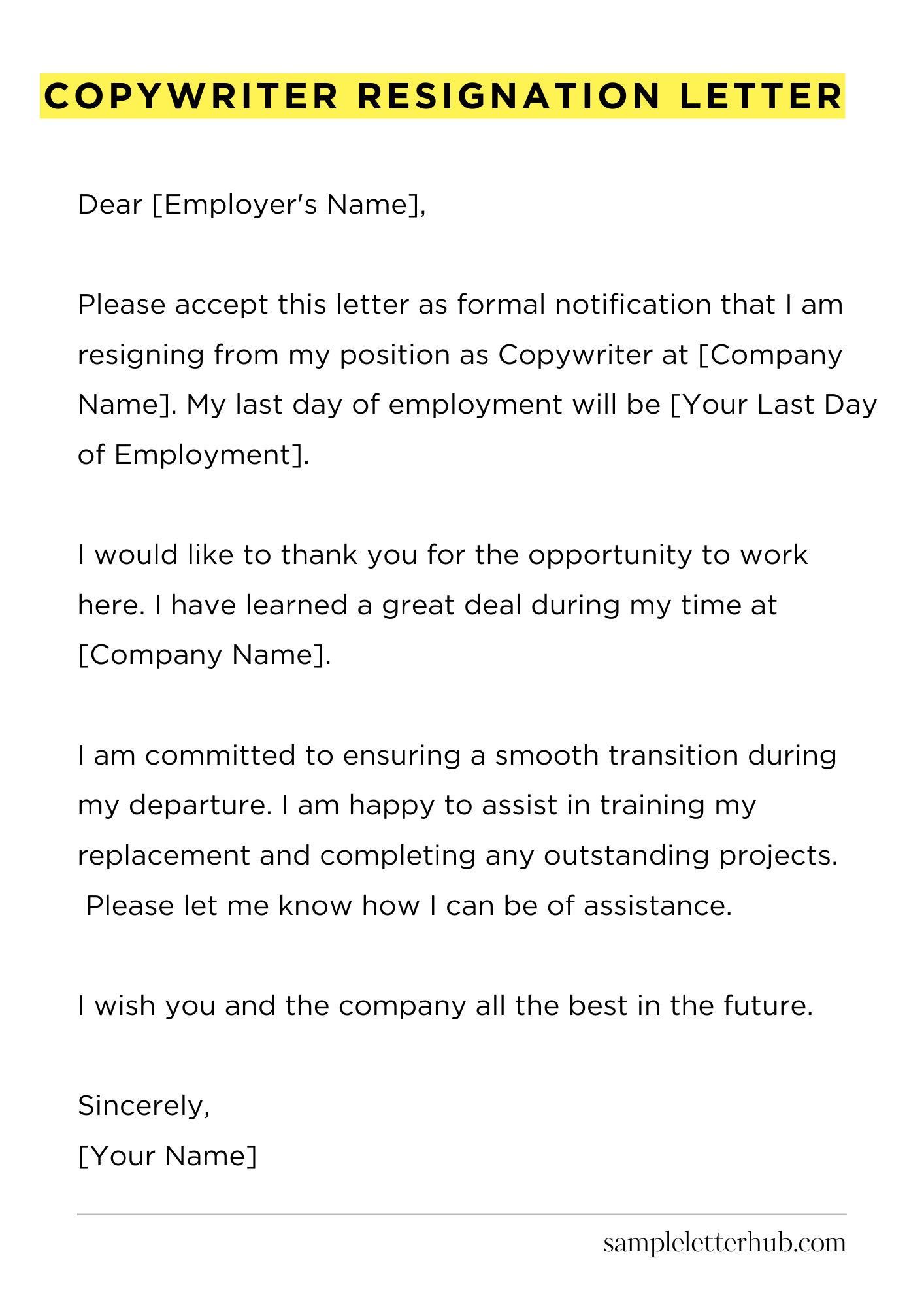
Dear [Employer’s Name],
Please accept this letter as formal notification that I am resigning from my position as Copywriter at [Company Name]. My last day of employment will be [Your Last Day of Employment].
I would like to thank you for the opportunity to work here. I have learned a great deal during my time at [Company Name].
I am committed to ensuring a smooth transition during my departure. I am happy to assist in training my replacement and completing any outstanding projects. Please let me know how I can be of assistance.
I wish you and the company all the best in the future.
Sincerely,
[Your Name]
How to Write a Copywriter Resignation Letter
So, you’re ready to move on. That’s perfectly fine! Life takes us in different directions. And you’re now composing your copywriter resignation letter. This is a crucial step! It can make or break your professional reputation. Writing a resignation letter is easier than you think. You can easily do it with a little planning and consideration.
1. Keep it Short and Sweet
Resignation letters aren’t the place for long, elaborate tales. Keep it direct, concise, and professional. One page is typically more than sufficient. You want to make your point quickly and with grace. The aim is to inform, not to over-explain your life story.
Start with a clear statement of your intention to resign. State your last day of employment. Use a formal tone, but don’t be overly stiff. A simple, polite approach works best. Remember this! Time is important.
2. The Essentials: What to Include
Let’s break down the must-have elements. First, your full name, the date, and the recipient’s name and job title. Next, state your resignation clearly. Mention your last day of work. You should be extremely careful to follow the company’s rules on notice periods. This is important to avoid problems with HR.
You may also include a brief expression of gratitude. It’s a good practice to thank your employer for the opportunity. Mention any specific skills gained, if you wish. But keep it brief. Finally, provide your contact information. This is to facilitate communication during your departure. Ensure this information is accurate.
3. Be Gracious and Professional
Even if you’re leaving due to negative experiences, maintain a positive tone. Avoid complaints, criticisms, or personal attacks. It’s a small world. You don’t want to burn any bridges. Focus on the positive aspects of your experience. Or simply state you are moving on to a different opportunity. This reflects well on you. Your goal is to leave a good impression.
Offer assistance with the transition. Be willing to help train your replacement or complete any ongoing projects. This demonstrates professionalism. It also shows you care about the company’s success.
4. Formatting and Tone Matters
Proper formatting is vital. Use a standard business letter format. Use a clear, easy-to-read font. Times New Roman or Arial are good choices. Ensure you have the correct spacing and alignment.
The tone should be formal. Avoid slang, jargon, or overly casual language. Proofread your letter carefully. Check for any typos or grammatical errors. Such errors can damage your credibility. Make sure to tailor your letter to your specific situation and relationship with your employer.
5. Final Touches and Delivery
Before submitting, double-check everything. Read the letter aloud to yourself. Get a second opinion from a trusted friend or colleague. This helps catch any overlooked errors.
Submit your letter according to company policy. Usually, this means delivering it to your direct supervisor or HR department. Consider keeping a copy for your records. This is just in case you ever need it in the future.
FAQs about Copywriter Resignation Letter
What is the essential information to include in a copywriter resignation letter?
A copywriter’s resignation letter should include your formal resignation, the effective date of your departure, a concise statement of your reason for leaving (if desired), a thank you to your employer for the opportunity, and any necessary details regarding the handover of your ongoing projects. It’s also advisable to include your contact information for future correspondence.
How far in advance should a copywriter submit their resignation letter?
The standard practice is to provide at least two weeks’ notice before your last day of employment. However, this can vary based on your employment contract or company policy. Always review your employment agreement for the specific notice period required.
Should I provide a reason for resigning in my copywriter resignation letter, and if so, what’s appropriate?
While not mandatory, you can briefly mention your reason for leaving. If you choose to do so, keep it professional and positive. Examples include stating that you’re pursuing a new opportunity, seeking career growth, or relocating. Avoid negative comments about your current employer or colleagues. You can also state that you are resigning for personal reasons.
What if I have ongoing projects; how should I address them in my resignation letter?
In your letter, acknowledge your ongoing projects and express your willingness to assist with a smooth handover. Offer to provide necessary documentation, train a replacement, or complete specific tasks before your departure. This demonstrates professionalism and a commitment to ensuring a seamless transition.
Can a copywriter’s resignation letter be customized, and what are some best practices for tailoring it?
Yes, your resignation letter can and should be customized. It should be tailored to your specific situation and relationship with your employer. Consider the company culture and your personal relationship with your manager when choosing your tone and level of detail. Maintain a professional and respectful tone, even if you are leaving due to negative experiences.
Related:
Resignation letter due to rude boss
Resignation letter moving to another state
Resignation letter due to illness of family member
Resignation letter due to study