

A “Materials Engineer resignation letter” is a formal document. Its purpose is simple: to inform your employer you’re leaving. It’s the official notice. It helps initiate the departure process.
Sometimes, crafting the right words is hard. That’s where we come in. We understand the challenges. We’ve got you covered. We’re providing templates and examples.
Get ready to breathe easy. We’ll offer sample resignation letters. These examples cater to various situations. Use them as inspiration or a starting point. Make your exit smooth and professional.
Materials Engineer Resignation Letter
Below is a sample of a Materials Engineer Resignation Letter:
[Your Name]
[Your Address]
[Your Phone Number]
[Your Email Address]
[Date]
[Employer’s Name]
[Employer’s Title]
[Company Name]
[Company Address]
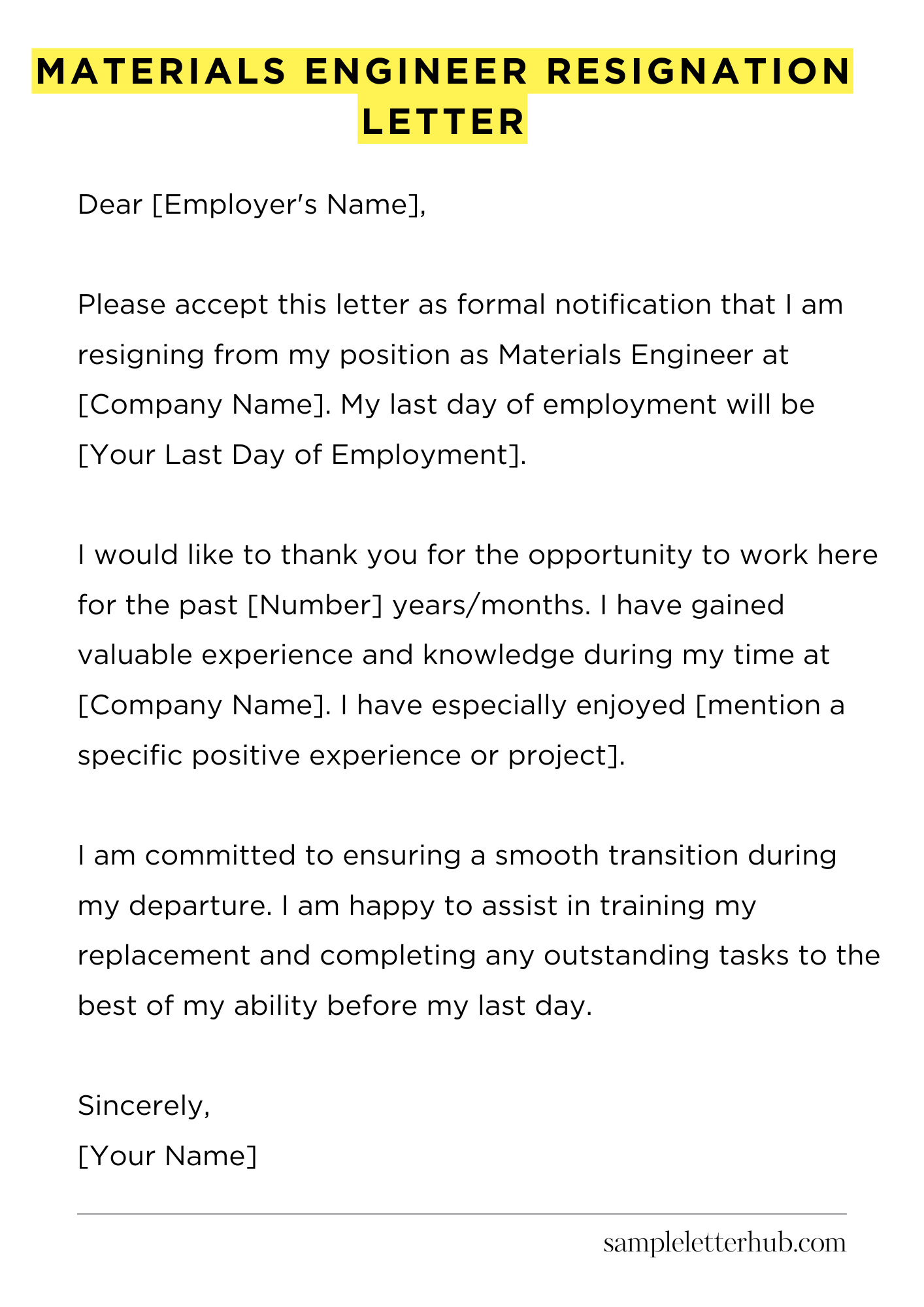
Dear [Employer’s Name],
Please accept this letter as formal notification that I am resigning from my position as Materials Engineer at [Company Name]. My last day of employment will be [Your Last Day of Employment].
I would like to thank you for the opportunity to work here for the past [Number] years/months. I have gained valuable experience and knowledge during my time at [Company Name]. I have especially enjoyed [mention a specific positive experience or project].
I am committed to ensuring a smooth transition during my departure. I am happy to assist in training my replacement and completing any outstanding tasks to the best of my ability before my last day.
I wish you and [Company Name] all the best in the future.
Sincerely,
[Your Name]
How to Write a Materials Engineer Resignation Letter
Leaving a job is a big step, no matter the profession. As a Materials Engineer, your resignation needs to be professional and clear. This is especially true given the technical nature of your work and the likely need to leave on good terms. You’ll want to craft a letter that reflects your professionalism and provides all necessary information. Here’s how to do it effectively.
1. Getting Started: The Basic Structure
Your resignation letter, like any formal correspondence, should follow a standard format. Always include your name, address, and contact information at the top, along with the date. Next, you’ll address the letter to your direct supervisor or the appropriate HR representative. Keep it concise. The body of your letter is where the core message lies.
Begin by clearly stating your intention to resign. Specify your last day of employment. This is crucial for your employer to plan for your departure. Be polite but direct. Avoid unnecessary jargon; keep it simple and easy to understand.
2. The Core Content: What to Say
The first paragraph is the most crucial; it announces your resignation. Example: “Please accept this letter as formal notification that I am resigning from my position as Materials Engineer, effective [Your Last Day of Employment].”
Always state the role. You can then briefly express your gratitude or appreciation for the opportunity. This shows professionalism. A short and sweet thank you can go a long way. Consider mentioning any specific experiences or skills you gained while employed.
The second paragraph may involve offering assistance during the transition. You could say, “I am willing to assist in the handover of my responsibilities to ensure a smooth transition.” This reflects a collaborative and helpful attitude. This makes your departure smoother for everyone involved. Mentioning that you are ready to help shows integrity.
3. Keeping It Professional: Tone and Language
Maintain a professional and respectful tone throughout the letter. Avoid any negative comments about your employer, colleagues, or the company. Even if you’ve had negative experiences, it’s best to keep those thoughts to yourself.
Focus on the positive aspects of your employment or simply state your reasons for leaving in a neutral way. Use formal language. Proofread your letter carefully for any spelling or grammatical errors.
Clarity is key. Be specific and avoid ambiguity. This increases the chances of it being read and digested quickly. Use clear and concise language; avoid complex sentence structures. Always remember: It’s not a good idea to burn bridges.
4. The Final Touches: Sign-off and Delivery
End your letter with a formal closing, such as “Sincerely,” or “Respectfully,” followed by your full name. Sign the letter. If you are submitting a digital copy, type your name below the closing. Consider delivering your resignation letter in person, if possible, along with a digital copy. This provides a more personal touch. Make sure you keep a copy for your records.
Confirm that your last paycheck and any benefits are handled as per company policy. If there are any specific benefits you want to inquire about, you can write something along the lines of, “I would appreciate information regarding my final paycheck and any relevant benefits.”
5. Important Considerations: Before You Submit
Before submitting your resignation letter, it’s wise to review the company’s policies regarding resignation. Does your company have any special procedures you need to follow? Check your employment contract. It may contain details regarding the notice period you are required to give. Be sure you comply with any notice requirements. The last thing you want is a legal issue.
Once you submit your letter, be prepared for a response. Your supervisor or HR may schedule an exit interview. This is a chance to discuss your reasons for leaving and to provide feedback. Be prepared to answer questions professionally and politely. Resignation is a process, and a well-written letter is the first, crucial step.
FAQs about Materials Engineer resignation letter
How do I write a resignation letter as a Materials Engineer?
A Materials Engineer’s resignation letter should be professional, concise, and respectful. Begin by stating your intent to resign, followed by your official last day of employment. Briefly express gratitude for the opportunities you’ve been given. Mention any assistance you can provide during the transition period, such as training a replacement or completing ongoing projects.
Keep the tone positive and avoid negative comments about the company or colleagues. Proofread the letter carefully before submitting it to your supervisor and Human Resources.
What key information should be included in a Materials Engineer’s resignation letter?
Essential components include a clear statement of resignation, the effective date of your resignation, and a brief expression of gratitude for the opportunity to work at the company. You may also want to offer assistance with the transition process.
It’s crucial to include your name, the date, and your contact information. If you’re providing a reason for your departure, keep it brief and positive, focusing on the future rather than past grievances.
What is the typical notice period for a Materials Engineer’s resignation?
The standard notice period is typically two weeks, though this can vary depending on your employment contract, company policy, or local labor laws. Be sure to review your employment agreement to confirm the required notice period.
Some companies may require a longer notice period, especially for senior-level positions or those involving critical projects. Providing adequate notice is crucial for a smooth transition and maintaining a positive professional reputation.
Should I provide a reason for resigning in my Materials Engineer’s letter?
Providing a reason is optional. If you choose to include one, keep it brief and positive. Focus on future opportunities or personal goals rather than negative aspects of your current role or the company. Some common reasons include pursuing a different career path, accepting a new job offer, or relocating.
However, you are not obligated to disclose the specific reasons for your departure. A simple statement such as, “I am pursuing other opportunities,” is often sufficient.
How can I ensure my resignation letter maintains a professional tone?
To maintain a professional tone, use formal language and avoid slang or emotional language. Be polite and respectful throughout the letter. Express gratitude for the opportunities you’ve had. Proofread your letter carefully for any grammatical errors or typos. Keep the letter concise and to the point, avoiding unnecessary details or criticisms.
Maintain a positive attitude, even if you are leaving due to dissatisfaction. Ensure your tone reflects professionalism and leaves a positive lasting impression.
Related:
Resignation letter due to rude boss
Resignation letter moving to another state
Resignation letter due to illness of family member
Resignation letter due to study