

A “Business Development Director resignation letter” is a formal document. It is written by a Business Development Director. Its main purpose is to officially announce their departure from a company. This letter is a crucial step. It communicates the intent to leave and provides necessary details.
Writing a resignation letter can be tricky. Knowing what to say isn’t always easy. We’re here to help. This article provides you with templates. It also offers samples of resignation letters.
Our goal is simple. We aim to make the process easier for you. You can adapt these examples. Craft your own resignation letter with confidence. Consider it a toolkit for a smooth transition.
Business Development Director Resignation Letter
Below is a sample of a Business Development Director Resignation Letter:
[Your Name]
[Your Address]
[Your Phone Number]
[Your Email Address]
[Date]
[Hiring Manager Name] (If known, otherwise use title)
[Hiring Manager Title]
[Company Name]
[Company Address]
Dear [Mr./Ms./Mx. Last Name],
Please accept this letter as formal notification that I am resigning from my position as Business Development Director at [Company Name], effective [Your Last Day of Employment].
I have enjoyed my time at [Company Name] and I appreciate the opportunities I have been given during my employment. I have learned a great deal and I am grateful for the experiences.
I am committed to ensuring a smooth transition during my departure. I am happy to assist in training my replacement and to complete any necessary tasks before my last day.
I wish you and [Company Name] all the best for the future.
Sincerely,
[Your Signature]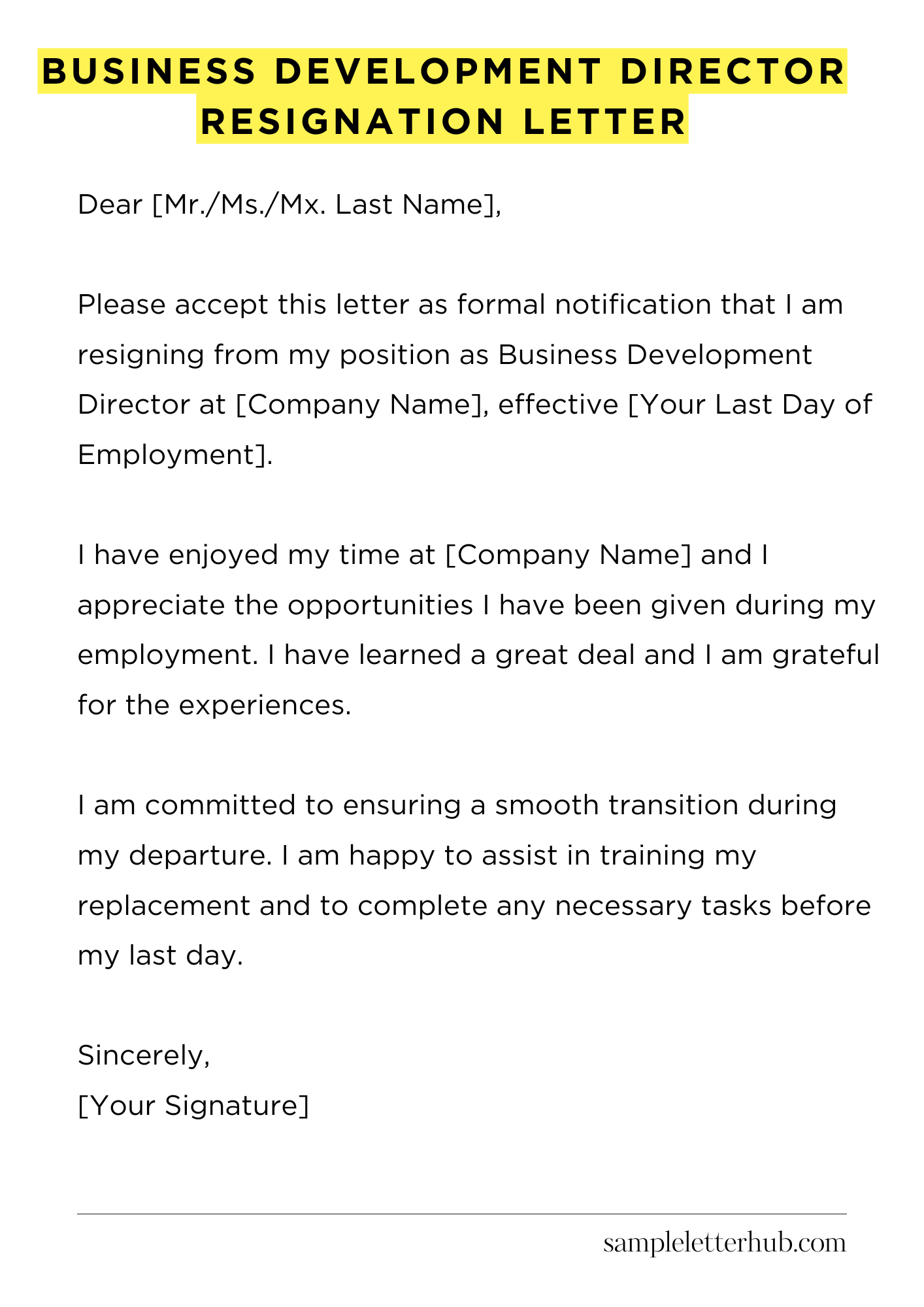
How to Write a Business Development Director Resignation Letter
Resigning from any job can be tricky. It’s a significant career move, and you want to ensure you leave on good terms. Crafting a professional and respectful resignation letter is critical, especially when you’re in a leadership position like a Business Development Director. This letter will serve as a formal record of your departure, so let’s get it right.
1. Preparation is Key: Before You Start Writing
Before you even begin to type, take a deep breath. Gather your thoughts. Consider all your reasons for leaving. It’s also wise to check your employment contract. It probably outlines the required notice period.
This is the most crucial part to understand. Are you expected to provide two weeks’ notice? A month? Knowing this will inform the letter’s timeline. You will want to determine the effective date of your resignation.
Once you understand your obligations, think about the tone you want to convey. Keep it professional and polite. You should also have the basics ready before you start, like the date, your name, the recipient’s name (usually your direct supervisor or the HR department), and the company’s address.
2. Structure and Content: What to Include
Here’s the basic structure your letter should follow. First, you’ll start with a formal salutation, like “Dear [Recipient Name].” Next comes the body of the letter.
The first paragraph is where you clearly state your intention to resign and your effective date. Be direct and unambiguous. “I am writing to formally resign from my position as Business Development Director at [Company Name], effective [Date].” Simple, clear, and to the point.
The second paragraph can offer a brief, positive statement about your experience. Keep it brief. For instance, “I have valued my time at [Company Name] and appreciate the opportunities I’ve been given.” You don’t need to overshare reasons. You can keep it general and avoid negativity. It’s always a good idea to express gratitude for the opportunities you have received.
The next part is optional: You can offer to help with the transition. “I am committed to ensuring a smooth handover of my responsibilities and am available to assist in the transition process.” This shows a commitment to professionalism. It also leaves a positive impression.
Finally, end with a formal closing, such as “Sincerely,” or “Best regards,” followed by your name and signature. Remember to sign the hard copy if you’re submitting a paper version.
3. Choosing Your Tone: Keeping it Professional
Your tone is everything. Even if you’re leaving due to negative experiences, try to maintain a neutral or positive tone. Avoid complaints or criticism. This is not the place to vent frustrations. Remember, this letter becomes part of your permanent record. A positive and professional tone will always serve you better in the long run.
Focus on the future. Frame your departure as a step forward for you. Acknowledge your contribution to the company, and move on. The letter is a formality to start with, so keep that in mind.
4. Proofreading and Review: The Final Checks
This is crucial! Proofread your letter meticulously. Check for grammar and spelling errors. Make sure the dates and names are correct. Have a friend or colleague read it over as a second pair of eyes. Fresh eyes can catch mistakes that you might have missed. Errors can undermine your professionalism.
Once you are completely satisfied, print it out (if necessary) and keep a copy for yourself. Keep the original document and a copy of the final letter somewhere safe. You might need it later.
5. Delivery and Follow-Up: The Final Steps
Deliver your resignation letter to the appropriate person. Depending on company policy, this might be your direct supervisor or HR. Hand it in person if possible. This allows you to have a brief, face-to-face conversation. If that’s not possible, send it via email, and request confirmation of receipt.
After you submit the letter, be prepared for a response. Your employer may want to discuss your departure. Be professional and courteous during any exit interviews or meetings. Remember, you’re building bridges, not burning them. Following these steps, you will leave on a positive note, setting the stage for future opportunities. Good luck!
FAQs about Business Development Director Resignation Letter
What is the essential information to include in a Business Development Director’s resignation letter?
A resignation letter from a Business Development Director should include the following key elements: a clear statement of resignation (e.g., “I am writing to formally resign from my position as Business Development Director”), the effective date of your resignation, a concise expression of gratitude for the opportunity, and any relevant details regarding the handover of responsibilities.
It’s also professional to briefly mention your reasons for leaving, if you choose to do so, while remaining positive and avoiding negative comments. Finally, provide your contact information to ensure a smooth transition.
How much notice should a Business Development Director give when resigning?
The standard notice period for a Business Development Director often aligns with the employment contract or local labor laws. Typically, a minimum of four weeks’ notice is expected, but contracts might specify a longer period, such as one or two months. Review your employment agreement to confirm the required notice.
Giving ample notice demonstrates professionalism and allows for a smoother transition, which can be particularly important in a strategic leadership role.
Should a Business Development Director include a reason for leaving in the resignation letter?
While not mandatory, including a brief, positive, and professional reason for leaving can be beneficial. It helps provide context and can prevent speculation. Acceptable reasons might include pursuing new opportunities, seeking career advancement, or relocating. Avoid negative comments about the company or colleagues.
If you prefer to keep your reasons private, it is perfectly acceptable to state that you are pursuing other opportunities or simply want to pursue new challenges. Ensure your letter remains professional and focused on the future.
What should a Business Development Director do about the handover of responsibilities when resigning?
A successful handover is critical for a smooth transition. Your resignation letter should offer your willingness to assist with the handover process. This includes compiling relevant documents, training your replacement, and providing any necessary support to ensure business continuity.
Communicate proactively with your manager to arrange a handover plan and ensure all key responsibilities, ongoing projects, and client relationships are covered. A well-executed handover demonstrates integrity and professionalism.
How should a Business Development Director handle references when resigning?
Before resigning, prepare for requests for references. Ensure you have a list of references, including previous managers, colleagues, and possibly clients, who can speak to your skills and accomplishments.
Inform your references that you may be looking for a new role. Be prepared to provide potential employers with contact details for your references. Upon resigning, be prepared to share your reference list with potential employers when requested and be prompt in getting back to them with the appropriate contact information.
Related:
Resignation letter due to rude boss
Resignation letter moving to another state
Resignation letter due to illness of family member
Resignation letter due to study