

A Senior Attorney resignation letter is a formal document. It announces your departure from a law firm or legal position. The purpose is to officially inform your employer of your intention to leave. It also outlines your last day of employment.
Writing this letter can feel daunting. We’re here to make it easier. We’ll provide you with various templates. Examples will show you different approaches. You can adapt these samples to your specific situation.
No need to start from scratch. These examples are designed for convenience. You can effortlessly craft your own letter. This article will help simplify the process.
Senior Attorney Resignation Letter
Below is a sample of a Senior Attorney Resignation Letter:
[Your Name]
[Your Address]
[Your Phone Number]
[Your Email Address]
[Date]
[Recipient Name]
[Recipient Title]
[Law Firm Name]
[Law Firm Address]
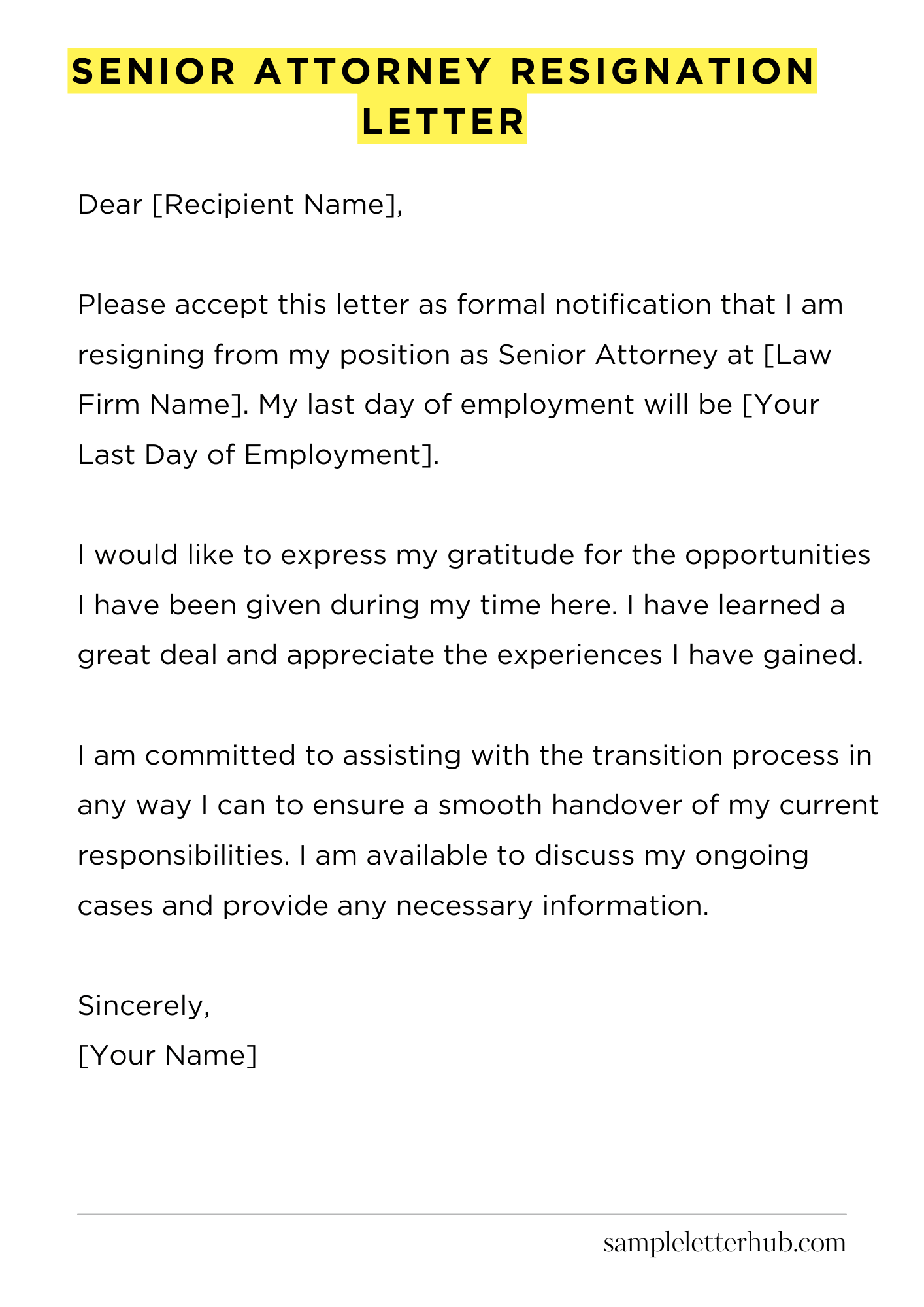
Dear [Recipient Name],
Please accept this letter as formal notification that I am resigning from my position as Senior Attorney at [Law Firm Name]. My last day of employment will be [Your Last Day of Employment].
I would like to express my gratitude for the opportunities I have been given during my time here. I have learned a great deal and appreciate the experiences I have gained.
I am committed to assisting with the transition process in any way I can to ensure a smooth handover of my current responsibilities. I am available to discuss my ongoing cases and provide any necessary information.
Thank you again for the support and guidance I have received. I wish you and the firm all the best in the future.
Sincerely,
[Your Name]
How to Write a Senior Attorney Resignation Letter
Getting Started: Planning Your Exit
Resigning from a senior attorney position requires careful planning and execution. This is a very important moment in your career. Before you even begin drafting the letter, think about the circumstances of your departure. Are you leaving on good terms? What is the notice period required by your employment contract?
Knowing this information will shape the tone and content of your letter. Review your contract thoroughly to understand your obligations.
Consider the timing, too. When is the best time to hand in your resignation? It is wise to have a new job lined up. Think through any uncompleted projects or client matters that will need to be addressed. Remember, professional courtesy is paramount. These preliminary steps will ensure a smoother transition and protect your professional reputation.
Crafting the Core: The Essential Elements
The core of your resignation letter should be clear, concise, and professional. It should also be brief. Start with a formal salutation, addressed to the appropriate person, such as your managing partner or the head of human resources. State your intention to resign from your position as Senior Attorney.
Provide the exact date of your last day of employment. This is essential for both your employer and for the record.
Express your gratitude for the opportunity to work at the firm. You should also acknowledge the experience you have gained and the relationships you’ve built. While it is acceptable to briefly mention your reason for leaving, you are not obligated to provide extensive details. Keep it positive and professional.
Remember to offer assistance with the transition. Mentioning your willingness to help ensure a seamless handover of your responsibilities can ease the transition.
Polishing the Tone: Maintaining Professionalism
Your tone is crucial. Even if your departure is less than amicable, maintain a professional and respectful tone. Avoid negativity, complaints, or personal attacks. This is your exit strategy. A well-written, positive letter reflects favorably on you and avoids burning bridges. Use formal language and proper grammar.
Carefully proofread your letter before sending it. Errors can undermine your credibility. Consider having a trusted colleague or mentor review your letter for feedback. This will enhance the overall impact.
Addressing Specific Considerations: Confidentiality and Compliance
Senior attorneys often have access to highly sensitive information. It is important to address confidentiality in your letter. You may need to reaffirm your commitment to maintaining client confidentiality and protecting the firm’s proprietary information. This demonstrates your integrity and professionalism.
Review the employment agreement and any non-compete clauses. Be very clear about what these require. Seek legal advice if needed. Always comply with all legal and contractual obligations. Consider addressing any outstanding issues, such as unused vacation time or benefits, within your letter. The details matter, so make a list.
Final Steps: Delivery and Follow-Up
Once you are satisfied with your letter, deliver it to the appropriate person or department. Hand deliver it, if possible. Follow up with an email or a phone call to confirm receipt and schedule a meeting to discuss your departure. This provides the opportunity for a face-to-face conversation and allows you to answer any questions your employer may have.
Be prepared to discuss your transition plan and answer questions about client matters or projects. The final step is to keep copies of your resignation letter and all related communications for your records. This helps to make a smooth departure from the firm. Good luck!
FAQs about Senior Attorney resignation letter
How much notice should a Senior Attorney give when resigning?
Generally, a Senior Attorney should provide at least four weeks’ notice, but six weeks or even two months is preferable. This allows the firm or employer sufficient time to find a replacement, transition clients, and manage ongoing cases.
The specific notice period may be dictated by the employment contract, firm policy, or state law. Always review these before submitting your resignation.
What key information should be included in a Senior Attorney resignation letter?
The letter should include a clear and concise statement of resignation, the effective date of departure, an expression of gratitude for the opportunity, and a willingness to assist with the transition, if appropriate. It is also good practice to confirm the return of firm property, such as laptops or access cards. Keep it professional and avoid negative comments about the employer or colleagues.
Should a Senior Attorney provide a reason for resigning in the letter?
While not mandatory, providing a brief, professional reason can be helpful. This is particularly relevant if the departure is due to a career advancement opportunity, better compensation, or personal reasons.
However, avoid overly detailed explanations or negative statements. A simple statement such as “I have accepted a position that aligns more closely with my long-term career goals” is sufficient.
How can a Senior Attorney ensure a smooth transition of client matters upon resignation?
Senior Attorneys should proactively work to transition client matters to other attorneys within the firm. This involves preparing summaries of ongoing cases, identifying key deadlines, and introducing clients to their new attorney. Maintain open communication with clients and the firm throughout the transition period to minimize disruptions.
What are the legal considerations a Senior Attorney should be aware of when resigning?
A Senior Attorney must be aware of their employment contract, any non-compete clauses, and client confidentiality obligations. They must also be mindful of their ethical duties as a lawyer, including the proper handling of client files and the return of firm property. Seeking advice from a legal professional or the bar association is highly recommended to navigate these considerations.
Related:
Resignation letter due to rude boss
Resignation letter moving to another state
Resignation letter due to illness of family member
Resignation letter due to study