

A Tax Associate resignation letter is a formal document. It informs your employer of your intention to leave your job. The letter officially states your last day of employment. It’s an important step in the process of moving on.
Thinking of leaving your current role? Crafting the perfect resignation letter can be tricky. Don’t worry, we’ve got you covered. We’ll provide a variety of templates and examples. They are designed specifically for Tax Associates.
These samples will help you. They make writing your own letter super easy. Customize them to fit your specific needs. Say goodbye to stress and hello to a smooth departure!
Tax Associate Resignation Letter
Below is a sample of a Tax Associate Resignation Letter:
[Your Name]
[Your Address]
[Your Phone Number]
[Your Email Address]
[Date]
[Employer’s Name]
[Company Name]
[Company Address]
Dear [Employer’s Name],
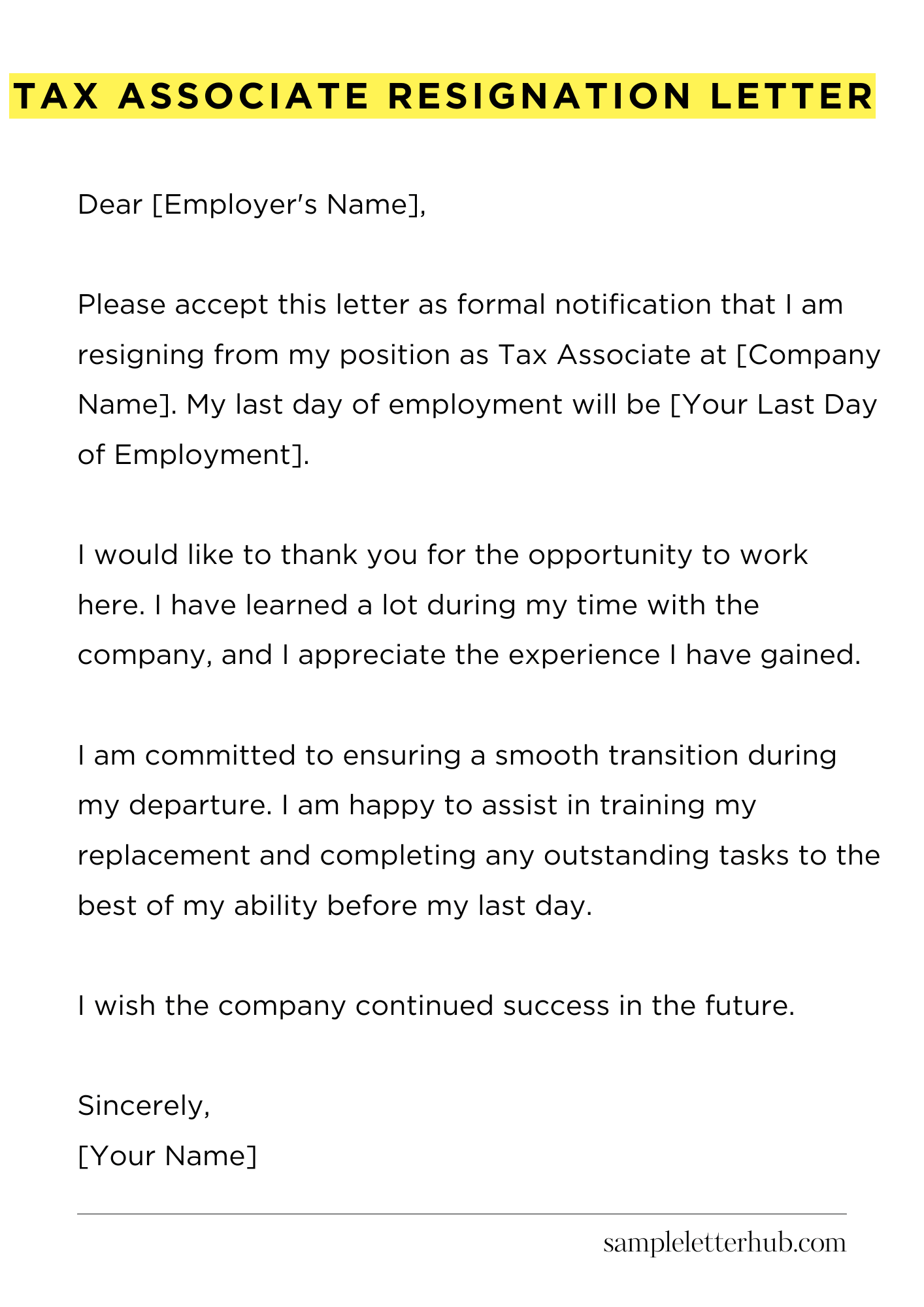
Please accept this letter as formal notification that I am resigning from my position as Tax Associate at [Company Name]. My last day of employment will be [Your Last Day of Employment].
I would like to thank you for the opportunity to work here. I have learned a lot during my time with the company, and I appreciate the experience I have gained.
I am committed to ensuring a smooth transition during my departure. I am happy to assist in training my replacement and completing any outstanding tasks to the best of my ability before my last day.
I wish the company continued success in the future.
Sincerely,
[Your Name]
How to Write a Tax Associate Resignation Letter
Understanding the Basics
Resigning from any job, especially a professional one like a Tax Associate position, requires a specific approach. It is important that you create a lasting positive impression. A well-crafted resignation letter is more than just a formality; it’s a crucial step in maintaining a professional reputation. You’ll want to leave on good terms, if possible. That starts here.
Keep the tone polite and professional. It’s a document that could follow you. It’s very simple to write, and should only take a few minutes. Think of it as a final piece of communication with your employer, at least for now.
Structuring Your Letter: The Core Components
There are some basic things that need to be there. You need a formal structure. Your letter should include a few key elements. First, include your name, address, and the date at the top. Then, address the letter to your immediate supervisor or the relevant HR department, using their formal title.
Next, state your intention clearly: “I am writing to formally resign from my position as Tax Associate…” Then, specify your last day of employment. Also, it is always a smart idea to include a brief, positive statement of gratitude for the opportunity. Keep it short and sincere. For example, “I would like to thank you for the opportunities I have been given.”
Expressing Gratitude and Providing Context
Acknowledging the opportunities you’ve received is not only polite, it’s beneficial. You do not need to overshare! Briefly mention what you’ve learned or the experience gained. If appropriate, you can state a reason for leaving, but you are not obligated to go into extensive detail. Some people prefer to share only if they feel it’s appropriate or professional.
Examples: “I have enjoyed my time here, and have learned a great deal. However, I have accepted a new position that aligns better with my long-term career goals.” or ” I would like to move closer to my family.” If you are leaving for a better opportunity, it might be something to consider.
The Fine Details: Clarity, Proofreading, and Delivery
Accuracy is important. Ensure the letter is clear, concise, and easy to read. Proofread carefully for any typos or grammatical errors. This reflects your professionalism. Remember, the letter is a reflection of you.
You can deliver the letter in person or via email. If emailing, consider including a hard copy too. Always ask for confirmation of receipt. This offers you assurance that your letter has been acknowledged.
Post-Resignation: Final Steps and Considerations
Once you have submitted your letter, be prepared for a response. Expect an exit interview. You should cooperate professionally. They might ask why you are leaving. They could also ask about your experience. If you are asked to train someone for your position, it is often a good idea.
Take time to gather your personal belongings. Return all company property. You want to leave with a clean slate. After this, you are free to move on to the next chapter. Good luck!
FAQs about Tax Associate resignation letter
How do I write a Tax Associate resignation letter?
Your Tax Associate resignation letter should be professional and concise. Begin by stating your intent to resign, followed by your last day of employment. Express gratitude for the opportunity to work at the firm and briefly mention any positive experiences. It’s also customary to offer assistance with the transition, if possible.
Keep the tone positive and avoid negative comments about the company or colleagues. Include your name and title, and then sign and date the letter.
What should I include in my Tax Associate resignation letter?
Essential components include: a clear statement of resignation, your last day of employment, a brief expression of gratitude for the opportunity, and an offer to assist with the transition (if you are willing and able).
You should also include your name, title, and the date. While not mandatory, it’s considered good practice to keep the letter brief and positive. Avoid going into excessive detail about your reasons for leaving.
When should I submit my Tax Associate resignation letter?
Generally, you should submit your resignation letter at least two weeks before your intended last day of employment. This standard notice period allows the firm sufficient time to find a replacement and facilitate a smooth transition. However, always check your employment contract or company policies for any specific notice requirements.
What are some good reasons to resign from a Tax Associate position?
Common reasons include: accepting a better job offer, seeking career advancement, pursuing further education, or relocating. Other reasons can include dissatisfaction with the current role, work-life balance issues, or a desire for a different work environment.
When stating the reason for leaving, you can keep it general (e.g., “pursuing a new opportunity”) or provide a more specific reason if you feel comfortable. You do not have to provide a reason at all.
Do I need to explain why I am leaving in my Tax Associate resignation letter?
No, it is not always necessary to explain the specific reasons for your departure in detail. A simple statement such as “I am resigning to pursue a new opportunity” or “I have accepted a position elsewhere” is perfectly acceptable.
While you may choose to provide more detail if you wish, avoid any negative or critical comments. The focus should be on your resignation and the transition process.
Related:
Resignation letter due to rude boss
Resignation letter moving to another state
Resignation letter due to illness of family member
Resignation letter due to study