

So, you’re a Senior Lecturer ready to move on. A “Senior Lecturer resignation letter” is your official goodbye. It’s a formal document. It informs your employer of your departure. This letter starts the process of your leaving.
Crafting this letter can feel tricky. You want to be professional. You also want to make sure you are not burning any bridges. You need the right words. We have you covered.
Here, we provide helpful examples. These include resignation letter templates. We will also include samples of different situations. They will make writing your own letter easy. Choose one. Adapt it to your needs. Good luck!
Senior Lecturer Resignation Letter
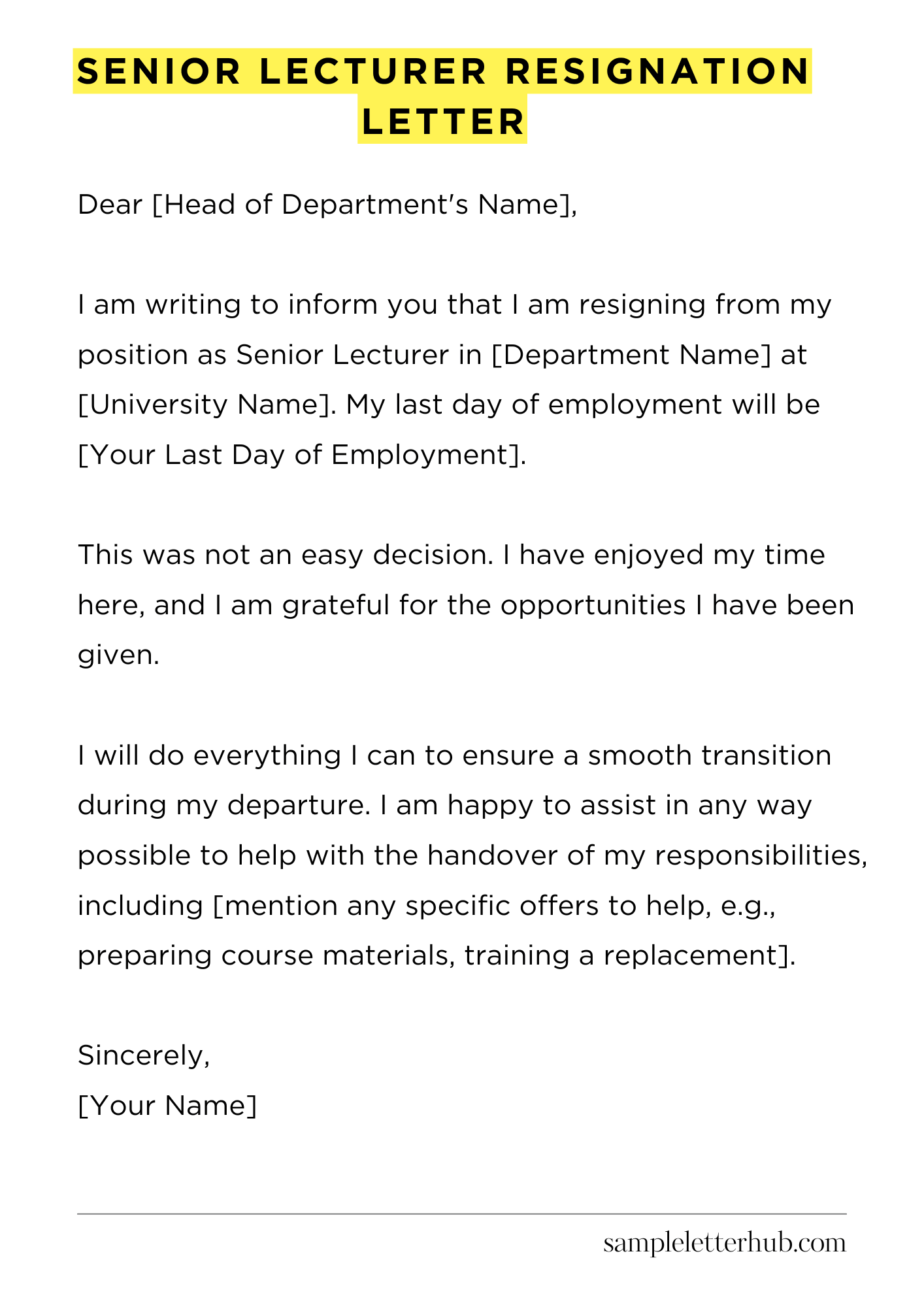
Below is a sample of a Senior Lecturer Resignation Letter:
[Your Name]
[Your Address]
[Your Phone Number]
[Your Email Address]
[Date]
[Head of Department’s Name]
[Head of Department’s Title]
[Department Name]
[University Name]
[University Address]
Dear [Head of Department’s Name],
I am writing to inform you that I am resigning from my position as Senior Lecturer in [Department Name] at [University Name]. My last day of employment will be [Your Last Day of Employment].
This was not an easy decision. I have enjoyed my time here, and I am grateful for the opportunities I have been given. I have especially appreciated [mention something specific you appreciated, e.g., the chance to work with the students, the support from colleagues, a specific project].
I will do everything I can to ensure a smooth transition during my departure. I am happy to assist in any way possible to help with the handover of my responsibilities, including [mention any specific offers to help, e.g., preparing course materials, training a replacement].
Thank you for your support and guidance during my time at [University Name]. I wish you and the department all the best in the future.
Sincerely,
[Your Name]
How to Write a Senior Lecturer Resignation Letter
1. Grasping the Basics: Why It Matters
Resigning from your Senior Lecturer position is a big step. It signals a shift in your career, so you’ll want to do it right. The resignation letter, while seemingly straightforward, is a critical document. It serves as a formal declaration of your departure. Moreover, it leaves a lasting impression on your employer.
Remember, a well-written letter can pave the way for a positive reference later. It can also help maintain a professional relationship.
Think of it this way: your resignation letter is your final opportunity to demonstrate professionalism and respect. This is true even if you are leaving due to less-than-ideal circumstances.
2. Crafting the Core Components: What to Include
Now, let’s look at the essential elements of your resignation letter. Start with a clear and concise opening. State your intention to resign and the specific date your employment will end. This is absolutely crucial! Next, briefly express your gratitude for the opportunity to have worked at the institution. Mention any specific experiences or learning that you value.
Next, you should mention the date of your last day. This is really important to specify this date for record keeping. It’s also professional to state the date of your last day of employment.
Keep your tone positive and avoid negative comments about colleagues or the institution, even if you’ve had disagreements. Consider offering assistance during the transition period. Finally, conclude with a professional closing, such as “Sincerely” or “Respectfully,” followed by your full name and contact information.
3. Refining the Tone: Staying Professional
The tone of your letter is incredibly important. Maintain a professional and respectful demeanor throughout. Avoid using overly emotional language or expressing grievances. Even if the environment wasn’t perfect, negativity can undermine your professionalism.
Focus on the positive aspects of your experience, highlighting any opportunities for growth or achievements. Keep it brief and to the point. Proofread carefully before sending it. Make sure there are no typos or grammatical errors. A polished letter reflects your attention to detail.
Remember that this letter is part of your professional record. It can come in handy for future opportunities. Keep it courteous and maintain a positive tone throughout the letter.
4. Tailoring for Senior Lecturer Positions: Specific Considerations
As a Senior Lecturer, you likely have more responsibilities. You should consider adding a few extra details tailored for your position. If you have any ongoing projects or responsibilities, briefly address how you will ensure a smooth handover.
You can offer to help in the transition process. Identify who the person is that you can assist. Consider the timing and ensure it aligns with any contractual obligations. Furthermore, offer your help with training a new hire. Make it clear and concise, and focus on leaving a positive impression.
Acknowledging your team can also be a nice touch. Show your thanks for your colleagues for their time and support. Remember, this is a formal record, so keep your tone professional.
5. Formatting and Submission: Finalizing the Letter
Before submitting your resignation letter, pay close attention to the formatting. Use a standard business letter format. Include your contact information at the top. Next, include the date, the recipient’s name and title, and the institution’s address.
Choose a clear and readable font, such as Times New Roman or Arial, with a standard font size. Keep the letter concise and focused, ideally within one page. Always send the original to the appropriate person.
Be sure to keep a copy for your records. Consider hand-delivering the letter or sending it via certified mail. This provides confirmation of receipt and protects your interests. Good luck with your future endeavors!
FAQs about Senior Lecturer resignation letter
What is the typical format for a Senior Lecturer resignation letter?
A Senior Lecturer resignation letter generally follows a professional business letter format. It should begin with your contact information and the date, followed by the recipient’s information (usually the Head of Department or Dean).
The body of the letter should clearly state your intention to resign, your last day of employment, and ideally, express gratitude for your time at the institution. You may also briefly state your reason for leaving, although this is optional. Finally, end with a professional closing and your signature.
What key information must be included in a Senior Lecturer resignation letter?
The core information required includes: a clear statement of resignation (e.g., “I am writing to formally resign from my position as Senior Lecturer”), the effective date of your resignation (your last day of employment), and your name and signature. Other elements typically included are your name, the date of the letter, and the recipient’s name and title.
How much notice should a Senior Lecturer give when resigning?
The required notice period for a Senior Lecturer typically depends on your employment contract or the institution’s policies. Common notice periods range from one to three months.
Carefully review your employment contract or consult with Human Resources to determine the correct notice period applicable to your situation. Adhering to the agreed-upon notice period is crucial to maintain a professional relationship.
Should I provide a reason for my resignation in the letter, and if so, what is appropriate?
Providing a reason is optional. If you choose to include one, keep it brief and professional. Common reasons include “to pursue other opportunities,” “for personal reasons,” or “to relocate.”
Avoid overly detailed or negative comments about the institution or individuals. A positive or neutral tone is usually best. If you prefer, you can simply state that you are resigning without giving a reason.
What is the best way to handle the handover of duties as a Senior Lecturer?
A successful handover is vital. Offer to assist in the transition by providing a list of ongoing projects and responsibilities. Offer to prepare a detailed handover document outlining current tasks, deadlines, and contact information for relevant stakeholders. Be prepared to answer questions and train your replacement if necessary.
Aim to leave the department in a good state, ready for your successor.
Related:
Resignation letter due to rude boss
Resignation letter moving to another state
Resignation letter due to illness of family member
Resignation letter due to study