

A VP resignation letter is a formal document. It announces a Vice President’s departure from a company. Its main purpose is to officially inform the employer of the resignation. It also often outlines the last day of employment.
Thinking of moving on from your VP role? You’ll need a good resignation letter. Don’t sweat it! We’ve got you covered. We’re sharing helpful templates. We’ll also provide practical examples. This makes crafting your own letter a breeze.
Whether you’re looking for a simple or more detailed letter, we have something. We aim to help you make this process smooth. Let’s get started.
Vp Resignation Letter
Below is a sample of a Vp Resignation Letter:
[Your Name]
[Your Address]
[Your Phone Number]
[Your Email Address]
[Date]
[Recipient Name]
[Recipient Title]
[Company Name]
[Company Address]
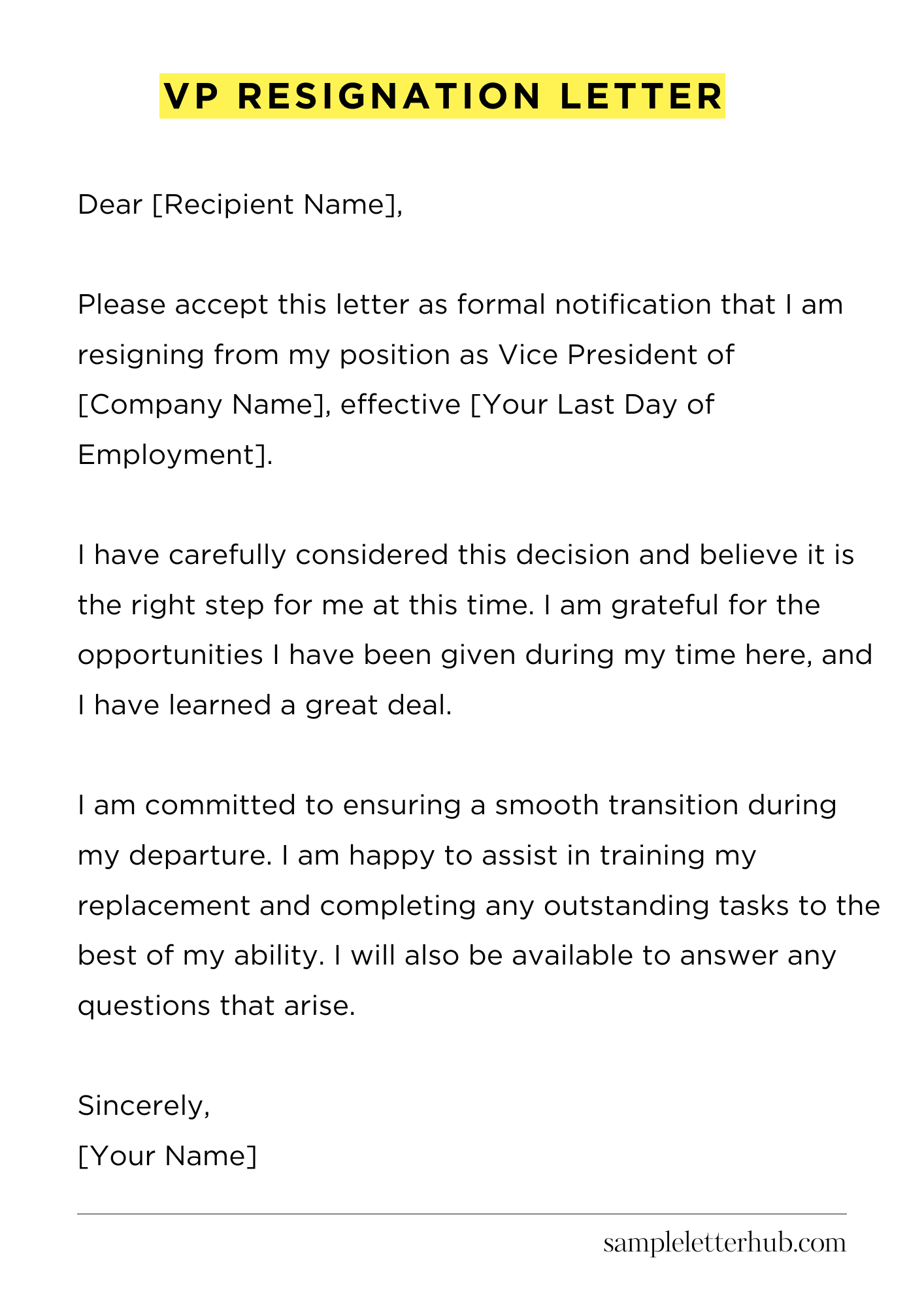
Dear [Recipient Name],
Please accept this letter as formal notification that I am resigning from my position as Vice President of [Company Name], effective [Your Last Day of Employment].
I have carefully considered this decision and believe it is the right step for me at this time. I am grateful for the opportunities I have been given during my time here, and I have learned a great deal.
I am committed to ensuring a smooth transition during my departure. I am happy to assist in training my replacement and completing any outstanding tasks to the best of my ability. I will also be available to answer any questions that arise.
Thank you again for the experience. I wish you and [Company Name] all the best in the future.
Sincerely,
[Your Name]
How to Write a VP Resignation Letter
Resigning from a Vice President role is a significant move. It’s the kind of decision that demands careful consideration and, just as importantly, a well-crafted resignation letter. This letter isn’t just a formality; it’s a professional statement that reflects on your time with the company and sets the tone for your departure. Getting it right is vital.
1. Start with a Clear and Concise Statement
The very first paragraph should be direct. The main goal is to clearly state your intent to resign from your position. Don’t beat around the bush. Start with something like: “Please accept this letter as formal notification that I am resigning from my position as Vice President of [Department/Area] at [Company Name], effective [Your Last Day of Employment].”
This needs to be stated upfront. Keeping it brief shows respect for the recipient’s time.
Avoid excessive embellishment at this early stage. The recipient needs to quickly understand your intentions. Leave the lengthy explanations for later in the letter, if necessary. A simple, professional tone is essential.
2. Express Gratitude and Highlight Your Contributions
While you’re leaving, expressing gratitude is crucial. Your resignation letter is an opportunity to thank the company for the opportunities you’ve been given.
Acknowledge the experience and the skills you’ve gained. For example, you could say: “I am grateful for the opportunities I’ve had during my [Number] years at [Company Name]. I have learned much and am thankful for the experience I have gained.”
Briefly mention some of your key accomplishments during your tenure. This showcases your value and provides a positive reflection of your time there.
You might include: “During my time here, I’m proud to have contributed to [mention a specific achievement or two – e.g., the successful launch of a new product line, significant cost savings, team growth].” Make this section as impactful as possible!
3. Address the Transition Plan (If Applicable)
A good VP resignation letter considers the transition. Offer your assistance in ensuring a smooth handover of your responsibilities. This shows professionalism and a commitment to the company’s well-being.
Consider the following: “I am committed to ensuring a smooth transition during my departure. I am available to assist in training my replacement and transferring my knowledge to ensure minimal disruption.”
However, it is not always possible to assist, so if that is the case, be as specific as possible about the reasons why. If you have a limited timeframe, clearly state the period you can assist. Clarity and willingness to help are key components here. This will leave a positive and lasting impression.
4. Maintain a Professional Tone Throughout
Always keep a professional tone. Regardless of your feelings about the company or your reasons for leaving, avoid negativity, criticism, or personal attacks. The letter is a reflection of your character. Using respectful language is always a good idea.
Avoid any use of slang or informal language. Proofread carefully before sending it. Make sure there are no typos or grammatical errors, as they could impact your credibility. Maintaining professionalism increases your chances of a positive future relationship.
5. Formal Closing and Contact Information
Conclude with a standard, formal closing, such as “Sincerely,” or “Respectfully,” followed by your full name. Provide your contact information, including your phone number and personal email address. It’s useful for future communication during the transition period or, potentially, for future references.
For example: “Sincerely,
[Your Full Name]
[Your Phone Number]
[Your Personal Email Address]”. Ensure all contact details are correct. Double-check everything, then send it off.
FAQs about VP Resignation Letter
What is the primary purpose of a VP resignation letter?
The primary purpose of a VP resignation letter is to formally notify the company and your direct supervisor of your intent to leave your position. It serves as an official record of your departure and outlines the terms of your exit, such as your last day of employment.
What key elements should be included in a VP resignation letter?
A comprehensive VP resignation letter should include your formal declaration of resignation, the effective date of your departure, a brief expression of gratitude for the opportunity, and any relevant details regarding the handover of responsibilities.
It’s often beneficial to include contact information for future communication and a concise statement of the reason for your departure, though this is optional.
How much notice should a VP provide in their resignation letter?
The standard notice period for a VP resignation typically aligns with the company’s policy or employment contract, commonly ranging from two weeks to a month or more. It is crucial to review your employment agreement to ascertain the required notice period. Providing ample notice allows for a smooth transition and demonstrates professionalism.
Is it necessary to state the reason for resigning in the letter?
While not mandatory, briefly stating your reason for resignation can be a polite gesture. This can be as simple as “pursuing other opportunities” or “seeking a new career path.” However, you are not obligated to disclose detailed personal or sensitive information. The level of detail depends on your relationship with the company and your comfort level.
What is the appropriate tone and style for a VP resignation letter?
The tone of a VP resignation letter should be professional, respectful, and concise. It’s important to maintain a positive and grateful attitude, even if your reasons for leaving are less than ideal. Avoid negative language or criticisms. The writing style should be clear and direct, focusing on the facts of your departure and ensuring the letter is easy to understand.
Related:
Resignation letter due to rude boss
Resignation letter moving to another state
Resignation letter due to illness of family member
Resignation letter due to study