

A monitor resignation letter is a formal document. It informs your employer of your intention to leave your job. The letter officially ends your employment. It’s a crucial step in the resignation process.
This article is designed to help you. We understand writing this letter can be daunting. We’ve got you covered with examples. We will share several templates here. These templates offer various situations.
You’ll find different formats. Each can be tailored. You can easily adapt them. Make them perfect for your needs. Use these examples as your guide. Good luck with your next chapter!
Monitor Resignation Letter
Below is a sample of a Monitor Resignation Letter:
[Your Name]
[Your Address]
[Your Phone Number]
[Your Email Address]
[Date]
[Recipient’s Name]
[Recipient’s Title]
[Company Name]
[Company Address]
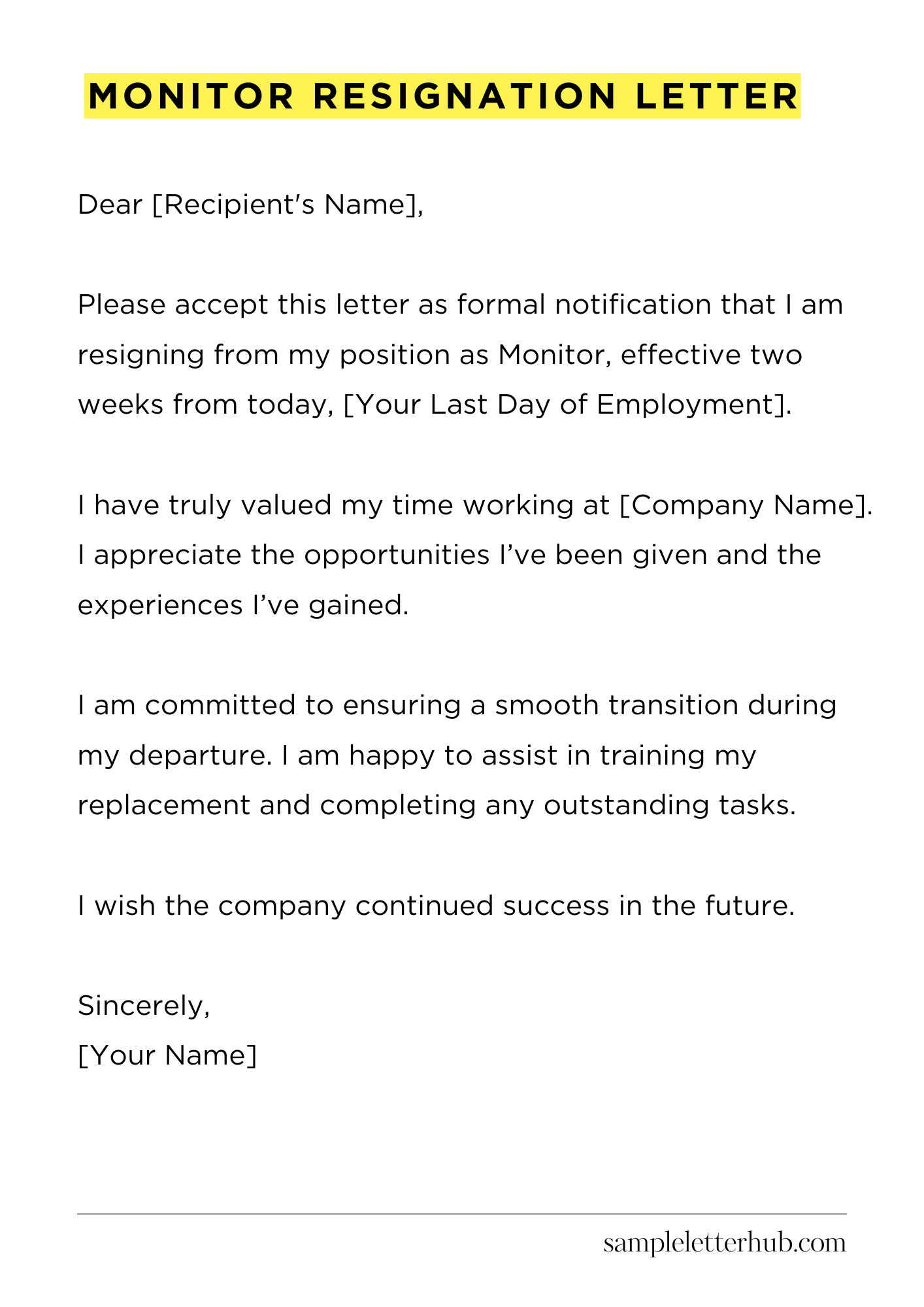
Dear [Recipient’s Name],
Please accept this letter as formal notification that I am resigning from my position as Monitor, effective two weeks from today, [Your Last Day of Employment].
I have truly valued my time working at [Company Name]. I appreciate the opportunities I’ve been given and the experiences I’ve gained.
I am committed to ensuring a smooth transition during my departure. I am happy to assist in training my replacement and completing any outstanding tasks.
I wish the company continued success in the future.
Sincerely,
[Your Name]
How to Write a Monitor Resignation Letter
Know the Basics First
Resigning from a monitor position can seem daunting. Take a deep breath! You need to compose a formal resignation letter. This letter signals your official departure.
It’s an essential part of the process, and a well-written one shows professionalism. Make sure you understand the expectations. Your tone should be polite and respectful. Keep it simple, clear, and concise. Your goal is to inform, not to debate.
Crafting the Core Message
The letter should immediately state your intention: to resign. Start with a direct statement. Then, clearly state the date of your last day of employment. This is usually determined by your contract or any established company policies.
Mention your position. Briefly, you can express gratitude for the experience, if you wish. Avoid negativity, even if your experience wasn’t ideal. Your last day should be stated explicitly, so there is no confusion.
Formatting is Key
Presentation matters! Use a formal business letter format. Include your name, address, and the date at the top. Next, include the recipient’s name and title. Address the person by name whenever possible.
Use a standard business font like Times New Roman or Arial. Keep the font size between 10-12 points. Use single spacing for the body of the letter. This is very important. Always proofread your letter before sending it.
Adding the Essentials
Besides the resignation statement and the date, there are a few other things you could add. Offer to assist with the transition. If you are willing, you can offer your help during the handover period.
Keep it simple. You could also include a short sentence of thanks. A brief note of appreciation can leave a positive impression. Make sure you sign the letter by hand. This demonstrates formality.
Final Touches and Delivery
Proofread the letter carefully. Check for any grammatical errors or typos. Double-check the date and the recipient’s name. You want to make sure your letter reflects your professionalism. Deliver your letter according to company policy. Usually, you would give it to your direct supervisor. Consider keeping a copy for your records. Good luck with your future endeavors!
FAQs about Monitor Resignation Letter
What is the purpose of a monitor resignation letter?
The primary purpose of a monitor resignation letter is to formally notify your employer of your intention to leave your position. It serves as an official record of your departure and provides essential details such as your last day of employment. This letter initiates the resignation process and helps to ensure a smooth transition for both you and your employer.
What key information should be included in a monitor resignation letter?
A well-crafted monitor resignation letter should include your clear intent to resign, the effective date of your resignation (your last day of employment), your official job title, and a concise expression of gratitude to the company or supervisor. It’s also prudent to include any specific instructions or handover details, although this may not always be necessary depending on the role.
How should I format a monitor resignation letter?
The format of a monitor resignation letter is typically a business letter. You should begin with your contact information and the date. Then, address your letter to your supervisor or HR department. Maintain a professional and respectful tone throughout the letter. Keep it concise, focused on the key details, and conclude with a professional closing and your signature.
When should I submit my monitor resignation letter?
The timing of your resignation letter submission depends on your employment agreement and company policy. Generally, you should submit your letter at least two weeks before your intended departure date.
However, certain positions or contracts may require a longer notice period. Always review your employment contract and consult with HR if you are uncertain about the required notice period.
Can a monitor resignation letter be revoked or changed?
Once submitted, a monitor resignation letter can be revoked or changed, but this is subject to your employer’s agreement. Ideally, you should discuss any changes with your supervisor or HR representative as soon as possible.
Whether a revocation is possible usually depends on the circumstances and the company’s policies. It’s often easier to withdraw or change your resignation letter before your last day of employment.
Related:
Resignation letter due to rude boss
Resignation letter moving to another state
Resignation letter due to illness of family member
Resignation letter due to study