

A Lead Teacher resignation letter is a formal document. It is written by a Lead Teacher. The letter notifies the school of their decision. It communicates the intent to leave their position.
Thinking of moving on? Drafting a resignation letter can feel daunting. We’ve got you covered. We’ll provide you with various templates. These templates are designed to streamline the process.
You’ll find several examples within this article. These are crafted for different situations. Use them as a starting point. Adapt them to fit your needs. Writing a professional resignation letter just got easier!
Lead Teacher Resignation Letter
Below is a sample of a Lead Teacher Resignation Letter:
[Your Name]
[Your Address]
[Your Phone Number]
[Your Email Address]
[Date]
[Principal’s Name]
[School Name]
[School Address]
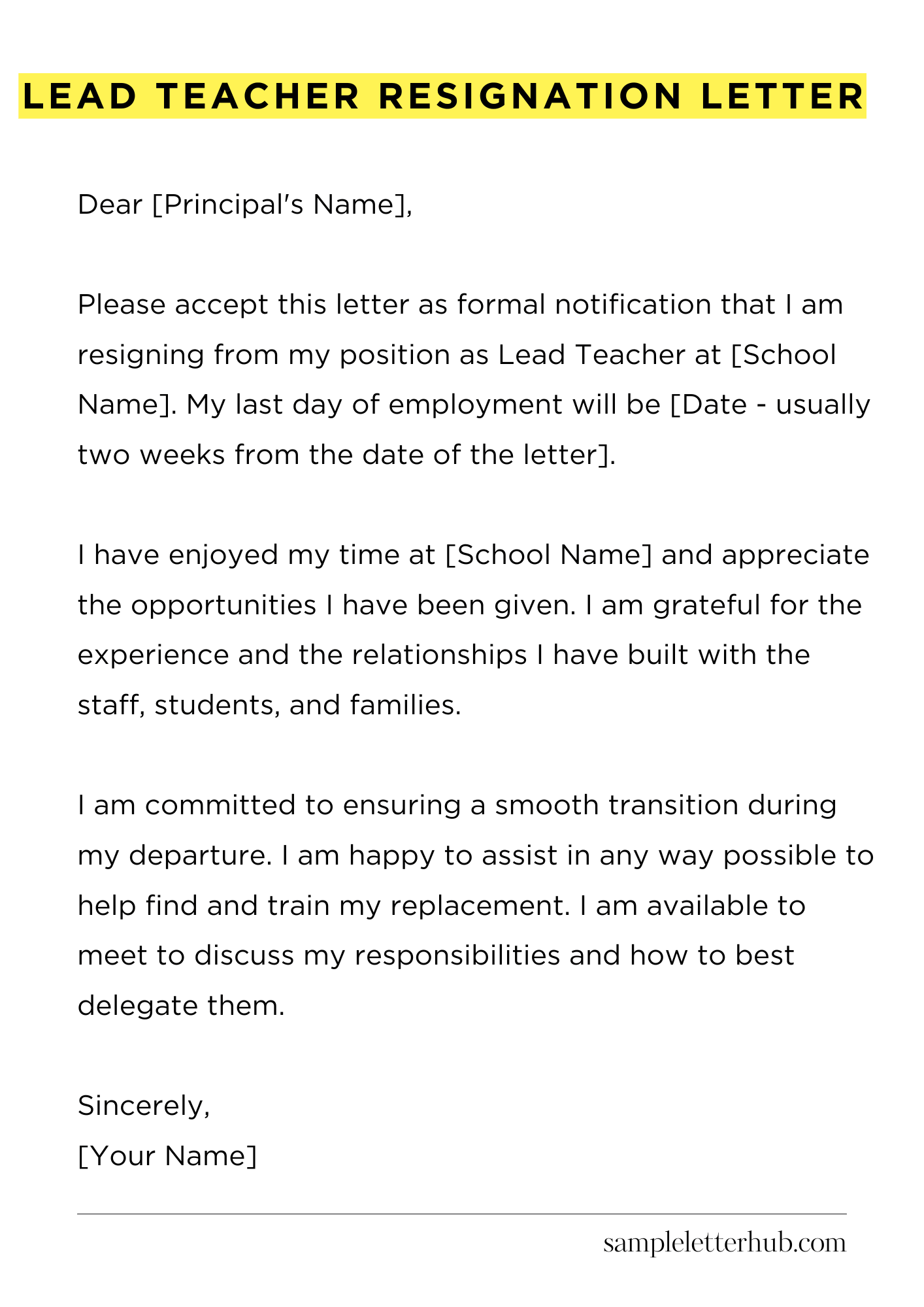
Dear [Principal’s Name],
Please accept this letter as formal notification that I am resigning from my position as Lead Teacher at [School Name]. My last day of employment will be [Date – usually two weeks from the date of the letter].
I have enjoyed my time at [School Name] and appreciate the opportunities I have been given. I am grateful for the experience and the relationships I have built with the staff, students, and families.
I am committed to ensuring a smooth transition during my departure. I am happy to assist in any way possible to help find and train my replacement. I am available to meet to discuss my responsibilities and how to best delegate them.
Thank you for your understanding. I wish you and [School Name] all the best in the future.
Sincerely,
[Your Name]
How to Write a Lead Teacher Resignation Letter
Resigning from a Lead Teacher position is a big step. It’s important to do it professionally and with respect. Your resignation letter is a crucial part of this process. It sets the tone and can impact your future professional relationships. Let’s break down how to write a great one.
1. Get Started with the Basics
First things first. You must include the date at the top of your letter. This is very important. Then, address the letter to the appropriate person. Typically, this is the school principal or the person you directly report to. Ensure you have their correct title and name. Clarity matters a lot. Keep it formal and concise. Be professional. It is the beginning of everything.
2. State Your Intentions Clearly
This is the most critical part of your letter. Start with a clear and direct statement of your resignation. Simply state that you are resigning from your position as Lead Teacher. Include the effective date of your resignation. This date is when your employment officially ends. Be specific! Specify the exact date.
This removes any ambiguity. Give enough notice, usually as per your contract or school policy.
3. Express Gratitude and Professionalism
Even if you’re leaving for a challenging reason, maintain a positive tone. Express your gratitude for the opportunity to have worked at the school. This demonstrates professionalism. You can mention specific positive experiences or things you’ve learned. This personalizes your letter and adds a touch of warmth. It also leaves a good impression.
4. Offer Assistance with the Transition
Show you are helpful and concerned about the school’s well-being. Offer your assistance during the transition period. This can be as simple as stating you are willing to help with training your replacement or preparing handover documents. This goes a long way. This shows you are a responsible professional. It makes the departure smoother for everyone involved. It boosts your reputation.
5. Finalize with a Professional Closing and Signature
End the letter with a professional closing. Use phrases like “Sincerely,” or “Respectfully,” followed by your full name. Make sure you sign the letter. A typed name is insufficient. You need an actual signature. This adds a personal touch. Proofread the entire letter. Check for any errors in spelling or grammar. A well-written letter reflects positively on you and leaves a lasting impression.
FAQs about Lead Teacher Resignation Letter
What are the essential components of a Lead Teacher resignation letter?
A Lead Teacher resignation letter should include: your official resignation, the effective date of your resignation, a formal and respectful tone, a brief statement of your reason for leaving (optional but often included), an expression of gratitude for the opportunity, and your contact information.
It’s also wise to mention the handover of responsibilities and any assistance you can provide during the transition.
What is the appropriate notice period for a Lead Teacher resignation?
The notice period depends on your employment contract, local labor laws, and school policy. However, as a general guideline, Lead Teachers should provide at least four to six weeks’ notice to allow sufficient time for the school to find a replacement and ensure a smooth transition. Always consult your contract and school administration for the specific requirements.
Should I provide a reason for resigning in my Lead Teacher resignation letter?
While not mandatory, providing a reason for leaving can be beneficial. It helps the school understand your decision and might provide opportunities for feedback or improvements. You can keep it brief and professional. Some common reasons include pursuing another opportunity, personal reasons, or a change in career goals. Avoid overly negative or detailed explanations.
How should I handle the handover of responsibilities in my resignation letter?
In your letter, acknowledge your responsibility to assist in the transition. Offer to help train your replacement, compile relevant documents, and provide any necessary support during the handover process. Be specific about your availability and offer to meet with your replacement to ensure a smooth transition.
What tone and language should I use in a Lead Teacher resignation letter?
Maintain a professional, respectful, and positive tone. Express gratitude for the opportunity to work at the school. Use clear and concise language. Avoid negative comments or complaints. Your goal is to leave on good terms and maintain a positive professional reputation. Address your letter to the appropriate authority (e.g., principal, superintendent).
Related:
Resignation letter due to rude boss
Resignation letter moving to another state
Resignation letter due to illness of family member
Resignation letter due to study