

A dental surgeon resignation letter is a formal document. It is written by a dentist. The letter announces their intention to leave their job. It officially informs their employer about their departure.
So, you’re ready to move on. Need to draft a resignation letter? Don’t worry! We’ve got you covered. We’ll share various templates and examples. They are ready to be used. They can also be customized.
Our aim? To make it easy. We will provide different samples. You can find the best fit. Writing your letter will be a breeze.
Dental Surgeon Resignation Letter
Below is a sample of a Dental Surgeon Resignation Letter:
[Your Name]
[Your Address]
[Your Phone Number]
[Your Email Address]
[Date]
[Employer’s Name]
[Dental Practice Name]
[Practice Address]
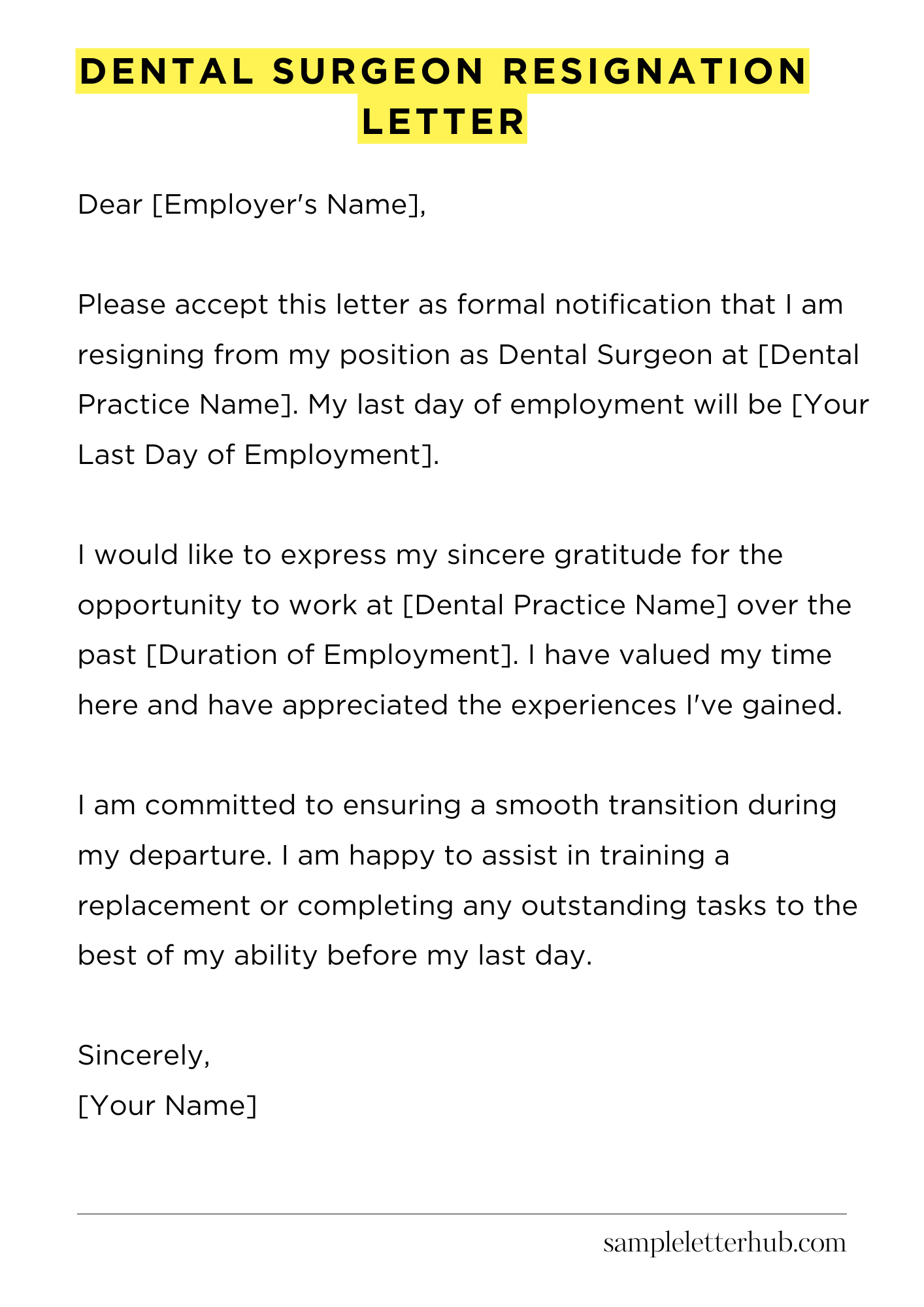
Dear [Employer’s Name],
Please accept this letter as formal notification that I am resigning from my position as Dental Surgeon at [Dental Practice Name]. My last day of employment will be [Your Last Day of Employment].
I would like to express my sincere gratitude for the opportunity to work at [Dental Practice Name] over the past [Duration of Employment]. I have valued my time here and have appreciated the experiences I’ve gained.
I am committed to ensuring a smooth transition during my departure. I am happy to assist in training a replacement or completing any outstanding tasks to the best of my ability before my last day.
Thank you again for the opportunity to have worked here. I wish you and the practice continued success in the future.
Sincerely,
[Your Name]
How to Write Dental Surgeon Resignation Letter
1. Getting Started: The Basics You Need
So, you’re a dental surgeon, and you’re ready to move on. That’s a big decision! Now, you’ve got to write the resignation letter. Don’t stress, it’s a straightforward process, but a well-crafted letter makes a positive lasting impression. First things first: your letter needs to be professional. This means clear language, a polite tone, and all the necessary information.
Start by addressing the letter to the appropriate person. This is typically your direct supervisor, the practice owner, or the head of the department. Always use their correct title. Next, include the date. This is crucial for record-keeping.
Keep it concise, focused, and free of unnecessary drama. Remember, you want to leave on good terms!
2. The Core Components: What to Include
There are some essential elements to get right in your resignation letter. Your goal is to communicate clearly and directly. The main thing? State your intention to resign. This should be the very first thing that’s clear.
Next, specify your last day of employment. This is a critical piece of information. This date should align with the terms of your employment contract, taking into account any required notice period. Most importantly, it should be a date that you and your employer agree on.
After the essentials, you can add a short expression of gratitude. Briefly thank your employer for the opportunity to work there. You don’t need to write a novel. A simple thank you can suffice. Lastly, offer assistance with the transition. Be willing to help train your replacement, if appropriate.
3. Crafting the Content: Sample Structures and Tone
Let’s look at some examples to get you started! The tone should be professional and respectful, regardless of your personal feelings. Here’s a basic template:
“Dear [Name of Supervisor],
Please accept this letter as formal notification that I am resigning from my position as Dental Surgeon at [Practice Name], effective [Date of Last Day].
I would like to express my gratitude for the opportunity to have worked at [Practice Name].
I am available to assist with the transition of my responsibilities during the notice period.
Sincerely,
[Your Name]”
Vary this template to fit your situation. If you want to be slightly more personal, you can briefly mention a reason for leaving, but avoid any negative comments about your current job.
4. Avoiding Common Pitfalls: Things to Steer Clear Of
There are a few things you definitely want to avoid! First, don’t burn bridges. Resist the urge to air grievances or complain about your experiences, no matter how tempting it might be. This can be viewed negatively and will not help your reputation.
Second, don’t make unrealistic promises. For instance, if you are unable to train your replacement, do not offer to do so. Be honest about your availability. Also, do not include any confidential information about patients or practice procedures in your letter. Finally, proofread, proofread, proofread! Ensure there are no spelling or grammatical errors.
5. Final Touches and Forward Steps: Polishing and Delivering
Before you send your resignation letter, take a moment to review it carefully. Check for any typos, grammatical errors, and ensure the tone is appropriate. Read it aloud, if that helps!
Once you are happy with the content, print a physical copy and sign it. Always keep a copy for your records. The delivery method depends on your workplace culture, but it’s often best to hand it to your supervisor directly, or hand it to the person that you are reporting to. In most circumstances, this shows the most respect. However, sometimes email is acceptable.
After you deliver your letter, be prepared for a conversation with your employer. They may have questions or want to discuss the details of your departure. Be professional, and be ready to answer any questions about your intentions! This process, while sometimes difficult, is a necessary step towards the future. Good luck!
FAQs about Dental Surgeon resignation letter
What is the essential information to include in a Dental Surgeon resignation letter?
A Dental Surgeon resignation letter should include your formal resignation, the date of your last day of employment (typically based on your contract or notice period), a clear and concise statement of your intent to leave, and a professional expression of gratitude to your employer for the opportunity.
It’s also beneficial to briefly state the reason for your departure (optional), express willingness to assist with the handover process, and provide your contact information for any follow-up.
How much notice should a Dental Surgeon give when resigning?
The notice period is usually stipulated in your employment contract. It’s crucial to review your contract carefully. Common notice periods for Dental Surgeons range from one to three months.
It’s imperative to adhere to the agreed-upon notice period to maintain professionalism and avoid potential contractual issues. If the contract is unclear, it’s wise to consult with an HR representative or legal counsel.
Is it necessary to provide a reason for resigning in the letter, and if so, how detailed should it be?
Providing a reason for your resignation is generally optional. However, if you choose to include it, it’s best to keep it brief and professional. Common reasons might include pursuing new career opportunities, relocation, or personal circumstances. Avoid including any negative comments about your employer or colleagues. Keep it factual and positive whenever possible.
What should a Dental Surgeon do after submitting the resignation letter?
After submitting your resignation letter, schedule a meeting with your supervisor or HR representative to discuss the transition. Be prepared to discuss the handover of your responsibilities, and be cooperative in assisting with the training of your replacement.
Ensure you complete all necessary paperwork, return company property, and clarify any outstanding benefits or final salary details. Maintain a professional demeanor throughout the notice period.
What are some common mistakes to avoid in a Dental Surgeon resignation letter?
Avoid including unprofessional language, grievances, or criticisms of your employer or colleagues. Do not make any hasty decisions or express negativity. Refrain from burning bridges or sharing confidential information.
Avoid making any demands or requests that are not within the scope of your contract. Always maintain a positive and professional tone. Failing to provide adequate notice is another common mistake.
Related:
Resignation letter due to rude boss
Resignation letter moving to another state
Resignation letter due to illness of family member
Resignation letter due to study