

A Financial Representative resignation letter is a formal document. It informs your employer of your intention to leave your job. The letter officially marks the end of your employment. It is a crucial step in the process of leaving a financial services role.
Leaving a job can be tricky. Writing the perfect resignation letter is essential. We’ve got you covered. This article offers several templates. We provide examples to help you. These samples make writing easier. You can adapt them to your specific situation.
Need to quit gracefully? Looking for a professional way to resign? We offer various options. Choose a template that suits your needs. Make your departure as smooth as possible. We aim to ease the burden of writing.
Financial Representative Resignation Letter
Below is a sample of a Financial Representative Resignation Letter:
[Your Name]
[Your Address]
[Your Phone Number]
[Your Email Address]
[Date]
[Recipient Name]
[Recipient Title]
[Company Name]
[Company Address]
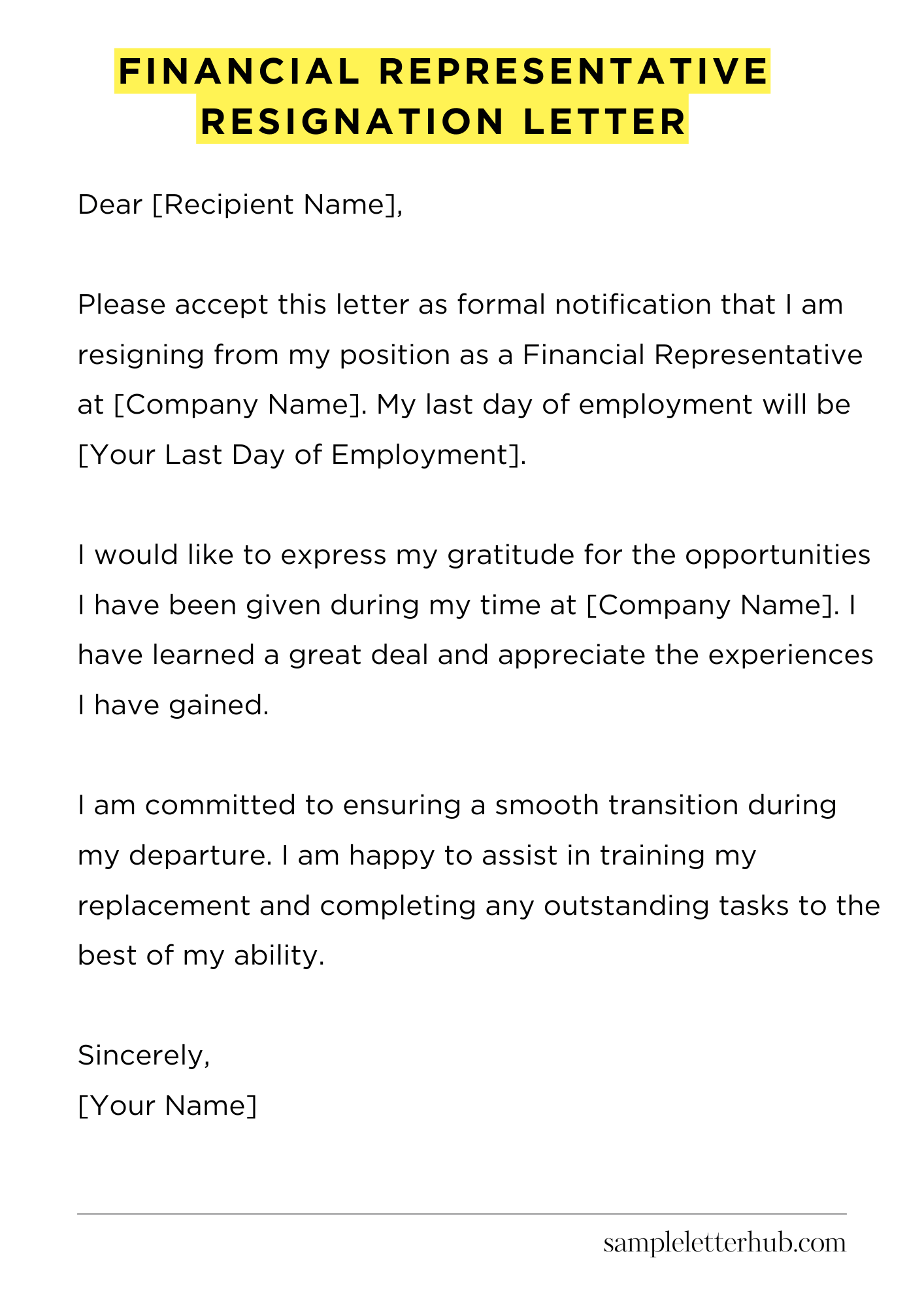
Dear [Recipient Name],
Please accept this letter as formal notification that I am resigning from my position as a Financial Representative at [Company Name]. My last day of employment will be [Your Last Day of Employment].
I would like to express my gratitude for the opportunities I have been given during my time at [Company Name]. I have learned a great deal and appreciate the experiences I have gained.
I am committed to ensuring a smooth transition during my departure. I am happy to assist in training my replacement and completing any outstanding tasks to the best of my ability.
Thank you for your understanding. I wish you and the company all the best in the future.
Sincerely,
[Your Name]
How to Write a Financial Representative Resignation Letter
Why Resignation Letters Matter
Leaving a job is a big decision. You might be moving on to something new, or maybe you’re just ready for a change. Whatever the reason, you need to resign, and the financial world has specific expectations. A well-crafted resignation letter is more than just a formality; it’s a professional courtesy and a crucial document.
It’s your official statement of departure, and it helps ensure a smooth transition. Consider it your final handshake with your current employer. This document sets the tone for your future professional relationships. It can also help safeguard your reputation.
Essential Elements: What to Include
Your resignation letter needs to be clear, concise, and professional. Start with your name, address, and the date. Next, address the letter to your direct supervisor or the appropriate hiring manager. Keep it brief. Begin by clearly stating your intention to resign from your position as a Financial Representative.
Specify your last day of employment. This is critical. Beyond the basics, you should express gratitude for the opportunity to have worked at the company. Mention any specific skills or experiences you gained. Briefly address the transition. Offer to assist in the handover process to ensure a seamless workflow. Always remember to maintain a professional tone.
Structuring Your Letter: A Step-by-Step Guide
Let’s break down the structure. First, the heading: your contact information, the date, and the recipient’s information. Next, the greeting: “Dear [Manager’s Name],” is standard. The body of the letter is where you’ll state your resignation, last day, and express thanks. Keep the body short and to the point.
Consider including a brief offer to assist with the transition of your tasks. Then comes the closing, something like “Sincerely,” or “Respectfully,” followed by your signature and your typed name. Proofread meticulously! Errors here can undermine your professionalism.
Crafting the Right Tone: Professionalism is Key
Professionalism is not just about what you say, but also how you say it. Avoid negativity. Even if you’re unhappy, focus on positive aspects. Keep the language respectful and polite. Steer clear of any disparaging remarks about your colleagues or the company. Focus on your future, not past grievances.
A professional tone reflects positively on you and can help maintain a positive relationship with your former employer. It’s better for your future. Always proofread everything. Make it a habit. Consider asking someone you trust to review it before you send it.
Beyond the Letter: Further Considerations
Your resignation letter is just the beginning. Before submitting, it’s wise to review your employment contract. Understand any clauses related to non-compete agreements or confidentiality. Prepare for an exit interview if one is scheduled. This is an opportunity to provide constructive feedback, if you choose.
Remember to collect any personal belongings, and return company property. Finally, maintain a positive attitude throughout the process. This helps in building and preserving your professional image. Planning your departure can often feel stressful. But remember a well-executed transition often helps your future goals. Make sure you follow these steps.
FAQs about Financial Representative resignation letter
How much notice should I give in my financial representative resignation letter?
The standard notice period for a financial representative resignation is typically two weeks. However, this can vary based on your employment contract, company policy, or industry standards.
Carefully review your employment agreement to determine the required notice period. Providing more than the minimum notice, if possible, can be beneficial for maintaining a positive relationship with your employer.
What should be included in a financial representative resignation letter?
Your resignation letter should be concise and professional. It should clearly state your intention to resign, the effective date of your resignation, and a brief expression of gratitude for the opportunity.
You may also want to offer assistance with the transition process. It’s often a good idea to avoid negative comments about the company or your reasons for leaving, unless you have specific legal or ethical obligations.
Do I need to explain why I’m resigning in my financial representative resignation letter?
While not strictly required, you are not generally obligated to provide a detailed explanation for your resignation. Your letter can be brief and focus on the essential information: your intention to leave and your last day.
However, depending on your relationship with your employer, you may choose to offer a general reason, such as “pursuing other opportunities” or “seeking a new career path.” Avoid going into excessive detail that could create conflict or liability.
How should I deliver my financial representative resignation letter?
It is best practice to deliver your resignation letter in writing to your direct supervisor or the appropriate HR representative. You can hand deliver the letter or send it via email, but ensure that you keep a copy for your records.
Consider scheduling a meeting to discuss your resignation with your supervisor after submitting the letter, if that is the accepted practice at your workplace.
Can I rescind my financial representative resignation after submitting the letter?
Rescinding your resignation after submitting the letter is possible, but it depends on several factors. Your employer may or may not accept the rescission. If your resignation has already been accepted and/or a replacement is in the process of being hired, it may be difficult or impossible to retract your decision.
You should speak with your employer promptly and directly if you wish to withdraw your resignation.
Related:
Resignation letter due to rude boss
Resignation letter moving to another state
Resignation letter due to illness of family member
Resignation letter due to study