

A Learning Specialist resignation letter is a formal document. Its purpose is to officially inform an employer about leaving a job. It clearly states the intent to resign. It also includes the last day of employment.
This article is here to help. We’ve got you covered. We’ll explore various examples. You’ll find templates and samples too. Need to craft a letter? This is the right place.
These samples will make it easier. Writing a resignation letter becomes simple. Pick the one that fits best. Adapt it to your specific situation. You can do this!
Learning Specialist Resignation Letter
Below is a sample of a Learning Specialist Resignation Letter:
[Your Name]
[Your Address]
[Your Phone Number]
[Your Email Address]
[Date]
[Hiring Manager Name] (If known, otherwise use title)
[Hiring Manager Title]
[Company Name]
[Company Address]
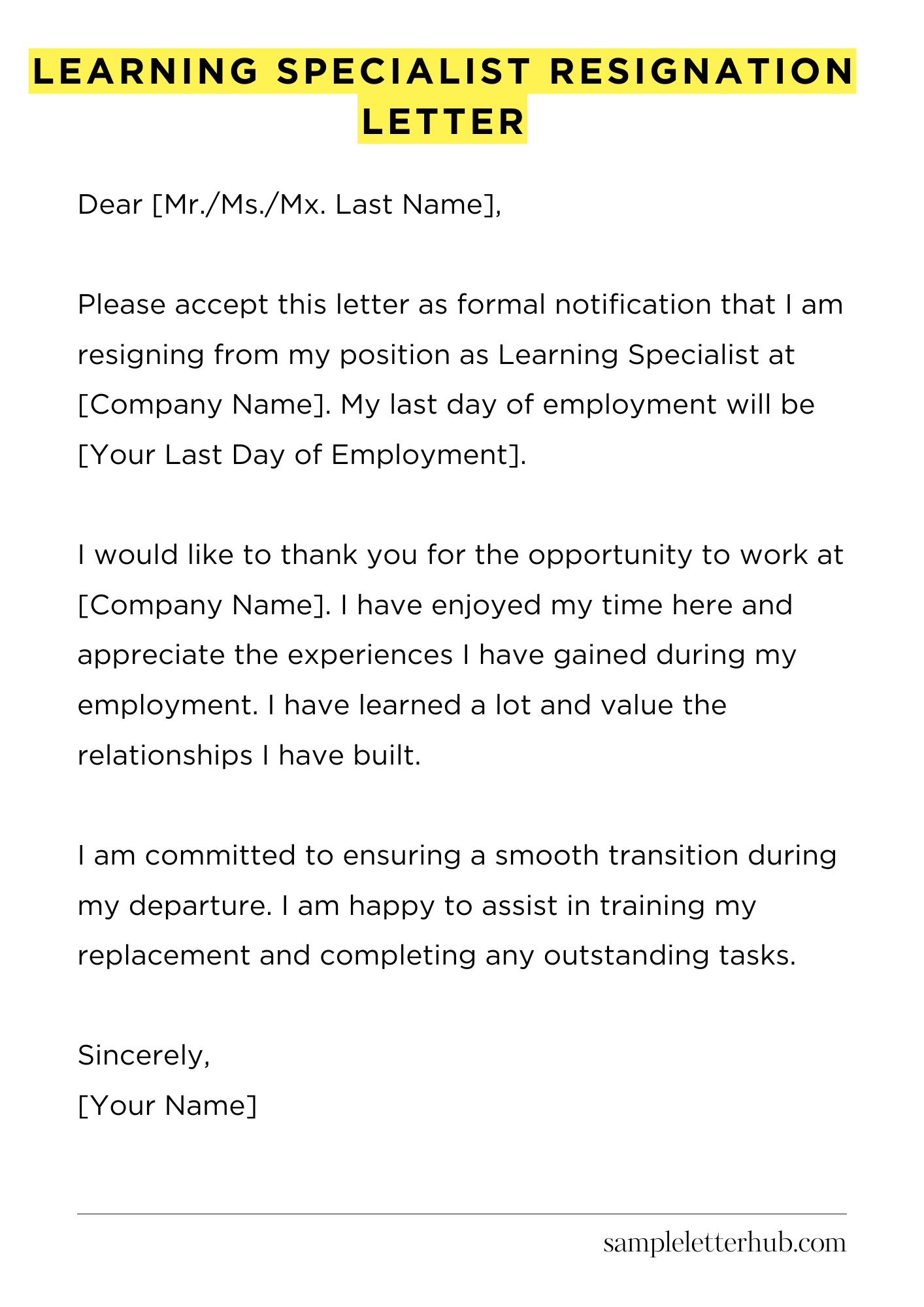
Dear [Mr./Ms./Mx. Last Name],
Please accept this letter as formal notification that I am resigning from my position as Learning Specialist at [Company Name]. My last day of employment will be [Your Last Day of Employment].
I would like to thank you for the opportunity to work at [Company Name]. I have enjoyed my time here and appreciate the experiences I have gained during my employment. I have learned a lot and value the relationships I have built.
I am committed to ensuring a smooth transition during my departure. I am happy to assist in training my replacement and completing any outstanding tasks. Please let me know how I can best support the team during this time.
I wish you and [Company Name] all the best in the future.
Sincerely,
[Your Name]
How to Write a Learning Specialist Resignation Letter
1. Getting Started: The Basics You Need
So, you’re moving on. That’s fantastic! Writing a resignation letter, especially as a Learning Specialist, might seem daunting, but it doesn’t have to be. First things first: keep it professional and polite.
Always. Remember, you might need a reference in the future, and burning bridges is never a good idea. Start with your name, address, date, and the recipient’s information. This sets a formal tone. Briefly state your intention to resign from your position as a Learning Specialist. Keep it straightforward and direct.
2. The Core Content: What to Actually Say
The main body of your letter is crucial. Here, clearly state your last day of employment. This is vitally important. Follow that up with a brief thank you. Express gratitude for the opportunities you’ve been given during your time there. You could mention specific experiences or skills you’ve developed.
For example, “I am grateful for the chance to develop and implement new learning strategies.” Keep your tone positive, even if you are leaving due to negative circumstances. The less you say about those, the better. Briefly, you can also offer to assist with the transition. This shows your commitment to a smooth handover.
3. Formatting is Your Friend: Keeping it Clean
Good formatting makes your letter easy to read. Use a standard business letter format. This is key for professionalism. Start with a formal salutation, like “Dear [Manager’s Name]”. Use clear paragraphs and keep them concise. Avoid long, rambling sentences. They can make your writing difficult to understand.
Double-check your spelling and grammar before sending. Proofreading is your best friend when you are composing the resignation letter. A polished letter reflects well on you. Simple mistakes can undermine your message.
4. Tailoring Your Letter: Consider Your Circumstances
Every situation is unique. Consider your specific reasons for leaving, but avoid going into too much detail. You do not need to explain every reason in the letter. If you have specific projects or tasks you’re willing to assist with, mention them. If you’re leaving for a new job, simply state you’ve accepted another position.
Do not compare your current job to a new one. Maintain neutrality. If you are open to discussing your departure further, you can include a brief statement such as, “I am happy to discuss my resignation further at your convenience.” If you leave on good terms, you can also offer to provide a reference.
5. Wrapping Up: Finalizing and Submitting
End your letter with a professional closing. Use “Sincerely,” or “Best regards,” followed by your full name. Sign the letter if you are submitting a physical copy. Consider delivering your letter in person to your manager. This allows you to have a face-to-face conversation.
If that is not possible, email is perfectly acceptable, but make sure to obtain a confirmation of receipt. Keep a copy of your resignation letter for your records. This is helpful for your own personal files. Remember, your resignation letter is a formal document. Make sure to keep it professional, courteous, and accurate. Good luck with your next endeavor!
FAQs about Learning Specialist Resignation Letter
What is the primary purpose of a Learning Specialist resignation letter?
The primary purpose of a Learning Specialist resignation letter is to formally notify the employer of the employee’s intent to leave their position. It serves as a written record of the resignation, the effective date of departure, and, often, a brief statement of gratitude or explanation for leaving.
What key information should be included in a Learning Specialist resignation letter?
Essential components of a resignation letter include the formal announcement of resignation, the Learning Specialist’s name and title, the effective date of the resignation, and the recipient’s name and title (usually the supervisor or HR representative).
It’s also typical to express appreciation for the opportunity and, optionally, provide a brief, professional explanation for leaving or offer assistance during the transition period.
How should a Learning Specialist address their resignation letter to their employer?
The letter should be addressed professionally, typically to the direct supervisor or Human Resources department. Use their correct title and name. A standard salutation like “Dear [Recipient’s Name]” or “Dear Mr./Ms. [Last Name]” is appropriate.
Is it necessary to provide a reason for resigning in a Learning Specialist resignation letter?
Providing a reason is generally optional. However, if the Learning Specialist wishes to offer a brief, professional explanation, they may do so. This could include citing a career change, personal reasons, or pursuing another opportunity. Keep it concise and avoid negativity.
How can a Learning Specialist ensure a professional and positive resignation process?
To ensure a professional and positive resignation process, a Learning Specialist should write a clear, concise, and respectful letter. They should adhere to the notice period specified in their employment contract or company policy. They should also remain professional during the transition period and be willing to assist with training a replacement or completing ongoing projects.
Related:
Resignation letter due to rude boss
Resignation letter moving to another state
Resignation letter due to illness of family member
Resignation letter due to study