

A “Legal Advisor Resignation Letter” is a formal document. It is written by a legal advisor. The purpose? To officially inform their employer of their decision to leave their position. This letter serves as a crucial step in the resignation process.
Feeling unsure how to start your own letter? Don’t worry, we’ve got you covered. We understand writing these letters can feel daunting. That’s why we’re sharing various templates.
We will provide examples and samples. Use them to craft your own perfect resignation letter. Make your exit smooth and professional with our easy-to-use resources.
Legal Advisor Resignation Letter
Below is a sample of a Legal Advisor Resignation Letter:
[Your Name]
[Your Address]
[Your Phone Number]
[Your Email Address]
[Date]
[Recipient’s Name]
[Recipient’s Title]
[Company Name]
[Company Address]
Dear [Recipient’s Name],
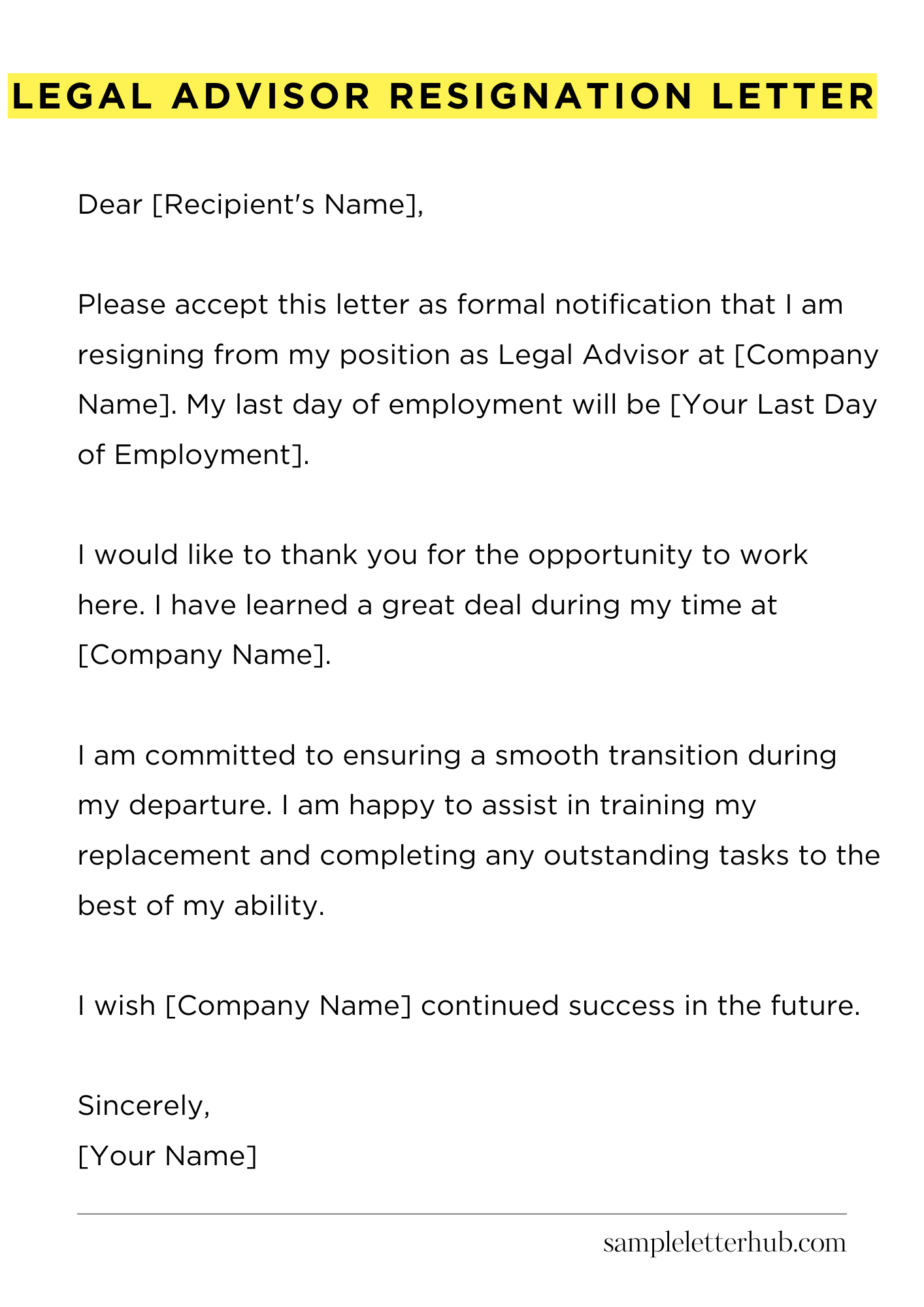
Please accept this letter as formal notification that I am resigning from my position as Legal Advisor at [Company Name]. My last day of employment will be [Your Last Day of Employment].
I would like to thank you for the opportunity to work here. I have learned a great deal during my time at [Company Name].
I am committed to ensuring a smooth transition during my departure. I am happy to assist in training my replacement and completing any outstanding tasks to the best of my ability.
I wish [Company Name] continued success in the future.
Sincerely,
[Your Name]
How to Write a Legal Advisor Resignation Letter
Understanding the Importance
Resigning from any position, especially one as crucial as a Legal Advisor, requires careful consideration. You’re not just leaving a job; you are severing a professional relationship. A well-crafted resignation letter is more than just a formality; it is a vital part of your professional reputation.
Think of it as your final, significant piece of work while employed there. This document can impact future opportunities and relationships. Therefore, it is important to get it right.
Essential Elements: What to Include
So, what should you include? First, state your intention to resign clearly. This should be concise and direct. Specify the date of your last day of employment. This is crucial for both you and your employer. Next, you should express your gratitude for the opportunity. Mentioning specific experiences or skills gained can personalize it.
Keep the tone professional, regardless of your personal feelings. Briefly summarize your reasons for leaving if you want. It’s not always necessary, but it might be useful. Finally, offer assistance during the transition period. This shows professionalism and consideration for your employer. Don’t forget to include your contact information.
Structuring Your Letter: A Clear and Concise Approach
Formatting matters. Always start with a formal business letter format. Include your contact information and the date at the top. Then, address the letter to the appropriate person, usually your direct supervisor or HR department.
Begin with a clear statement of your resignation and your last day. This is the main point! Use a polite and professional tone throughout the letter. Keep the paragraphs short and easy to read. Proofread carefully.
Check for grammatical errors and typos. Double-check all dates and names. Your attention to detail will reflect well on you. This makes a great first and last impression.
Common Mistakes to Avoid
Avoid negativity at all costs. Don’t dwell on complaints or grievances. Focus on the future, not the past. Don’t burn bridges. You never know when you might need a reference or encounter these people again. Do not overshare information about your new job or future plans. Keep the focus on your resignation and the transition.
Avoid making demands or ultimatums in the letter. Stay polite and respectful. Also, do not forget to keep a copy of the letter for your records. Remember, this is your professional history.
Sample Template and Customization Tips
Here’s a basic template:
[Your Name]
[Your Address]
[Your Phone Number]
[Your Email Address]
[Date]
[Recipient’s Name]
[Recipient’s Title]
[Company Name]
[Company Address]
Dear [Mr./Ms./Mx. Last Name],
Please accept this letter as formal notification that I am resigning from my position as Legal Advisor at [Company Name], effective [Your Last Day of Employment].
[Optional: Briefly express gratitude or mention a positive aspect of your employment. For example: “I am grateful for the opportunities I’ve had during my time here.”]
[Optional: Briefly explain your reasons for leaving.]
I am committed to ensuring a smooth transition during my departure. I am available to assist with the handover of my responsibilities and to train my replacement.
Thank you for the opportunity to work at [Company Name]. I wish the company continued success in the future.
Sincerely,
[Your Signature]
[Your Typed Name]
Customize this template with your specific details. Be sure it reflects your personal tone. Adapt it to fit your specific situation. This ensures it’s professional and personal. Good luck!
FAQs about Legal Advisor resignation letter
How much notice should a Legal Advisor give when resigning?
The notice period a Legal Advisor should provide is typically dictated by their employment contract or local labor laws. Common notice periods range from two weeks to one or two months.
It is crucial to review the employment agreement to determine the specific requirements. Failing to give the proper notice could result in financial penalties or damage to professional reputation.
What key elements should be included in a Legal Advisor resignation letter?
A well-crafted resignation letter should include: a clear and concise statement of resignation, the effective date of departure, a brief expression of gratitude for the opportunity, and any relevant details regarding the handover of responsibilities. It is generally advisable to avoid negative comments about the employer or colleagues. If appropriate, offer assistance with the transition process.
Should a Legal Advisor explain the reason for their resignation in the letter?
While not always mandatory, a Legal Advisor may choose to briefly state the reason for their resignation. This could be to pursue a new opportunity, relocate, or for personal reasons. However, it’s generally recommended to keep the explanation concise and professional. Avoid lengthy explanations or criticisms of the employer or workplace.
How should a Legal Advisor handle the handover of their responsibilities?
The resignation letter should mention a willingness to assist with the handover process. This might involve training a replacement, documenting ongoing cases, or providing contact information for clients.
It is critical to cooperate fully with the employer during the handover to ensure a smooth transition and maintain professionalism. Documenting all the activities to avoid any future conflict.
What are the legal considerations a Legal Advisor needs to address in their resignation?
A Legal Advisor should be aware of any non-compete agreements or confidentiality clauses in their employment contract. They must adhere to these stipulations to avoid legal repercussions.
It’s also important to return all company property, including documents and electronic devices, before leaving. Additionally, they should be mindful of any ethical obligations regarding client confidentiality.
Related:
Resignation letter due to rude boss
Resignation letter moving to another state
Resignation letter due to illness of family member
Resignation letter due to study