

A Graduate Assistant resignation letter is a formal document. It informs your supervisor of your decision to leave. The purpose is to officially end your employment as a Graduate Assistant. It should be clear and professional.
Need to resign from your Graduate Assistant position? We’ve got you. Writing this type of letter can feel daunting. We’re here to help make it easier.
You’ll find various templates and examples here. These samples cover different scenarios. Use these to craft your perfect resignation letter. Feel confident and prepared as you take the next step.
Graduate Assistant Resignation Letter
Below is a sample of a Graduate Assistant Resignation Letter:
[Your Name]
[Your Address]
[Your Phone Number]
[Your Email Address]
[Date]
[Supervisor’s Name]
[Supervisor’s Title]
[Department Name]
[University Name]
[University Address]
Dear [Supervisor’s Name],
Please accept this letter as formal notification that I am resigning from my position as a Graduate Assistant in the [Department Name] department, effective [Your Last Day of Employment].
I would like to express my gratitude for the opportunity to have worked in this role. I have learned a great deal during my time here and appreciate the support and guidance I have received from you and the department.
I am committed to assisting with the transition process in any way I can to ensure a smooth handover of my responsibilities. I am happy to discuss my duties and any ongoing projects to ensure a seamless workflow.
I wish you and the department all the best in the future.
Sincerely,
[Your Name]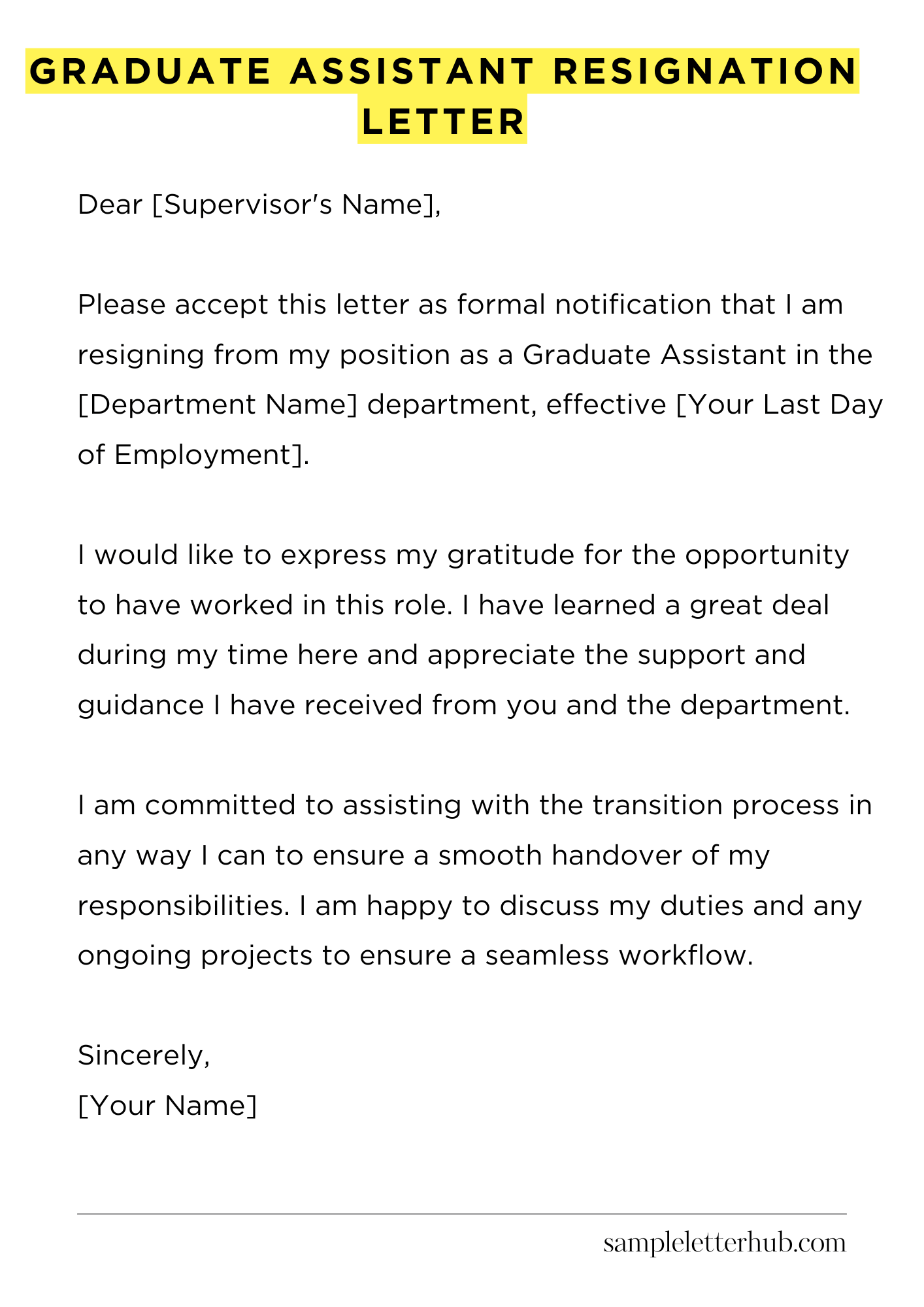
How to Write a Graduate Assistant Resignation Letter
Know Your Audience
Before you even think about putting pen to paper (or fingers to keyboard), you need to consider who you’re writing to. Your resignation letter as a Graduate Assistant isn’t just a formality; it’s a professional statement. It’s a reflection on your time with the department and should be treated accordingly.
Address the letter to your direct supervisor or the relevant person in charge of Graduate Assistants. Using the correct title and spelling their name correctly shows respect and attention to detail. This is important for maintaining a positive relationship as you exit your position.
The Core Components: What to Include
Every resignation letter, regardless of the role, needs certain essential elements. First and foremost, clearly state your intention to resign. This should be direct and unambiguous.
Next, specify your last day of employment. Be sure to consult your contract or the department’s policies regarding the required notice period. Then, express your gratitude. Acknowledge the opportunity you’ve been given as a Graduate Assistant. Briefly mention the skills you’ve gained or the experiences you’ve valued. Finally, keep it simple. Avoid rambling and stick to the facts.
Crafting the Right Tone
The tone of your letter is incredibly important. You want to strike the right balance between professional and personal. Avoid being overly emotional, negative, or bitter. Instead, aim for a tone of appreciation and respect. Even if your experience wasn’t ideal, maintaining a positive attitude reflects well on you.
Proofread your letter carefully to eliminate any typos or grammatical errors. These can detract from the overall impression you create. Use formal language and proper sentence structure.
Offer Assistance and Provide Contact Information
Show your willingness to help with the transition. Offer to assist with training your replacement, completing any outstanding tasks, or providing any relevant information. This demonstrates your professionalism and commitment. Include your contact information (phone number and personal email address).
It’s possible the department might need to contact you after your departure. This makes it easier for them, and it’s simply a good practice.
Finalizing Your Letter: Checklist and Delivery
Before submitting, use a checklist to ensure you’ve covered all the necessary points: Have you stated your resignation? Have you included your last day of employment? Have you expressed your gratitude? Is the tone professional and respectful? Are there any errors in spelling or grammar?
Once you’re confident in your letter, make sure you know the preferred method of delivery. Do they prefer a hard copy, email, or both? Keep a copy of your letter for your records.
Remember, your resignation letter is a crucial step in maintaining a positive professional relationship. Following these guidelines will help ensure a smooth transition and a positive final impression.
FAQs about Graduate Assistant resignation letter
How do I write a Graduate Assistant resignation letter?
A Graduate Assistant resignation letter should be formal and concise. Start by stating your intent to resign, including your name, the position, and the effective date of your resignation.
Express gratitude for the opportunity and mention any specific positive aspects of the experience. You may briefly state your reason for leaving, if desired, but it’s not mandatory. Proofread carefully before submitting.
What information should be included in a Graduate Assistant resignation letter?
The letter should include your name, the position title (Graduate Assistant), the date of the letter, and the effective date of your resignation.
Also, you should include a formal salutation (e.g., “Dear Professor/Supervisor’s Name”). You can briefly acknowledge the positive aspects of the experience and state that you have enjoyed working in the role. Finally, your signature and printed name should be at the end.
How much notice should I give when resigning as a Graduate Assistant?
The amount of notice required varies depending on your program and university policies. Generally, two weeks’ notice is considered standard professional practice. However, review your employment contract or the Graduate Assistant guidelines provided by your department. Some programs may require more or less notice.
If you are unsure, consult your supervisor or the program coordinator.
What if I need to resign as a Graduate Assistant immediately?
While two weeks’ notice is preferred, unexpected circumstances may require immediate resignation. If this is the case, clearly state the reason for your immediate resignation in your letter, if you feel comfortable doing so.
Be aware that immediate resignation may have implications for your funding, future opportunities, or academic standing. Consult with your advisor or the appropriate university office to understand these potential consequences.
Can I use a template for my Graduate Assistant resignation letter?
Yes, using a template is perfectly acceptable as a starting point. Numerous templates are available online. However, always customize the template to fit your specific situation and program requirements.
Make sure you personalize the letter with relevant details and proofread carefully before submitting to avoid any errors or misinterpretations.
Related:
Resignation letter due to rude boss
Resignation letter moving to another state
Resignation letter due to illness of family member
Resignation letter due to study