

A “Campus Representative resignation letter” is a formal document. It is written by a student. The student is resigning from their position. This letter officially communicates their decision. It also outlines the reason for leaving.
We understand it can be tough to put your thoughts into words. That’s why we’re here to help. We’ll be sharing various letter examples. These are designed for different scenarios.
You’ll find sample letters here. We have crafted these to guide you. Whether it’s for academics, personal reasons, or something else. We’ve got you covered.
Campus Representative Resignation Letter
Below is a sample of a Campus Representative Resignation Letter:
[Your Name]
[Your Address]
[Your Phone Number]
[Your Email Address]
[Date]
[Recipient’s Name]
[Recipient’s Title]
[University/Organization Name]
[Organization Address]
Dear [Recipient’s Name],
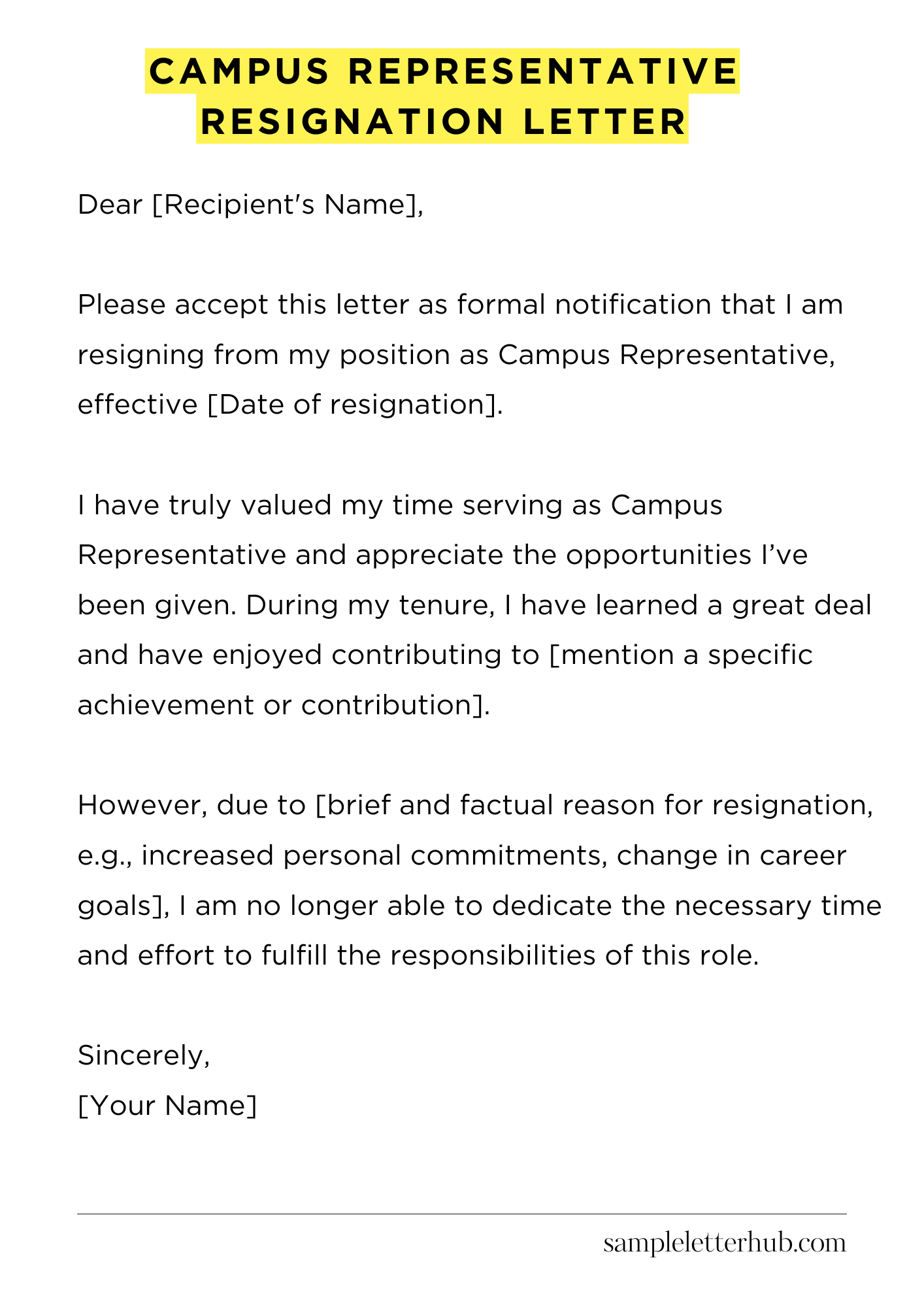
Please accept this letter as formal notification that I am resigning from my position as Campus Representative, effective [Date of resignation].
I have truly valued my time serving as Campus Representative and appreciate the opportunities I’ve been given. During my tenure, I have learned a great deal and have enjoyed contributing to [mention a specific achievement or contribution].
However, due to [brief and factual reason for resignation, e.g., increased personal commitments, change in career goals], I am no longer able to dedicate the necessary time and effort to fulfill the responsibilities of this role.
I am committed to ensuring a smooth transition. I am happy to assist in training my replacement and to provide any necessary information or documentation. Please let me know how I can best facilitate this process.
Thank you for the experience and support. I wish the University/Organization continued success in the future.
Sincerely,
[Your Name]
How to Write a Campus Representative Resignation Letter
Why Resign? Understanding the Need
Being a Campus Representative is a great opportunity. It allows you to build leadership skills and contribute to your university community. However, there are times when resigning becomes necessary.
Maybe you’re facing academic pressure. Perhaps a new job has come along. Or, you could be dealing with personal circumstances that require your full attention. Whatever the reason, resigning is a formal process that should be handled professionally.
Understanding the reasons for your resignation is the first crucial step. Clearly defining this will help you frame your letter appropriately.
Crafting the Perfect Letter: The Essential Components
Your resignation letter is a formal document. It needs to be clear, concise, and professional. It should also be respectful. Here’s what needs to be included:
- Your Name and Contact Information: Start with your full name, address, phone number, and email address. This allows them to contact you if needed.
- Date: Include the date you are writing the letter. This is very important.
- Recipient’s Information: Address the letter to the appropriate person, such as the Student Activities Director or the advisor of the campus representative program. Include their name, title, and department/office.
- Formal Salutation: Begin with a professional greeting, such as “Dear [Name of Recipient].”
- Clear Statement of Resignation: State clearly that you are resigning from your position as a Campus Representative. Be specific.
- Effective Date of Resignation: Specify the last day you will be serving in the role. Provide ample notice, if possible, allowing for a smooth transition.
- Brief Reason (Optional): While not always required, a brief, professional reason for your resignation can be included. Keep it short.
- Gratitude: Express your gratitude for the opportunity to serve as a Campus Representative. Acknowledge the experience and any positive aspects of the role.
- Offer of Assistance: Offer to assist with the transition. This shows professionalism. Offer to train the new candidate.
- Formal Closing: End with a professional closing, such as “Sincerely” or “Best regards.”
- Your Signature: Sign your name above your typed name.
These elements are all required to create a perfect resignation letter.
Formatting for Success: Make It Look Good
Formatting is important. Your letter should be easy to read and presentable. Use a professional font like Times New Roman or Arial. Use 12-point font size. The letter should be single-spaced with a double space between paragraphs. Be sure to use standard margins (1 inch on all sides). Proofread your letter carefully for any spelling or grammatical errors before sending it.
A well-formatted letter is a sign of respect and professionalism.
The Tone Matters: Maintaining Professionalism
Always maintain a positive and professional tone. Avoid negativity, even if you had negative experiences. Keep the letter concise and to the point. Focus on the facts. Express your gratitude for the opportunity. Refrain from making any criticisms. A positive tone is key to leaving a good impression, even when you are leaving the role.
Your goal is to leave on good terms and maintain positive relationships.
Delivering Your Letter: Procedures and Follow-Up
Once your letter is ready, make sure you know the proper channels. Find out who the letter should be submitted to. It may be your supervisor. It could be a specific office on campus. Submit your letter in person or via email, depending on the requirements. Be sure to keep a copy of your letter for your records.
Consider scheduling a meeting with the recipient after submitting the letter. This allows you to discuss your resignation in person. Offer your assistance in the transition. This will make your exit smoother.
Proper delivery and follow-up are critical. They showcase your professionalism and ensure a seamless transition for all involved.
FAQs about Campus Representative resignation letter
Why is it important to write a formal resignation letter as a Campus Representative?
A formal resignation letter is crucial for several reasons. It provides a documented record of your departure, officially communicating your decision to resign.
This protects both you and the organization. It allows for a smooth transition by providing ample notice and helps clarify the end date of your employment. This is professional courtesy and provides a clear and unambiguous record of your resignation.
What key elements should be included in a Campus Representative resignation letter?
The essential components of a Campus Representative resignation letter include: a clear statement of your intent to resign, the effective date of your resignation, a brief expression of gratitude for the opportunity, and any relevant details concerning the handover of responsibilities. Providing contact information is also a good practice.
How much notice should a Campus Representative give when resigning?
The amount of notice required usually depends on your contract, company policy, and any relevant legal guidelines. However, it is customary to provide at least two weeks’ notice, unless otherwise stipulated. Consulting your employment agreement or human resources department is advisable to confirm the required notice period.
What if I want to explain the reasons for my resignation in the letter?
While not mandatory, you may choose to briefly explain your reasons for resigning. Keep the tone positive and professional. Focus on future opportunities or personal circumstances, rather than making negative comments about the organization or its members. If you are comfortable, you can state your reason for leaving.
What should be the tone of a Campus Representative resignation letter?
The tone of your resignation letter should be professional, respectful, and positive. Even if you have had negative experiences, avoid making complaints or criticisms. Express gratitude for the opportunities you have had and maintain a courteous demeanor. A well-written letter reflects positively on you and allows you to leave on good terms.
Related:
Resignation letter due to rude boss
Resignation letter moving to another state
Resignation letter due to illness of family member
Resignation letter due to study