


So, you’re an Equity Research Analyst looking to move on? You’ll need a resignation letter. This document formally communicates your decision to leave your current role. Its main purpose is to notify your employer of your departure. It should also state your last day of employment.
Crafting the perfect resignation can feel tricky. Luckily, we’ve got you covered. We’ve compiled examples, samples, and templates for Equity Research Analyst resignation letters. You’ll find options for various situations. Feel free to use them as inspiration.
Our goal is simple. We aim to help you write a professional resignation letter quickly. Use these samples to create your own. Make the process easy and stress-free. Good luck with your next chapter!
Equity Research Analyst Resignation Letter
Below is a sample of a Equity Research Analyst Resignation Letter:
[Your Name]
[Your Address]
[Your Phone Number]
[Your Email Address]
[Date]
[Hiring Manager Name] (If known, otherwise use title)
[Hiring Manager Title]
[Company Name]
[Company Address]
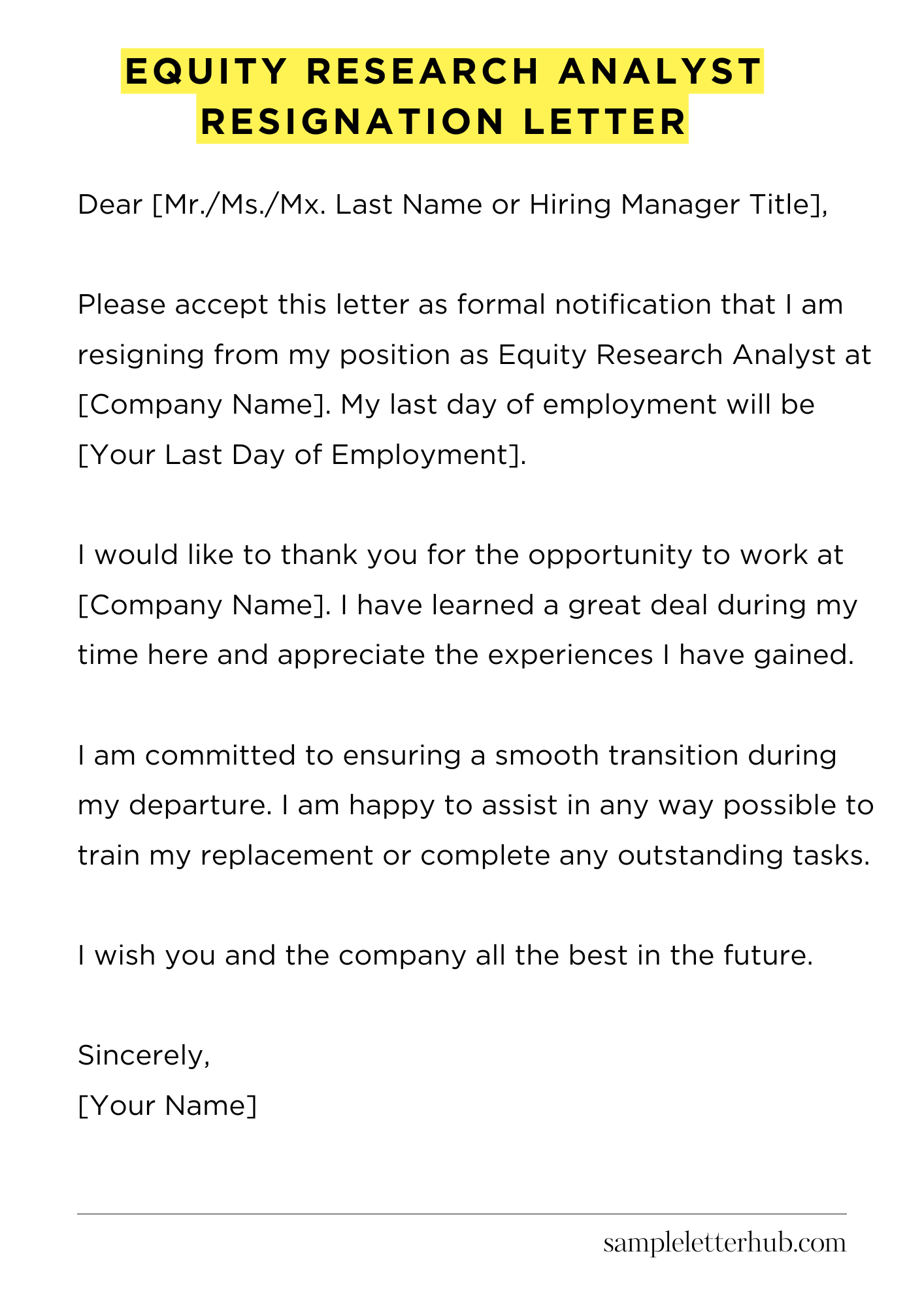
Dear [Mr./Ms./Mx. Last Name or Hiring Manager Title],
Please accept this letter as formal notification that I am resigning from my position as Equity Research Analyst at [Company Name]. My last day of employment will be [Your Last Day of Employment].
I would like to thank you for the opportunity to work at [Company Name]. I have learned a great deal during my time here and appreciate the experiences I have gained.
I am committed to ensuring a smooth transition during my departure. I am happy to assist in any way possible to train my replacement or complete any outstanding tasks.
I wish you and the company all the best in the future.
Sincerely,
[Your Name]
How to Write an Equity Research Analyst Resignation Letter
1. Keeping it Concise and Clear
Resigning from any job, especially one as demanding as an Equity Research Analyst, requires a professional approach. Your resignation letter is a formal document. It is important to remember that this letter serves as a crucial piece of documentation.
You want to keep it straightforward and to the point. No need for lengthy explanations of your dissatisfaction. Your primary goal is to clearly state your intention to leave your position.
Begin by formally stating your resignation. Provide your name, the date, and the specific role you are resigning from. Next, include the date of your last day of employment. This is the official date when you will no longer be working for the company. Use simple, direct language. Avoid any ambiguity.
2. Expressing Gratitude and Professionalism
Regardless of your reasons for leaving, maintaining a professional tone is paramount. It’s always good practice to express your gratitude. Acknowledge the opportunities you’ve been given during your time with the company. Even if you faced challenges, focus on the positive aspects of your experience.
Consider mentioning what you’ve learned. Did you develop specific skills? Did you gain valuable knowledge? Briefly highlight these accomplishments. This displays maturity and respect. This helps maintain a positive relationship. Avoid making negative statements or accusations. This will reflect poorly on you.
3. Key Elements to Include
There are some essential components that should be included in your Equity Research Analyst resignation letter. First, your official resignation statement, as mentioned earlier. Then, include the date of your last day of employment. Clearly state your intent to leave.
You’ll also want to address the transition process. Offer your assistance in training your replacement. Offer to help. If you’re willing to assist with any ongoing projects, mention it. Next, confirm your willingness to cooperate with the company during the transition period. Finally, include your contact information. This makes communication easier.
4. Formatting Your Letter Correctly
Proper formatting is vital for a professional resignation letter. Always use a formal business letter format. Start with your contact information. Place it at the top. This includes your name, address, phone number, and email. Then, add the date of the letter.
Address the letter to your direct supervisor or the appropriate HR representative. Use a professional salutation. This will ensure that the letter goes to the correct individual. Maintain a standard font, such as Times New Roman or Arial.
Keep the font size between 10 and 12 points. Use standard margins for readability. Proofread the entire letter carefully. Check for any grammatical errors or typos before sending.
5. Final Steps and Considerations
Before submitting your resignation letter, take a moment to review it carefully. Make sure it accurately reflects your intentions. Once you are satisfied with the content, print a hard copy. Then, keep a copy for your records. Consider discussing your resignation with your supervisor. Provide them with a copy of the letter.
Be prepared for a possible counteroffer from the company. Think about your goals and reasons for leaving. Stick to your decision if you are certain. Finally, be polite and helpful. This will leave a positive lasting impression. Remember, your final interactions with the company can impact your future career prospects.
FAQs about Equity Research Analyst Resignation Letter
What is the primary purpose of an Equity Research Analyst resignation letter?
The primary purpose of an Equity Research Analyst resignation letter is to formally notify the employer of the employee’s intent to leave their position. It serves as an official record of the resignation, the last day of employment, and often includes a brief expression of gratitude for the opportunity to work at the firm.
What key information should be included in an Equity Research Analyst resignation letter?
Essential components include a clear statement of resignation, the effective date of departure, a thank you to the employer, and often a brief statement regarding future plans. It should also include contact information for any follow-up.
Should an Equity Research Analyst provide a reason for resigning in their letter?
While not mandatory, providing a brief, professional reason can be beneficial. It’s often advisable to keep the explanation concise and positive, focusing on personal or professional growth, a new opportunity, or a change in circumstances. Avoid overly negative or detailed explanations.
How much notice should an Equity Research Analyst give in their resignation letter?
The standard notice period varies, but typically, two weeks is considered professional. However, the employment contract or company policy may dictate a longer notice period. It is crucial to review the employment agreement to adhere to any specified requirements.
What should an Equity Research Analyst avoid including in their resignation letter?
Avoid including negative comments about the company, colleagues, or management. Don’t mention specific details about the new job if you have one. Also, refrain from making demands or attempting to negotiate terms of separation in the resignation letter itself. The letter should maintain a professional and courteous tone throughout.
Related:
Resignation letter due to rude boss
Resignation letter moving to another state
Resignation letter due to illness of family member
Resignation letter due to study