

A “Private Banker resignation letter” is a formal document. It is written by a private banker. Its purpose is to officially inform their employer of their intention to leave their job. The letter starts the process of their departure. It also details the last day of employment.
Finding the right words can be tough. We understand. That is why we are here to help. This article offers various samples. They range in style and tone. You can use them as a starting point.
Crafting a resignation letter should not be stressful. We provide templates. They make the writing process simple. You can easily adapt them. Use these examples to create your own letter.
Private Banker Resignation Letter
Below is a sample of a Private Banker Resignation Letter:
[Your Name]
[Your Address]
[Your Phone Number]
[Your Email Address]
[Date]
[Bank Manager’s Name] (or relevant person)
[Bank Name]
[Bank Address]
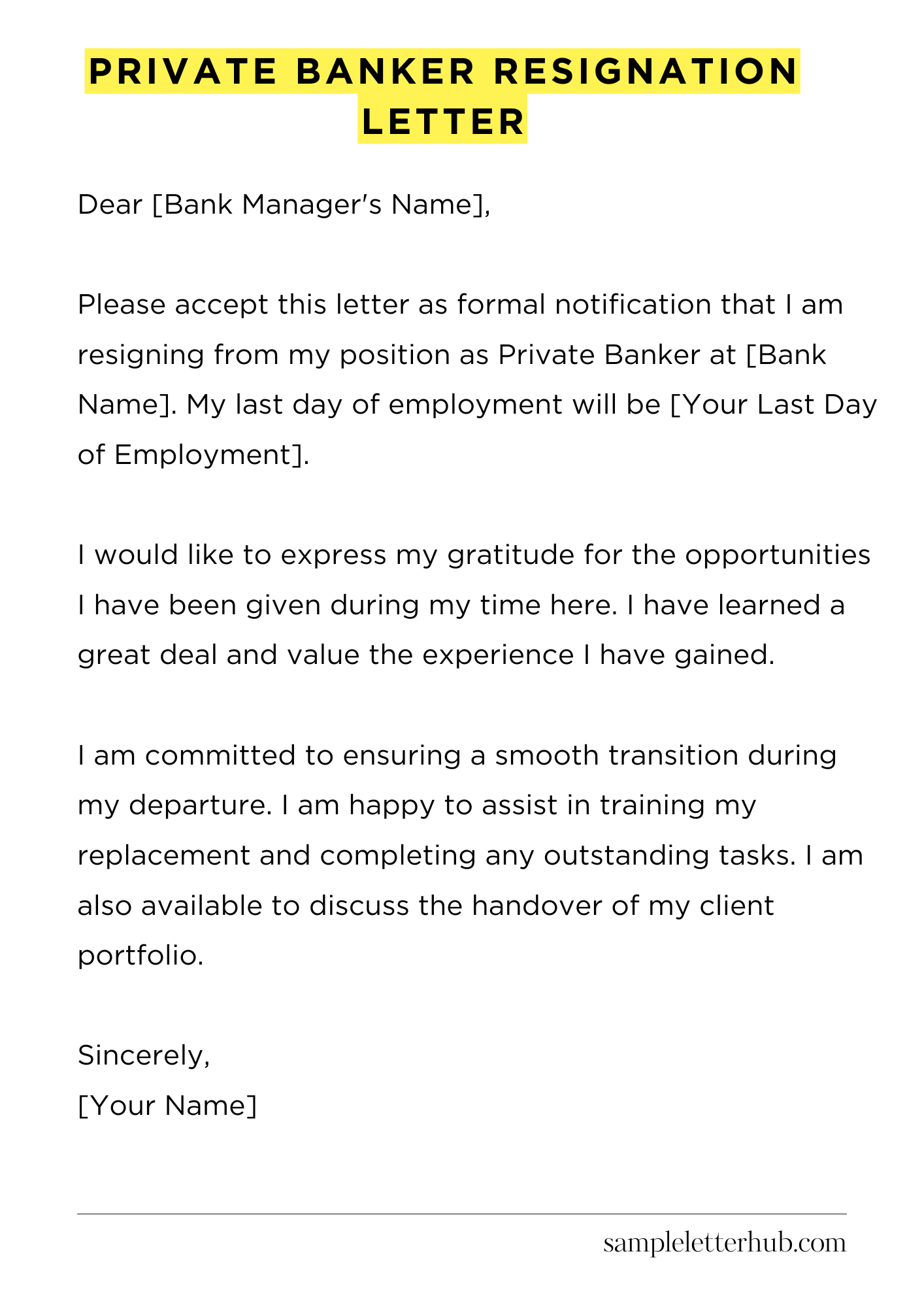
Dear [Bank Manager’s Name],
Please accept this letter as formal notification that I am resigning from my position as Private Banker at [Bank Name]. My last day of employment will be [Your Last Day of Employment].
I would like to express my gratitude for the opportunities I have been given during my time here. I have learned a great deal and value the experience I have gained.
I am committed to ensuring a smooth transition during my departure. I am happy to assist in training my replacement and completing any outstanding tasks. I am also available to discuss the handover of my client portfolio.
I wish you and the bank all the best in the future.
Sincerely,
[Your Name]
How to Write a Private Banker Resignation Letter
1. Grasping the Basics: Why Your Letter Matters
Leaving a job as a Private Banker requires finesse. Your resignation letter isn’t just about saying goodbye; it’s a professional courtesy. It’s a formal record of your departure. A well-crafted letter ensures a smooth transition. Consider it your final professional impression. It protects your reputation in the banking world. A poorly written letter can burn bridges. You certainly don’t want that.
2. Crafting the Core: What to Include
Your letter should be clear, concise, and professional. Start with a direct statement of your resignation. State your effective last day of employment. This is crucial for payroll and handover purposes.
Briefly express your gratitude for the opportunity. Mention any positive experiences you’ve had. Then, offer to assist with the transition. If you’re willing, this shows professionalism. Provide your contact information for any follow-up.
3. Sample Structure: A Template for Success
Here’s a basic structure to guide you. Remember to personalize it to your situation. Begin with your contact information. Then, the date and the recipient’s information. Next, the formal salutation: “Dear [Manager’s Name]”. State your intention to resign. Include your last day of employment. Briefly mention your appreciation.
Offer assistance with the handover process. End with a professional closing, such as “Sincerely” or “Best Regards,” followed by your name and signature.
4. Avoiding Pitfalls: Things to Watch Out For
Avoid negativity, even if you had a negative experience. Keep the tone professional. Do not burn bridges. Do not include any personal grievances. Focus on the facts. Don’t disclose sensitive information or client details. Keep it brief. Double-check for grammatical errors and typos. Proofread carefully before sending it. Always keep a copy for your records.
5. Taking the Next Step: Beyond the Letter
Once you’ve submitted your letter, prepare for the next steps. This might include an exit interview. Be prepared to answer questions. Maintain a positive attitude. Cooperate with the handover process. You will want to leave on good terms. Networking is key. Update your LinkedIn profile. Start thinking about your next move. This is a critical time for your career.
FAQs about Private Banker resignation letter
What is the most important information to include in a Private Banker resignation letter?
The most crucial elements of a Private Banker resignation letter are a clear and concise statement of your intent to resign, the effective date of your resignation, and a professional expression of gratitude for the opportunity to have worked at the company.
Additionally, it should include any specific requirements outlined in your employment agreement or company policy regarding the handover of client accounts and other responsibilities.
How far in advance should a Private Banker submit their resignation letter?
The standard practice for submitting a resignation letter is typically two weeks’ notice, but this can vary depending on your employment contract or company policy.
Some institutions may require a longer notice period, especially for senior roles with significant client responsibilities. It is best to review your employment agreement to ascertain the specific requirements.
What should a Private Banker avoid including in their resignation letter?
A Private Banker should avoid including negative comments about their employer, colleagues, or the company culture. It’s best to maintain a professional tone throughout the letter.
Avoid burning bridges. Steer clear of revealing confidential information, sharing the reasons for leaving in detail, or listing potential issues with the company. Instead, keep the reasons general and focus on your future plans.
How should a Private Banker handle the transition of their client accounts and responsibilities?
Your resignation letter should briefly mention your willingness to assist with the transition of your client accounts and responsibilities. Upon submitting your letter, proactively work with your manager to facilitate a smooth handover.
This may involve training your replacement, documenting client information, and coordinating meetings to introduce clients to their new Private Banker. Adhering to all compliance regulations and client confidentiality standards is paramount throughout this process.
Is it necessary to state the reason for leaving in a Private Banker resignation letter?
While not mandatory, it is usually wise to state a general reason for leaving, such as “pursuing other opportunities” or “seeking a new career path.” You do not need to provide a detailed explanation. Keeping your reason general protects your privacy and maintains a professional tone, unless your company requires a specific explanation or exit interview.
Related:
Resignation letter due to rude boss
Resignation letter moving to another state
Resignation letter due to illness of family member
Resignation letter due to study