

So, you’re a Project Assistant and ready to move on. A Project Assistant resignation letter is a formal document. It informs your employer of your decision to leave your job. The purpose? To officially communicate your departure and end your employment gracefully.
Writing this letter can feel tricky. You want to be professional and clear. You also want to leave on good terms. Don’t worry!
We’ve got you covered. This article offers several project assistant resignation letter templates. You’ll find different examples. They cater to various situations. Use these samples to create your perfect letter.
Project Assistant Resignation Letter
Below is a sample of a Project Assistant Resignation Letter:
[Your Name]
[Your Address]
[Your Phone Number]
[Your Email Address]
[Date]
[Recipient’s Name] (If known, otherwise use title)
[Recipient’s Title]
[Company Name]
[Company Address]
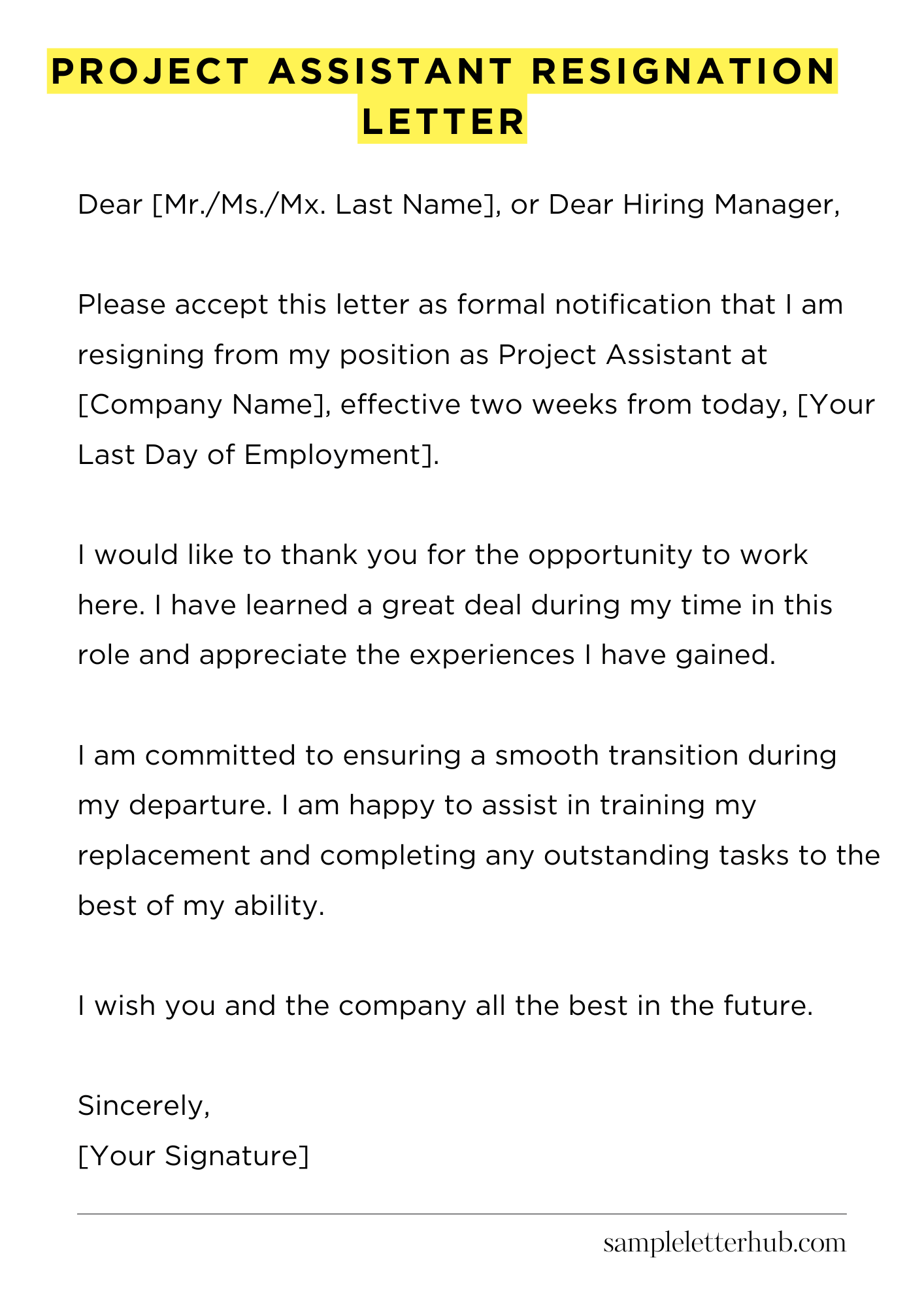
Dear [Mr./Ms./Mx. Last Name], or Dear Hiring Manager,
Please accept this letter as formal notification that I am resigning from my position as Project Assistant at [Company Name], effective two weeks from today, [Your Last Day of Employment].
I would like to thank you for the opportunity to work here. I have learned a great deal during my time in this role and appreciate the experiences I have gained.
I am committed to ensuring a smooth transition during my departure. I am happy to assist in training my replacement and completing any outstanding tasks to the best of my ability.
I wish you and the company all the best in the future.
Sincerely,
[Your Signature]
How to Write Project Assistant Resignation Letter
So, you’re moving on! Leaving your role as a Project Assistant? That’s great! Whether it’s for a new opportunity, a change in career direction, or personal reasons, you’ll need to write a resignation letter. This is more than just a formality; it’s a professional courtesy and a crucial step in ensuring a smooth departure.
A well-crafted letter can also help you maintain positive relationships with your former colleagues and employer. It is absolutely essential to follow specific guidelines.
1. Get Started: The Basics First
Your resignation letter needs to be clear, concise, and professional. Think of it as your final official communication. It should state your intention to resign and the effective date of your resignation. Also, it should be addressed to the appropriate person, usually your direct supervisor or the HR department.
Don’t forget your contact information. Keep it simple and direct; no need to over-complicate things here. Consider using a professional font like Times New Roman or Arial and stick to a standard business letter format. Your supervisor should clearly understand your intent.
2. The Core Content: What to Include
The heart of your letter lies in its content. Start with a clear and direct statement of your resignation. For instance, “Please accept this letter as formal notification that I am resigning from my position as Project Assistant.” Following this, clearly state your last day of employment.
This is critical. Make it as specific as possible – “My last day of employment will be [Date].” Next, express your gratitude for the opportunity.
This is a nice gesture. Thank your employer for the experience and the opportunities you’ve been given. Briefly mention any key accomplishments you are proud of, it is a good idea to show your efforts and contributions. You might consider including your willingness to assist with the transition.
It can be something like, “I am committed to making this transition as smooth as possible.”
3. Keeping It Positive: Maintain a Professional Tone
Even if your experience wasn’t entirely positive, keep your letter professional and positive. Avoid negativity. Avoid criticizing your employer or colleagues.
Focus on the future and your personal growth. Expressing gratitude is always a good idea. Even if your experience wasn’t ideal, finding something positive to say can leave a lasting good impression. This helps maintain a good relationship.
Remember, the world is small, and you never know when your paths may cross again. Also, you can keep the tone formal. It is extremely important.
4. Polishing the Details: Proofreading and Format
Before you send your letter, proofread it carefully. Check for any typos, grammatical errors, and formatting inconsistencies. A polished letter demonstrates attention to detail and professionalism. You want to make a good impression. Read it aloud to catch any awkward phrasing.
Ensure the format is clean and easy to read. Use a business letter format. Review your letter several times; ask a friend or colleague to read it too. It is worth it, to get everything right.
5. Delivery and Follow-Up: The Final Steps
Once you’re satisfied with your letter, deliver it to the appropriate person, as discussed earlier. If possible, hand-deliver it or email it. Make sure you keep a copy for your records. After submitting your letter, be prepared to discuss your departure with your supervisor.
Be prepared to answer questions. Also, be cooperative and professional during your remaining time. You might consider sending a thank-you note if you received help or guidance. Always leave on a positive note, maintaining a good relationship with your employer can provide future benefits.
FAQs about Project Assistant resignation letter
Navigating the resignation process can be tricky, especially when crafting the perfect letter. Here are some of the most common questions regarding Project Assistant resignation letters, along with concise answers to help guide you.
What should be included in a Project Assistant resignation letter?
A standard resignation letter for a Project Assistant should include: your formal announcement of resignation, the effective date of your departure, a brief statement of gratitude for the opportunity, and any necessary information about the handover process or outstanding tasks.
You may also choose to include a positive statement about your experience or reasons for leaving, but this is optional.
How far in advance should I submit my resignation letter?
Typically, a Project Assistant should submit their resignation letter at least two weeks before their intended last day of employment. This allows the employer sufficient time to plan for your departure and initiate the transition process. However, always refer to your employment contract or company policy for the specific notice period required.
What is the proper format for a Project Assistant resignation letter?
The format should be professional and straightforward. Begin with your contact information and the date. Address the letter to your direct supervisor or the appropriate HR representative. Clearly state your intention to resign, the effective date, and a closing thanking the company for the opportunity. Keep the tone courteous and respectful.
Can I provide a reason for my resignation in the letter?
While not mandatory, it’s acceptable to briefly mention your reason for leaving, especially if it’s for a new job or personal reasons. However, avoid going into excessive detail or expressing any negative feelings. Keep it concise and positive. Examples include “to pursue another opportunity” or “to focus on personal development.”
Should I offer to help with the transition after resigning?
Yes, offering your assistance with the transition process is highly recommended. It demonstrates professionalism and a commitment to ensuring a smooth handover. You can offer to train your replacement, document your tasks, or provide any necessary support to your team before your final day.
Related:
Resignation letter due to rude boss
Resignation letter moving to another state
Resignation letter due to illness of family member
Resignation letter due to study