


An analyst resignation letter is a formal document. It is how you tell your employer you are leaving. The letter states your departure date. It also provides a brief reason for leaving. It is a crucial step in your career transition.
Finding the right words can be tricky. This article helps you. We offer various resignation letter templates. These templates are tailored for analysts. They cover different scenarios.
We’ve got you covered. This resource makes writing your letter easier. You’ll find sample letters. Use them as a starting point. Adapt them to fit your specific needs.
Analyst Resignation Letter
Below is a sample of a Analyst Resignation Letter:
[Your Name]
[Your Address]
[Your Phone Number]
[Your Email Address]
[Date]
[Recipient Name]
[Recipient Title]
[Company Name]
[Company Address]
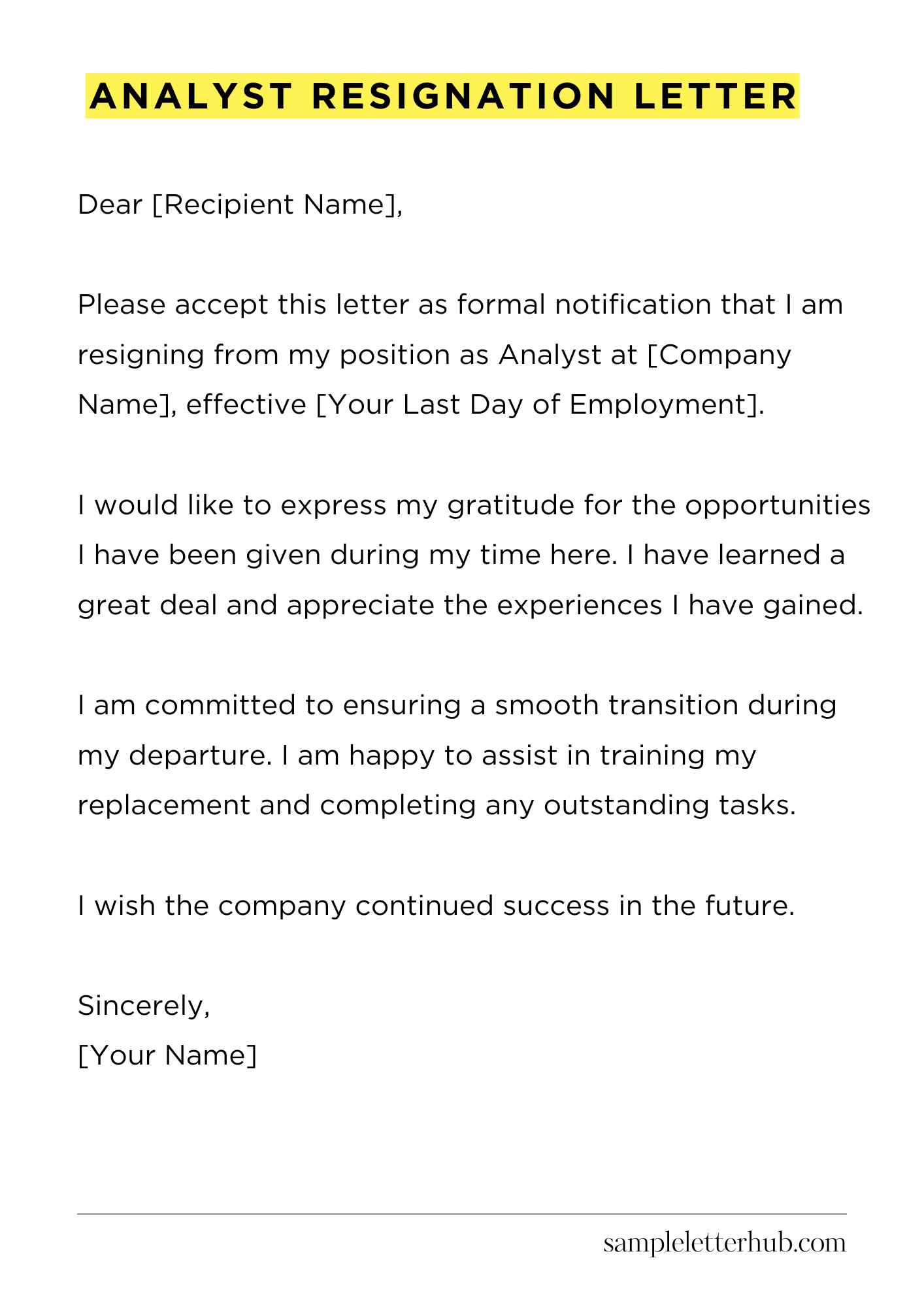
Dear [Recipient Name],
Please accept this letter as formal notification that I am resigning from my position as Analyst at [Company Name], effective [Your Last Day of Employment].
I would like to express my gratitude for the opportunities I have been given during my time here. I have learned a great deal and appreciate the experiences I have gained.
I am committed to ensuring a smooth transition during my departure. I am happy to assist in training my replacement and completing any outstanding tasks.
I wish the company continued success in the future.
Sincerely,
[Your Name]
How to Write Analyst Resignation Letter
Start with a Clear and Concise Statement
The first thing to do is to get right to the point. You don’t want to beat around the bush; you’re resigning! Make your intention clear from the very beginning. Keep it simple.
A simple sentence like, “Please accept this letter as formal notification that I am resigning from my position as Analyst, effective [Your Last Day of Employment]” works perfectly. Don’t overthink it.
Why this matters? Clarity is king. This opening establishes your position without confusion. It avoids any ambiguity that could potentially cause delays or misunderstandings.
Express Gratitude (But Keep it Brief)
Even if things didn’t always go smoothly, it is important to express appreciation for the opportunity. This shows professionalism. A simple acknowledgement of the experience gained or the opportunities provided goes a long way. You could say something along the lines of, “I am grateful for the opportunities I’ve had during my time at [Company Name].”
Be sincere and keep it short. Avoid lengthy gushing or over-the-top praise.
Provide a Seamless Transition
Make the departure as smooth as possible for everyone. Offer your assistance with the transition. It can be useful to offer to help train a replacement or complete ongoing projects. Include a sentence like, “I am committed to ensuring a smooth handover of my responsibilities, and I am happy to assist with training my replacement during my remaining time here.”
This demonstrates professionalism and shows you care. Plus, it’s just the right thing to do.
Remember that a well-executed transition will leave a positive impression, regardless of your reasons for leaving.
Address Necessary Administrative Details
This is where you handle the nuts and bolts. Confirm your last day of employment. Also, it’s a good idea to mention the return of company property, like laptops, ID badges, and so on. You should also confirm any outstanding vacation time and how it should be handled. All of this can be covered briefly.
For example: “My last day of employment will be [Date]. I will return all company property, including my laptop and ID badge, on or before my last day. Please let me know the process for receiving my final paycheck and unused vacation time.”
Doing this ensures you cover all your bases and avoid any post-employment confusion.
Close with a Professional and Forward-Looking Statement
End the letter on a positive note. Reiterate your appreciation and express your well wishes for the company’s future. Avoid any negativity or complaints here. A simple sentence like, “I wish [Company Name] all the best in the future” will do the trick.
Also, don’t forget to include your contact information (email address and phone number) just in case they need to contact you after your departure. Then sign it. A thoughtful and professional conclusion is important. It solidifies your positive impression.
FAQs about Analyst Resignation Letter
What is the primary purpose of an analyst resignation letter?
The primary purpose of an analyst resignation letter is to formally communicate an employee’s decision to leave their position to their employer. It serves as an official record of the resignation, the last day of employment, and often includes expressions of gratitude and offers of assistance during the transition.
What key components should an analyst resignation letter include?
A well-structured analyst resignation letter should include: a clear statement of resignation, the effective date of the resignation (last day of employment), a brief statement of gratitude for the opportunity to work there, any relevant details about the transition such as offering assistance, and a professional closing with your name and signature.
How much notice should an analyst give when resigning?
The amount of notice an analyst should give typically depends on the company’s policy and/or the employment contract. Common standards are two weeks’ notice, but it’s important to consult your employment agreement or company handbook to understand the specific requirements.
Can an analyst’s resignation letter be used as a reference?
While a resignation letter itself isn’t typically used as a primary reference, the information within it, such as your job title and dates of employment, can be verified. More importantly, the manner in which the letter is written and the tone used can subtly indicate your professionalism, which a future employer might observe if they request it.
What are some common mistakes to avoid in an analyst resignation letter?
Common mistakes to avoid include: being overly negative or critical of the company or colleagues, not providing adequate notice, failing to be professional in tone, and neglecting to offer assistance with the transition. It’s important to maintain a positive and professional approach throughout the letter.
Related:
Resignation letter due to rude boss
Resignation letter moving to another state
Resignation letter due to illness of family member
Resignation letter due to study