

A Dietary Aide resignation letter is a formal document. It is written by a Dietary Aide. The letter informs an employer of the employee’s intent to leave their job. Its primary purpose is to officially end the employment relationship.
Are you a Dietary Aide looking to move on? You’re in the right place. We’ve got you covered. We’ll provide a variety of resignation letter templates. These samples will help you. They’ll guide you through the process.
Our goal is simple. We aim to make it easier for you. You can adapt these templates. Customize them to fit your specific needs. Say goodbye to guesswork. Say hello to a well-crafted letter.
Dietary Aide Resignation Letter
Below is a sample of a Dietary Aide Resignation Letter:
[Your Name]
[Your Address]
[Your Phone Number]
[Your Email Address]
[Date]
[Hiring Manager Name] (If known, otherwise use title)
[Hiring Manager Title]
[Facility Name]
[Facility Address]
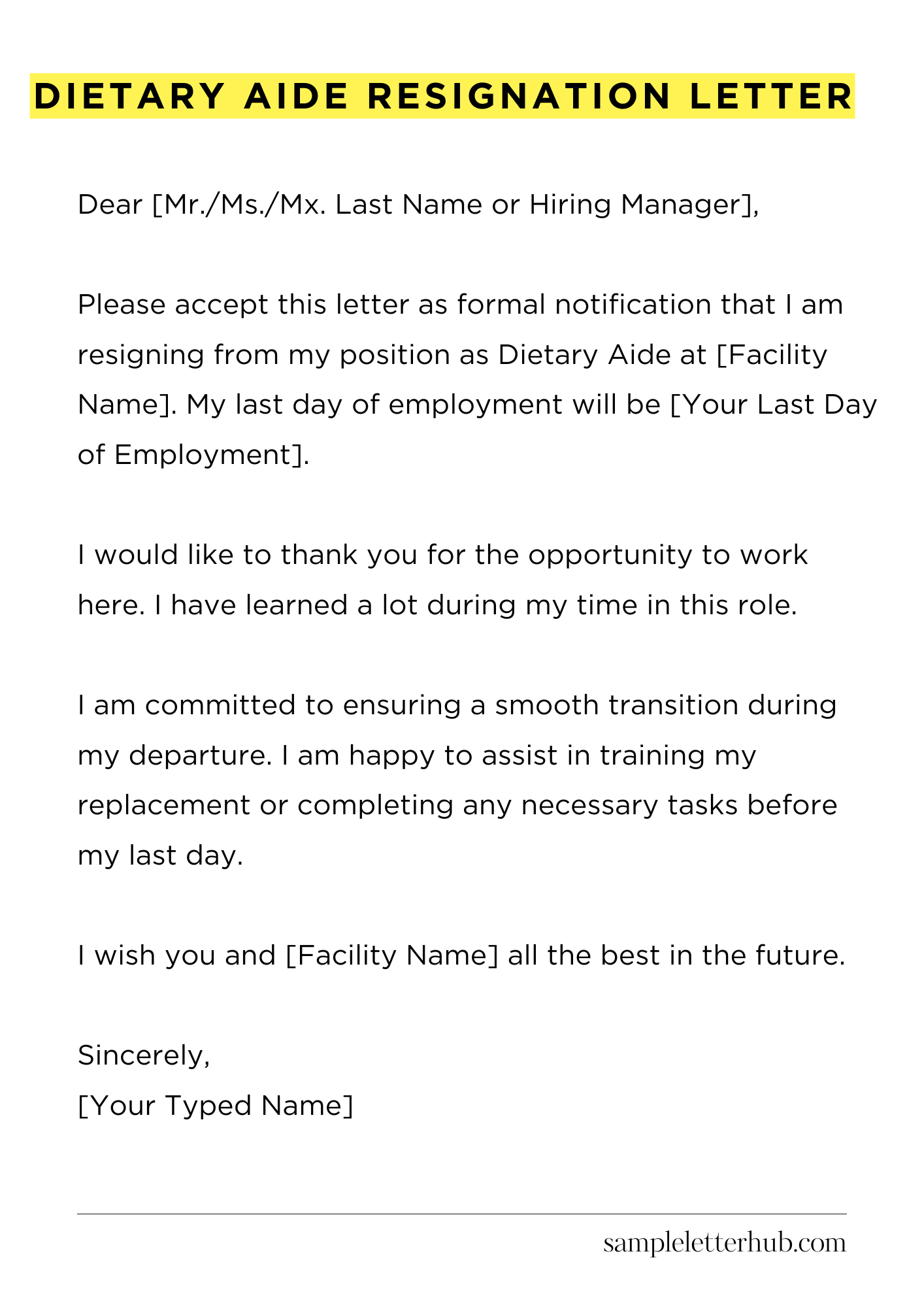
Dear [Mr./Ms./Mx. Last Name or Hiring Manager],
Please accept this letter as formal notification that I am resigning from my position as Dietary Aide at [Facility Name]. My last day of employment will be [Your Last Day of Employment].
I would like to thank you for the opportunity to work here. I have learned a lot during my time in this role.
I am committed to ensuring a smooth transition during my departure. I am happy to assist in training my replacement or completing any necessary tasks before my last day.
I wish you and [Facility Name] all the best in the future.
Sincerely,
[Your Typed Name]
How to Write Dietary Aide Resignation Letter
Why Resign? Understanding Your Reasons First
Before you even think about putting pen to paper (or fingers to keyboard), it’s crucial to understand *why* you’re resigning from your Dietary Aide position. This is the first step! Think about it carefully. Are you pursuing a better opportunity? Perhaps the work environment isn’t a good fit.
Maybe it’s a career change. A clear understanding of your motivations helps inform the tone and content of your resignation letter. It is that simple.
Pinpointing your reasons, whether they’re personal, professional, or a combination, will allow you to articulate them effectively (or omit them, depending on the situation!). This self-assessment is key to a smooth and professional departure. Consider every facet!
Crafting the Core: The Essential Elements
Your resignation letter doesn’t need to be a novel; it needs to be concise and effective. Start with a clear and direct statement of your intent to resign. State your position, Dietary Aide, and the effective date of your resignation.
Be specific about this date! Include it. Next, express your gratitude for the opportunity to have worked there, even if the experience wasn’t perfect. A simple “Thank you for the opportunity” can go a long way in maintaining a positive tone.
If you’re willing to help with the transition, indicate your availability to assist in training your replacement. This is usually a good thing to do. Always review the letter before sending it. Proofread for errors. It shows professionalism.
The Art of Tone: Keeping It Professional
Maintain a professional and respectful tone throughout your resignation letter. Even if you’ve had negative experiences, avoid dwelling on them or including complaints. This isn’t the time for a rant. Your letter should reflect your professionalism, not your frustrations.
Focus on the positive aspects of your employment, or simply state your reasons for leaving without going into excessive detail. Your goal is to resign gracefully and leave a positive lasting impression. Remember this.
What to Include (and What to Leave Out)
Include the essential information: your intent to resign, your position, the effective date, and a brief expression of gratitude. If you are willing, offer assistance during the transition period. Keep it short and sweet.
Avoid including overly personal information, negative criticisms, or lengthy explanations of your reasons for leaving. Your letter is a formal document, not a diary entry. Keep it concise. This will do the trick.
Final Touches: Formatting and Delivery
Format your letter professionally. Use a standard business letter format, including your contact information, the date, the recipient’s information (your supervisor’s name and title), and a formal closing (e.g., “Sincerely”). Make sure you are using a font like Arial or Times New Roman. Ensure your writing is presentable.
Deliver your resignation letter to your immediate supervisor. It’s often best to provide a physical copy, but check your company’s policy. Always keep a copy for your records. Do these things, and you’ll be set to go!
FAQs about Dietary Aide resignation letter
How do I write a Dietary Aide resignation letter?
A Dietary Aide resignation letter should be professional and concise. Start by stating your intent to resign, followed by your official last day of employment. Express gratitude for the opportunity to work there and mention any specific positive experiences. You can optionally include a brief reason for leaving, but this is not required.
Close with a thank you and a polite offer to assist with the transition, if possible. Keep it brief, typically one page.
What information should be included in a Dietary Aide resignation letter?
Essential information includes your name, the date, your supervisor’s name and title, the official date of your last day, and a clear statement of your resignation. It is also a good practice to include a brief, professional expression of gratitude for the employment opportunity. You should also confirm if you can assist with the transition.
What is the typical notice period for a Dietary Aide?
The typical notice period for a Dietary Aide is generally two weeks. This allows your employer sufficient time to find a replacement and ensure a smooth transition. However, always refer to your employment contract or employee handbook to verify your specific notice requirements.
Should I provide a reason for resigning in my letter?
You are not obligated to provide a reason for your resignation. While it can be polite to briefly mention why you are leaving (e.g., “pursuing a new opportunity”), it is perfectly acceptable to simply state your resignation. Keep the reason brief and avoid negative comments about the employer or colleagues.
If you have concerns, consider discussing them in a separate conversation with your supervisor if you choose to.
How should I deliver my Dietary Aide resignation letter?
The preferred method is to deliver the resignation letter in person to your supervisor, if possible. If this is not feasible, send it via email. Ensure you keep a copy of the letter for your records. Following up with a verbal confirmation with your supervisor is also advisable to ensure they received and understood your resignation.
Related:
Resignation letter due to rude boss
Resignation letter moving to another state
Resignation letter due to illness of family member
Resignation letter due to study