

So, you’re a Clinical Social Worker. You’re ready to move on. A resignation letter is your official goodbye to your current job. It formally informs your employer of your departure. This letter is a professional way to end your employment.
Writing a resignation letter can be tricky. Don’t worry, though. We’re here to help. This article provides you with helpful templates. You can adapt these to fit your needs. Consider them your starting point.
We’ll explore different scenarios. Think of letters for various reasons. Maybe you’re moving. Perhaps you’ve found a new opportunity. You’ll find examples that suit your situation. Get ready to write with confidence.
Clinical Social Worker Resignation Letter
Below is a sample of a Clinical Social Worker Resignation Letter:
[Your Name]
[Your Address]
[Your Phone Number]
[Your Email Address]
[Date]
[Employer’s Name]
[Employer’s Title]
[Company Name]
[Company Address]
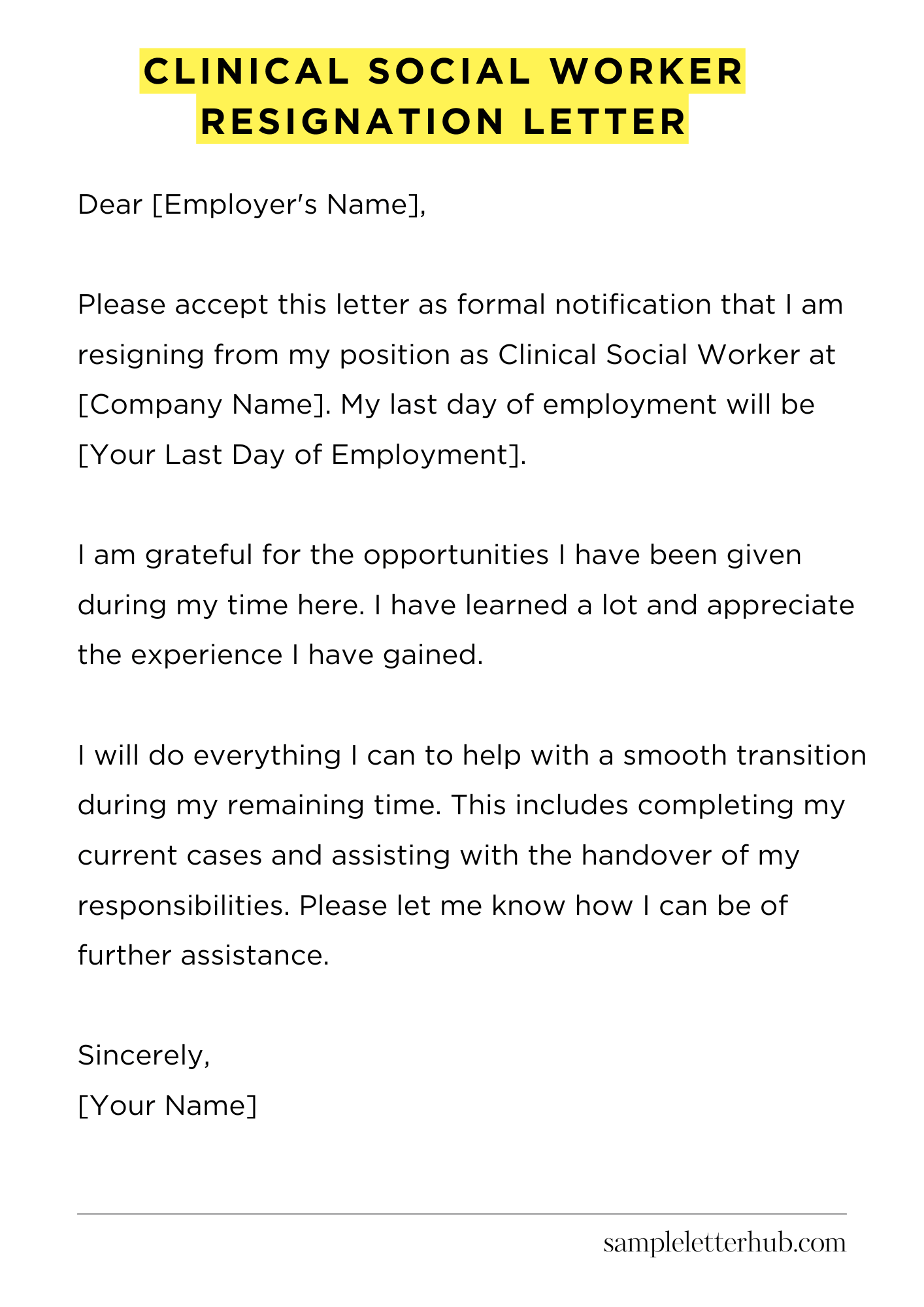
Dear [Employer’s Name],
Please accept this letter as formal notification that I am resigning from my position as Clinical Social Worker at [Company Name]. My last day of employment will be [Your Last Day of Employment].
I am grateful for the opportunities I have been given during my time here. I have learned a lot and appreciate the experience I have gained.
I will do everything I can to help with a smooth transition during my remaining time. This includes completing my current cases and assisting with the handover of my responsibilities. Please let me know how I can be of further assistance.
I wish you and [Company Name] all the best for the future.
Sincerely,
[Your Name]
How to Write a Clinical Social Worker Resignation Letter
1. Setting the Stage: The Basics
Resigning from any job can be tricky. It’s especially crucial when your profession involves providing care for vulnerable people. A Clinical Social Worker’s role carries significant responsibilities. Therefore, a well-crafted resignation letter is absolutely essential.
Think of it as the formal goodbye. Keep it professional. Maintain a positive tone. This is not the time to air grievances; it’s about closing this chapter respectfully. Always include the date, your name, and the recipient’s name (usually your supervisor).
2. Expressing Your Intent and Gratitude
The core of your letter should clearly state your intention to resign. Make this very straightforward. State your last day of employment.
It’s also good practice to express gratitude. This is where you acknowledge the opportunities you’ve been given. Briefly mention any positive experiences or skills gained. A simple “Thank you for the opportunities I’ve had…” goes a long way. This shows you’re leaving on good terms.
3. Addressing Your Responsibilities
Clinical Social Workers often have clients to manage. Your letter needs to address this directly. Outline your plans for transitioning your caseload. Will you assist in finding replacement therapists? Will you document your cases for continuity of care?
Provide specific information about your handover plans. Be as helpful as possible. This highlights your professionalism and commitment to your clients’ well-being. Good handovers ensure your clients will have continued support.
4. Keeping it Concise and Professional
Long letters are generally not ideal. Get to the point! Keep the letter focused on the essential information: your resignation, your last day, any transition plans, and a brief expression of gratitude.
Avoid any negative comments. Refrain from getting bogged down in complaints. Always proofread your letter carefully. Errors in grammar or spelling can undermine your professionalism.
5. The Final Touches: Sign Off and Review
End your letter with a professional closing, such as “Sincerely” or “Best Regards.” Sign your name above your typed name. Keep a copy of the letter for your records. This is important for reference later.
Before submitting, review everything one last time. Ensure you’ve covered all the necessary points. Now, you are good to go. A well-written letter reflects positively on you and leaves a lasting impression.
FAQs about Clinical Social Worker resignation letter
How much notice should I give when resigning as a Clinical Social Worker?
The standard practice is to provide two weeks’ notice. However, this can vary based on your employment contract, organizational policies, or state laws.
Review your employment agreement to clarify the specific notice period required by your employer. Consider giving more notice if your role involves complex responsibilities or patient care, allowing for a smoother transition.
What should I include in my Clinical Social Worker resignation letter?
Your resignation letter should include a clear and concise statement of your intent to resign, the effective date of your resignation, and a brief expression of gratitude for the opportunity. While not mandatory, it is often considered courteous to briefly state your reason for leaving (e.g., pursuing a new opportunity or personal reasons).
Keep the tone professional and positive. You might also offer to assist with the transition of your responsibilities.
Do I need to explain the reason for my resignation in the letter?
While you are not obligated to provide an extensive explanation, it is usually a good idea to briefly state your reason, especially if it is due to a new job or personal reasons. This allows the employer to understand your decision. If you prefer, you can keep the reason general, such as “pursuing other opportunities.”
Avoid negative comments about your current employer or colleagues. If you have any serious grievances, it’s better to discuss them separately, preferably with HR.
How should I handle the resignation letter in the context of client care?
As a Clinical Social Worker, client well-being is paramount. Discuss your resignation with your supervisor and ensure a proper plan is in place to transition your clients to another provider. This may include transferring client files, scheduling handover meetings, and assisting clients in finding alternative support.
This process should prioritize the continuity of care and the clients’ best interests and should also follow any relevant ethical guidelines or legal requirements.
How do I deliver my Clinical Social Worker resignation letter?
Ideally, you should first inform your supervisor in person or via a phone call and then follow up with a formal written resignation letter. Deliver the letter to your direct supervisor or HR department, depending on your organization’s policy.
It’s often recommended to keep a copy of your letter for your records. Ensure all necessary steps are taken in the letter to provide a formal resignation.
Related:
Resignation letter due to rude boss
Resignation letter moving to another state
Resignation letter due to illness of family member
Resignation letter due to study