

A Project Executive resignation letter is a formal document. It informs your employer of your intention to leave. This letter initiates the official departure process. It’s a key part of ending your employment professionally.
Crafting a resignation letter can be tough. We’re here to help. This article provides helpful examples. You’ll find templates and samples. These will guide you. Writing your own letter will be simple.
No more staring blankly at a screen! We’ve done the work for you. Explore the provided formats. Adapt them to fit your specific needs. Say goodbye to stress, and hello to a smooth transition!
Project Executive Resignation Letter
Below is a sample of a Project Executive Resignation Letter:
[Your Name]
[Your Address]
[Your Phone Number]
[Your Email Address]
[Date]
[Recipient Name]
[Recipient Title]
[Company Name]
[Company Address]
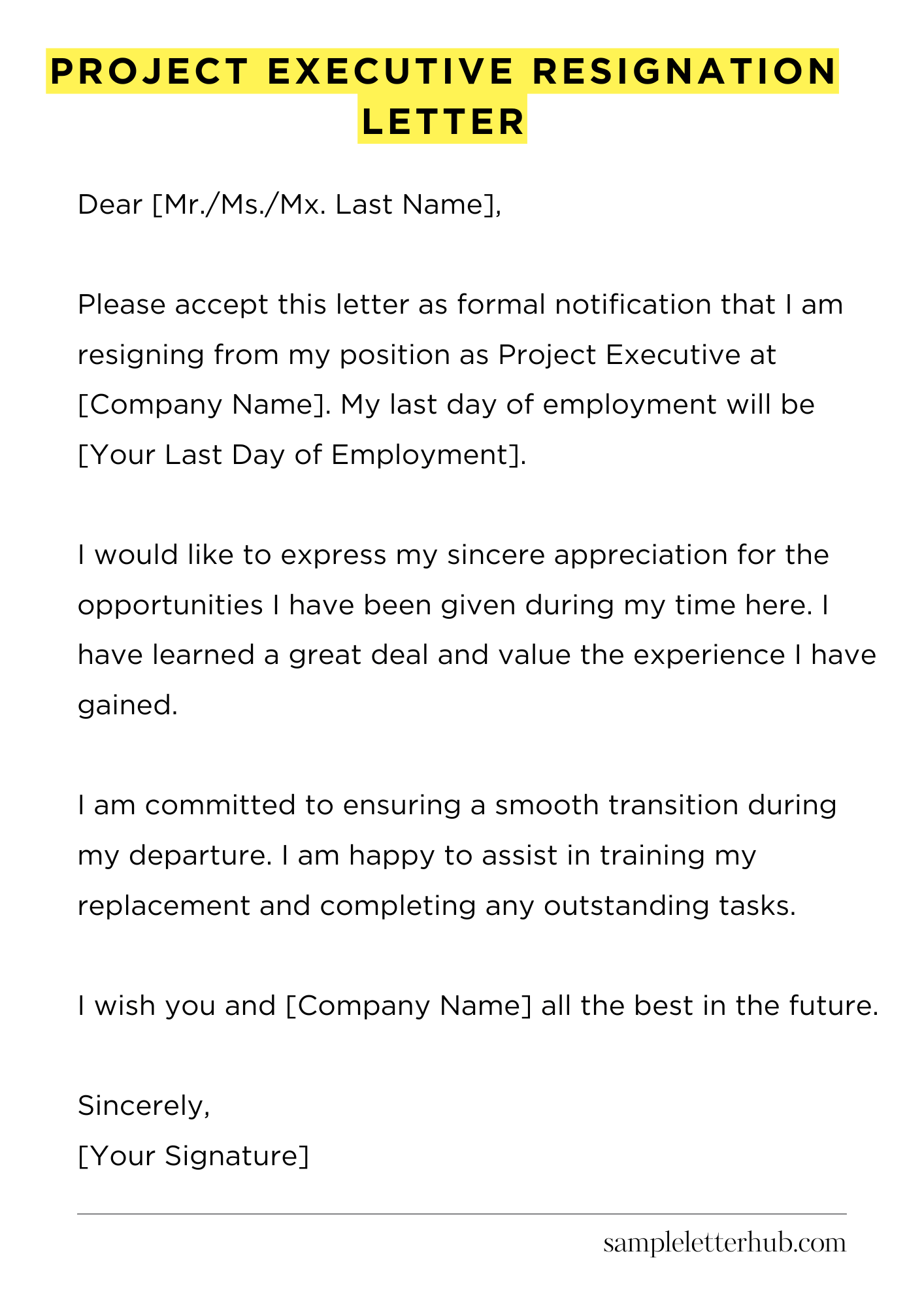
Dear [Mr./Ms./Mx. Last Name],
Please accept this letter as formal notification that I am resigning from my position as Project Executive at [Company Name]. My last day of employment will be [Your Last Day of Employment].
I would like to express my sincere appreciation for the opportunities I have been given during my time here. I have learned a great deal and value the experience I have gained.
I am committed to ensuring a smooth transition during my departure. I am happy to assist in training my replacement and completing any outstanding tasks to the best of my ability.
I wish you and [Company Name] all the best in the future.
Sincerely,
[Your Signature]
How to Write a Project Executive Resignation Letter
1. Why is a Proper Resignation Letter Important?
Leaving a job, especially a high-profile one like a Project Executive role, requires careful consideration. A well-crafted resignation letter is more than just a formality. It’s a crucial step in maintaining a positive professional reputation.
It protects your future career prospects. Think of it as your final official communication as a member of the company. It’s a chance to leave a lasting, good impression. This letter can also help you avoid any potential legal issues down the road. Consider this: a bad letter can cause unwanted problems.
2. Essential Elements to Include
Okay, so what should your letter *actually* say? First and foremost, clearly state your intention to resign. Specify your last day of employment. This is usually two weeks from the date of the letter, but always adhere to your employment contract.
Next, briefly express your gratitude for the opportunity. This shows respect. Then, consider mentioning a positive aspect of your time at the company. This isn’t mandatory, but it helps. Keep it concise, to the point, and always professional.
Avoid negativity, even if your departure is due to unpleasant circumstances. Finally, offer your assistance with the transition. This signals professionalism and a willingness to help. Providing a clear and concise letter is important.
3. Structuring Your Letter for Maximum Impact
Formatting matters. Always start with your contact information and the date. Then, address the letter to the appropriate person, usually your direct supervisor or HR. Open with a clear and direct statement of your resignation.
For instance, “Please accept this letter as formal notification that I am resigning from my position as Project Executive, effective [Date].” Next, include a brief expression of gratitude.
Following this, you should briefly offer assistance with the handover of your responsibilities. Finally, close with a professional sign-off, such as “Sincerely” or “Respectfully,” followed by your typed name. Proofread meticulously for any errors! Proper structure will help in better reading and understanding.
4. Dos and Don’ts: Things to Avoid
There are some key things to avoid in your resignation letter. Absolutely do not burn bridges. Do not use overly emotional language or vent about your frustrations.
Don’t include any personal attacks or negative comments about colleagues or the company. Avoid sharing too much personal information. Don’t reveal any sensitive company information. Keep it brief, professional, and positive, even if your experience was challenging. Keep in mind: your letter can be kept in your file.
5. Sample Letter and Customization Tips
Here’s a basic template you can adapt:
[Your Name]
[Your Address]
[Your Phone Number]
[Your Email Address]
[Date]
[Recipient’s Name]
[Recipient’s Title]
[Company Name]
Dear [Mr./Ms./Mx. Last Name],
Please accept this letter as formal notification that I am resigning from my position as Project Executive, effective [Your Last Day of Employment].
I am grateful for the opportunities I have been given during my time at [Company Name].
I am happy to assist with the transition during my remaining time here.
Sincerely,
[Your Typed Name]
Remember to personalize the content! Add in a specific instance of something you appreciated. Modify the handover offer to reflect your specific responsibilities. Before you send it, review everything! Ensure it’s tailored to your unique situation.
FAQs about Project Executive Resignation Letter
What is the purpose of a Project Executive resignation letter?
The primary purpose of a Project Executive resignation letter is to formally notify an employer of your intention to leave your position. It serves as an official record of your departure and provides essential details regarding your last day of employment.
It also allows you to express your gratitude, offer assistance with the transition, and maintain a professional relationship with your former employer.
What key information should be included in a Project Executive resignation letter?
A well-crafted resignation letter should include your formal declaration of resignation, the effective date of your resignation, the title of your position, and a brief and professional statement of your reason for leaving (if you choose to include one).
It’s also important to express gratitude for the opportunity, offer assistance with the handover of your responsibilities, and include your contact information for any follow-up.
How much notice should a Project Executive provide in their resignation letter?
The amount of notice a Project Executive should provide typically depends on their employment contract, company policy, and local labor laws. However, a general rule of thumb is to provide at least two to four weeks’ notice.
Consulting your employment agreement and the company handbook is crucial to determine the required notice period. Providing ample notice allows for a smoother transition and demonstrates professionalism.
How should a Project Executive handle the handover of their responsibilities?
A Project Executive should provide a comprehensive handover plan. This may include creating detailed documentation of ongoing projects, providing training to colleagues, identifying key contacts, and offering to assist in any transition-related activities.
Being proactive and available during the handover period ensures a seamless continuation of work and leaves a positive impression on your former employer.
What are the common mistakes to avoid in a Project Executive resignation letter?
Common mistakes to avoid include unprofessional language or negativity, burning bridges by making disparaging remarks about the company or colleagues, and failing to provide sufficient notice.
It’s also important to avoid including sensitive company information or violating any confidentiality agreements. Maintaining a professional and respectful tone throughout the letter is paramount.
Related:
Resignation letter due to rude boss
Resignation letter moving to another state
Resignation letter due to illness of family member
Resignation letter due to study