

A youth worker resignation letter is a formal document. It is written by a youth worker. Its purpose is to officially inform an employer of their intention to leave their job. This letter marks the end of employment. It also provides a date of departure.
Writing this letter can feel tricky. You might not know where to start. Don’t worry, we’re here to help. We’ll share several templates. You can use these to create your own letter.
These samples provide clear examples. They cover different situations. You can adapt them to your specific needs. They will make the writing process easier. Crafting a professional letter is simpler than you think.
Youth Worker Resignation Letter
Below is a sample of a Youth Worker Resignation Letter:
[Your Name]
[Your Address]
[Your Phone Number]
[Your Email Address]
[Date]
[Employer’s Name]
[Employer’s Title]
[Organization Name]
[Organization Address]
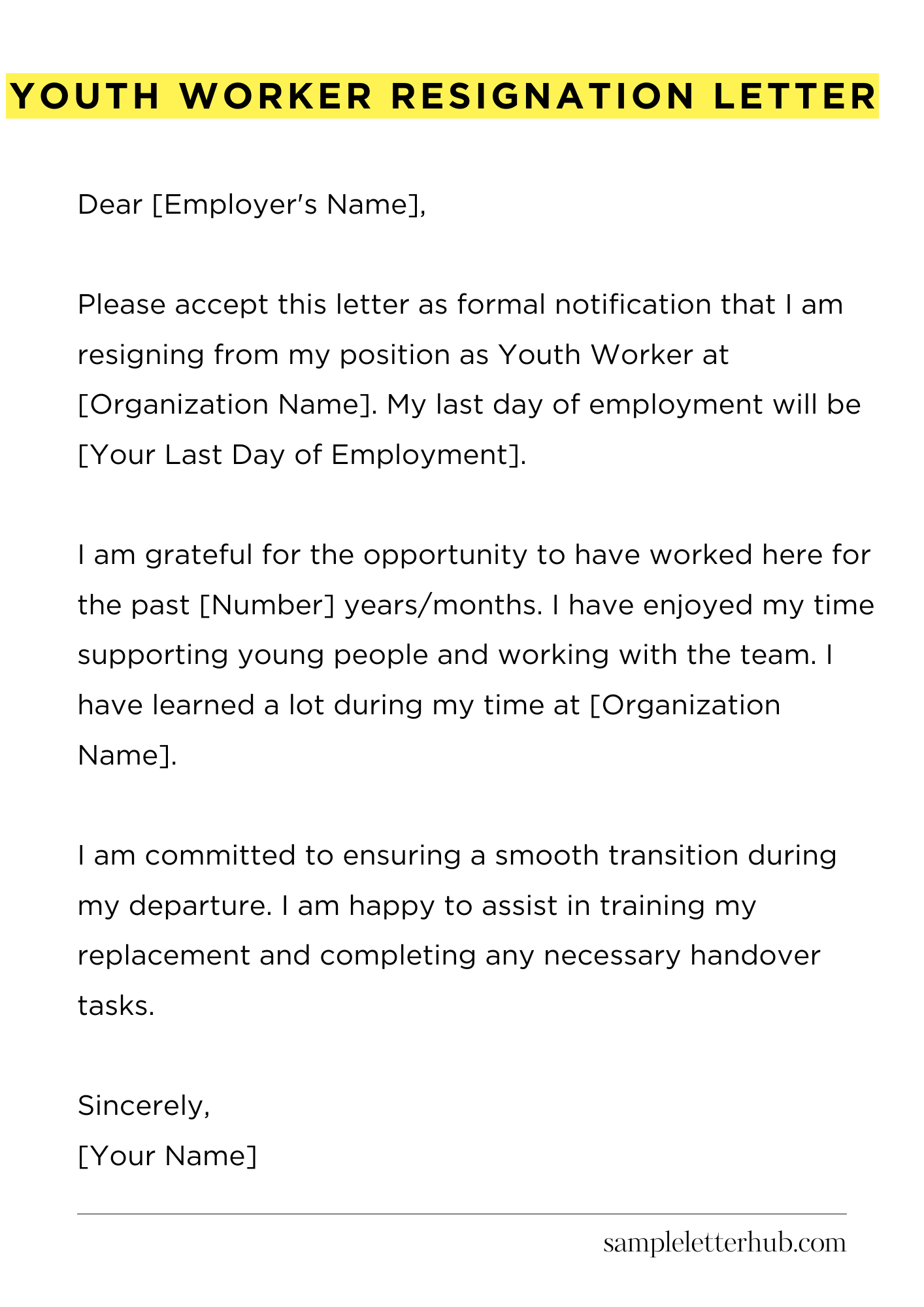
Dear [Employer’s Name],
Please accept this letter as formal notification that I am resigning from my position as Youth Worker at [Organization Name]. My last day of employment will be [Your Last Day of Employment].
I am grateful for the opportunity to have worked here for the past [Number] years/months. I have enjoyed my time supporting young people and working with the team. I have learned a lot during my time at [Organization Name].
I am committed to ensuring a smooth transition during my departure. I am happy to assist in training my replacement and completing any necessary handover tasks. Please let me know how I can be of assistance in the coming weeks.
I wish you and the organization continued success in the future.
Sincerely,
[Your Name]
How to Write a Youth Worker Resignation Letter
Know Your Audience
Before you even begin typing, consider who you’re writing to. This isn’t a casual text message. You are writing an important business letter. Is it your direct supervisor, the program director, or the HR department?
Understanding your recipient helps you tailor the tone and format appropriately. Think about the level of formality expected. A more formal letter is generally a safe bet, especially if you’re unsure of the workplace culture. The language used should always be professional.
Crafting the Core: The Essentials
Now, let’s get down to the basics. Your resignation letter needs some key components. First, clearly state your intent to resign. Be direct and unambiguous. Next, specify your last day of employment. This is a crucial detail! It allows your employer to plan for your departure. Include the date you are writing the letter.
After that, you’ll want to express gratitude for the opportunity. Briefly mention what you learned or the experiences you cherished. It is a good thing to show appreciation. A brief, positive statement can leave a good impression. Finally, consider offering assistance with the transition. This shows professionalism and a commitment to helping the organization.
Building Your Letter: Structure and Tone
Organization is key. Start with your name, address, and contact information. Then, add the date, and the recipient’s information. Use a formal salutation like “Dear [Supervisor’s Name],” or “To Whom It May Concern,” if you don’t know the specific person.
The body should be concise and to the point. Focus on the essentials outlined above. The tone should be professional and respectful. Avoid negativity or complaining. Even if you’re leaving due to dissatisfaction, it’s best to maintain a positive and graceful demeanor. Keep it short; no one wants to read a long, rambling letter.
What to Avoid (And Why)
There are some things you should absolutely leave out. Avoid providing excessive details about your reasons for leaving. Keep the explanation brief and neutral. Also, steer clear of negativity, complaints, or making accusations.
These actions rarely help and can burn bridges. Do not include personal opinions about coworkers or the organization’s management. Finally, don’t make demands. Focus on clarity and professionalism rather than negotiation or ultimatums.
Final Touches and Sending Your Letter
Before you send your resignation letter, proofread it carefully. Check for any grammatical errors or typos. Ensure the formatting is clean and easy to read. Print a hard copy for your records.
Consider hand-delivering it to your supervisor if possible, or sending it via email. If submitting electronically, a PDF format is a great option. A well-written resignation letter can set the stage for a positive ending, even if you are leaving. Leaving on a positive note can really make a difference for future opportunities!
FAQs about Youth Worker Resignation Letter
Understanding the nuances of a youth worker resignation letter is crucial for a smooth transition. The following are frequently asked questions regarding this topic, along with detailed answers.
What is the purpose of a youth worker resignation letter?
The primary purpose of a youth worker resignation letter is to formally notify the employer of the intention to leave the position.
It serves as an official record of the resignation, providing a clear date of departure and allowing the organization to prepare for the transition. It also provides the opportunity to express gratitude for the experience and, in some cases, provide a brief reason for leaving.
What key elements should be included in a youth worker resignation letter?
A well-crafted resignation letter should include: your name and contact information, the date, the name of your supervisor or the person to whom you’re submitting the letter, a clear and concise statement of your intent to resign, the effective date of your resignation, a brief expression of gratitude for the opportunity to work there, and a professional closing.
It’s also often beneficial to offer assistance with the transition period, such as offering to train a replacement or complete ongoing tasks.
How much notice should a youth worker give when resigning?
The amount of notice required varies depending on the employment contract or company policy. However, it is generally recommended to provide at least two weeks’ notice.
This allows the organization sufficient time to find a replacement and ensure a smooth handover of responsibilities. Review your employment contract or employee handbook to determine the required notice period.
Should I provide a reason for resigning in my letter?
While not mandatory, it is often considered courteous to briefly state the reason for your resignation.
Keep the explanation concise and professional, focusing on the future rather than dwelling on any negative experiences. Examples include: pursuing a new opportunity, seeking career advancement, or relocating. However, you are not obligated to disclose the specific reasons.
How should I format and deliver a youth worker resignation letter?
The letter should be typed, professionally formatted, and addressed to the appropriate person, usually your direct supervisor or the Human Resources department.
It’s generally best to deliver the letter in person or via email, with a printed copy also kept for your records. Ensure the language is formal, polite, and reflects a professional tone. Proofread the letter carefully for any errors before submitting it.
Related:
Resignation letter due to rude boss
Resignation letter moving to another state
Resignation letter due to illness of family member
Resignation letter due to study