

A freelance artist resignation letter is a formal document. It informs a client or employer of your decision to end your working relationship. This letter serves as a crucial step in maintaining professionalism. It ensures a smooth transition and preserves a positive reputation.
Writing this letter can feel tricky. We want to make it easier for you. This article provides various templates and examples. You’ll find different formats and styles. They will help you craft the perfect resignation letter.
Whether you’re moving on to new opportunities or just need a change, we’ve got you covered. These samples are designed to be adaptable. Use them as a starting point. Make them your own.
Freelance Artist Resignation Letter
Below is a sample of a Freelance Artist Resignation Letter:
[Your Name]
[Your Address]
[Your Phone Number]
[Your Email Address]
[Date]
[Client Name/Company Name (if applicable)]
[Client Address/Company Address (if applicable)]
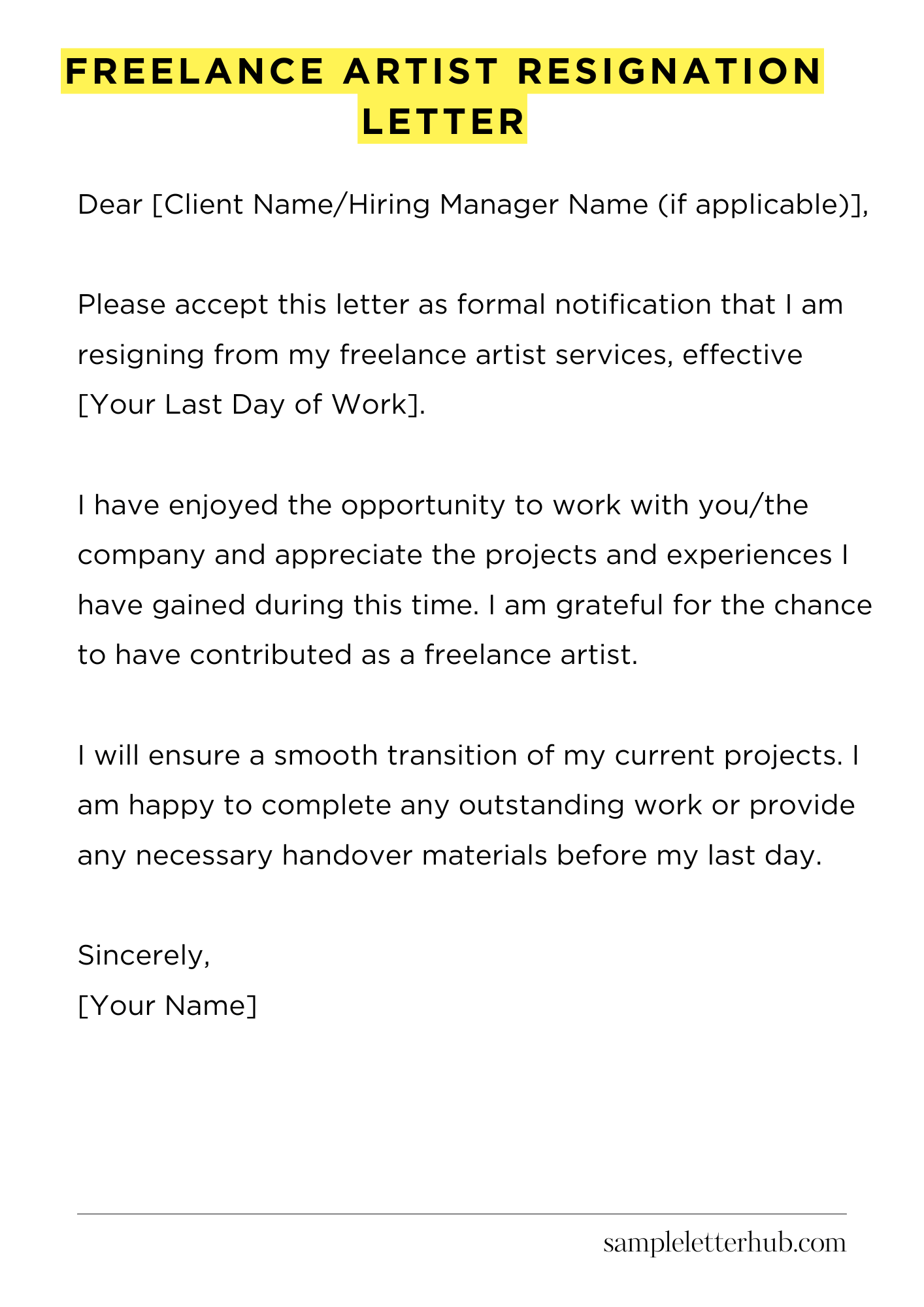
Dear [Client Name/Hiring Manager Name (if applicable)],
Please accept this letter as formal notification that I am resigning from my freelance artist services, effective [Your Last Day of Work].
I have enjoyed the opportunity to work with you/the company and appreciate the projects and experiences I have gained during this time. I am grateful for the chance to have contributed as a freelance artist.
I will ensure a smooth transition of my current projects. I am happy to complete any outstanding work or provide any necessary handover materials before my last day. Please let me know how I can best assist with this process.
Thank you again for the opportunity. I wish you and the company all the best in the future.
Sincerely,
[Your Name]
How to Write a Freelance Artist Resignation Letter
Why You Need a Resignation Letter
Leaving a freelance gig is a big deal. You’ve built a relationship with a client, you’ve probably poured your heart into the work, and now you’re moving on.
Whether it’s to pursue other opportunities, re-evaluate your business strategy, or simply to take a break, a formal resignation letter is crucial. A well-crafted letter is not just a polite gesture. It’s also professional.
This protects your reputation. Think of it as your final professional statement. It officially communicates your departure, sets clear expectations, and helps maintain a positive relationship. You’ll thank yourself later when you need a reference or want to work with them again.
Key Elements to Include
A good resignation letter is concise and respectful. First, be sure to include your name and the date at the top. Next, state your intention to resign. Make it clear and direct.
For example, “I am writing to formally resign from my position as a freelance artist, effective [Your Last Day].” It’s important to state your last day. This helps set expectations.
After that, express your gratitude for the opportunity. Briefly mention what you’ve appreciated about the experience. Don’t go overboard, just a sincere acknowledgement. Include the reason.
Do not feel obligated to get into extreme detail. Keep it brief. For example, “I am pursuing other opportunities.” Finally, mention your willingness to assist with the transition. Offer to help with any handover tasks or to complete any ongoing projects if you can.
Crafting the Perfect Wording
Keep your language professional. Avoid emotional outbursts or negativity. Even if your experience wasn’t perfect, focus on the positive. Be sure to use respectful language.
It is generally advisable to proofread. Check for any typos or grammatical errors. Before sending it, ask someone else to review it as well. Maintain a polite and professional tone throughout the letter.
A sample closing would be: “Thank you again for the opportunity to work with you. I wish you and the team all the best in the future. Sincerely, [Your Name].”
Handling Your Last Projects
What if you are in the middle of a project when you decide to leave? Be sure to address any ongoing projects. Offer to complete the work as agreed, or to assist in a smooth handover.
Communicate your availability to the client. Clearly outline how you plan to complete any unfinished tasks before your last day. This shows responsibility and consideration.
This will leave a positive impression. Ensure that the client is aware of the project’s status and any deadlines to be met. Providing detailed notes or documentation will also be helpful for the next artist taking over.
Delivering Your Letter and Follow-Up
Once you’ve finalized your letter, decide on the best way to deliver it. Email is a standard approach, offering a record of the communication.
Ensure the email’s subject line is clear, such as “Resignation – [Your Name].” Send it directly to the client or the person who is the primary point of contact. After sending the letter, follow up if you do not receive a response within a reasonable time, which is usually within a few days.
Be sure to be available to answer any questions or clarify any points. Be professional until the very end. The way you leave a gig is just as important as how you started.
FAQs about Freelance Artist resignation letter
What is the primary purpose of a freelance artist resignation letter?
The primary purpose of a freelance artist resignation letter is to formally notify a client or employer of your decision to end your working relationship. It serves as an official record of your departure and helps to maintain a professional closing to the project or contract.
What essential information should be included in a freelance artist resignation letter?
A well-crafted resignation letter should include: a clear statement of your intention to resign, the effective date of your resignation, a brief expression of gratitude for the opportunity, details on the handover of ongoing projects (if any), and your contact information. It should also follow the project or contract’s requirements.
How far in advance should a freelance artist submit a resignation letter?
The notice period depends on the terms outlined in your contract or agreement with the client. It’s crucial to review the contract to determine the required notice period. As a general rule, providing as much advance notice as possible is a courteous practice. If the contract does not mention anything related to notice period, two weeks of advance notice is recommended.
Can a freelance artist’s resignation letter be adjusted based on the situation?
Yes, a freelance artist’s resignation letter can and often should be tailored to fit the specific circumstances. Consider factors like your relationship with the client, the project’s status, and any ongoing agreements.
You can adjust the tone and content of your letter, but always ensure it clearly conveys your decision and provides essential information. For example, if you would like to offer help or additional details about ongoing projects.
What are the legal considerations when submitting a freelance artist resignation letter?
Legal considerations are primarily related to the contract or agreement you have with the client.
You must adhere to the terms regarding notice periods, intellectual property rights, and confidentiality agreements. It’s wise to review the contract to ensure you are meeting all legal obligations before submitting your resignation letter. It is advised to seek legal counsel if there are any doubts or concerns.
Related:
Resignation letter due to rude boss
Resignation letter moving to another state
Resignation letter due to illness of family member
Resignation letter due to study