

A “Compliance Resignation Letter” is a formal document. It is written by an employee. The employee is leaving a compliance-related role. The letter officially announces the resignation. It often includes details like the last day of employment.
Are you a compliance professional planning to leave your current job? This article is for you. We understand writing these letters can be tricky. We’ve got you covered with various templates. You can use these to create your own letter.
We’ll share different samples. These are designed to be clear and effective. You’ll find templates for various situations. These will help you compose your perfect compliance resignation letter.
Compliance Resignation Letter
Below is a sample of a Compliance Resignation Letter:
[Your Name]
[Your Address]
[Your Phone Number]
[Your Email Address]
[Date]
[Recipient Name]
[Recipient Title]
[Company Name]
[Company Address]
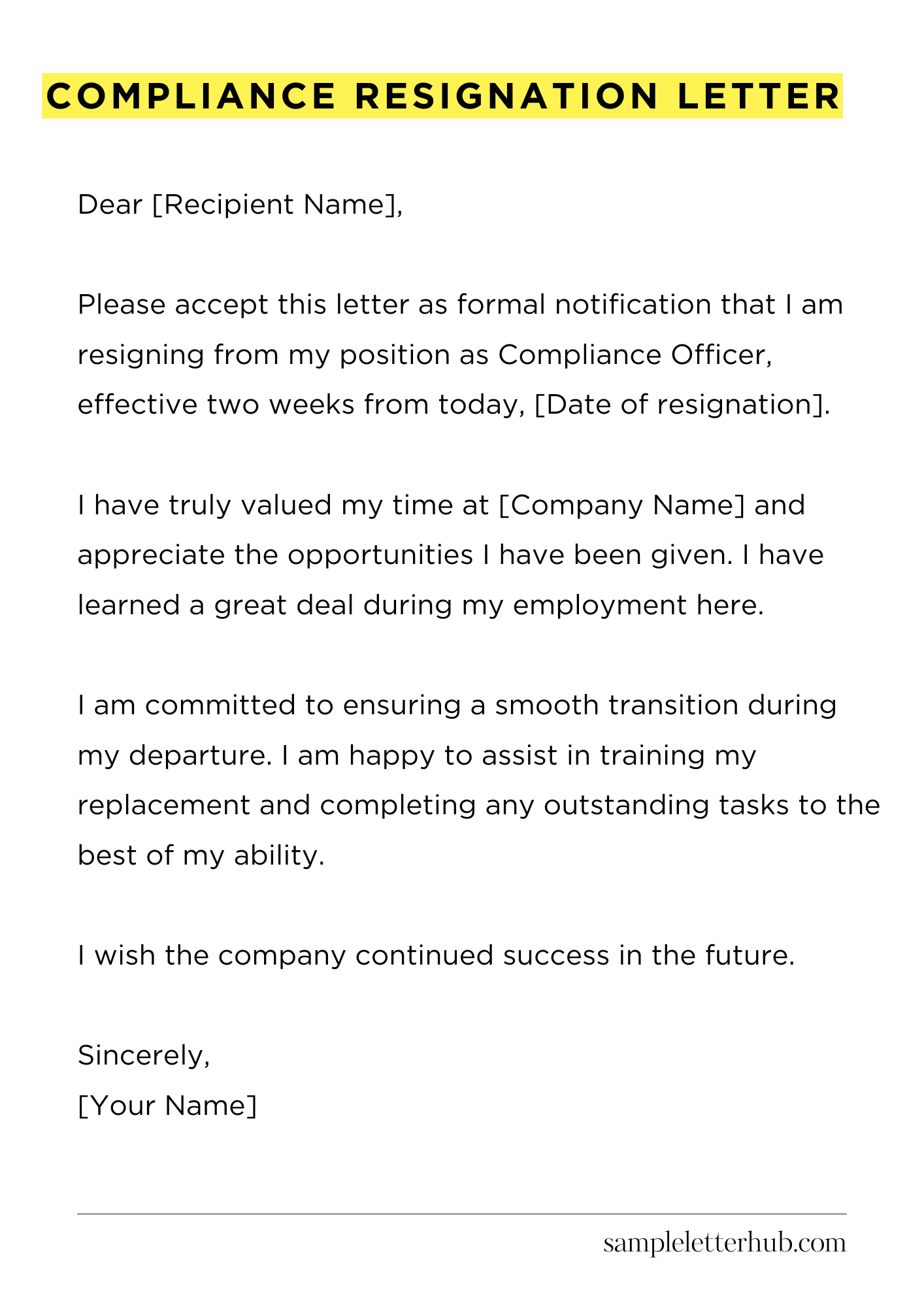
Dear [Recipient Name],
Please accept this letter as formal notification that I am resigning from my position as Compliance Officer, effective two weeks from today, [Date of resignation].
I have truly valued my time at [Company Name] and appreciate the opportunities I have been given. I have learned a great deal during my employment here.
I am committed to ensuring a smooth transition during my departure. I am happy to assist in training my replacement and completing any outstanding tasks to the best of my ability.
I wish the company continued success in the future.
Sincerely,
[Your Name]
How to Write a Compliance Resignation Letter
Why a Good Resignation Letter Matters
Leaving a job is a big step, but it’s how you leave that really matters. Think about it: you’re closing a chapter and starting a new one. A well-crafted compliance resignation letter is not just a formality. It serves several crucial purposes. First, it formally notifies your employer of your departure.
This protects you legally, especially when dealing with sensitive information or industries with strict regulations. Second, it maintains a professional image.
You’ll want to leave a positive lasting impression. You never know when you might need a reference from your current job. Finally, it helps to ensure a smooth transition. It lets your company prepare for your departure and minimizes disruption.
Essential Elements: What to Include
So, what exactly goes into this important document? There are a few key pieces of information you should always include. Begin with a clear and concise statement of your intent to resign. State your effective last day of employment. This is critical for legal and payroll purposes.
If your company requires a specific format, make sure you follow it. Express your gratitude for the opportunity. While you might be ready to move on, showing appreciation is a sign of professionalism. Be specific about your reason for leaving. This is important for a lot of reasons. Whether it’s to seek a new career or take a new opportunity.
Navigating Confidentiality and Compliance Considerations
This is where things get really crucial. A compliance resignation letter isn’t just any resignation letter. You’re likely working with sensitive data. In the compliance world, confidentiality is paramount.
You need to acknowledge your understanding of this in your letter. Remember, you can’t share any company information, data, or trade secrets.
The letter should include a reaffirmation of your commitment to maintaining confidentiality even after you leave the company. Ensure you clearly state your understanding of the non-disclosure agreements you signed. Don’t include any negative comments about the company or its employees.
Crafting Your Letter: A Practical Guide
Now, let’s get down to the practical part. Start with a formal salutation, using the appropriate name and title of your supervisor. Then, clearly state your intent to resign, followed by your last day of employment.
Mention the areas you are grateful to work in and the skills you have developed while working for the company. Briefly state the reason for your departure if you wish. Reiterate your commitment to confidentiality.
Offer to assist with the transition. Proofread your letter carefully. Spelling mistakes or grammatical errors can undermine your credibility. It’s always good practice to have someone else read it over before you submit it. Make a copy of the letter for your records.
Final Steps and Follow-Up
You have written your letter. Now what? Submit it according to your company’s policy. This usually means giving it to your direct supervisor or HR department. After submitting, be prepared to answer questions.
They may need you to clarify anything. Be professional and cooperate fully with the transition process. It’s often standard practice to conduct an exit interview. This is your chance to offer feedback.
Even if you’re leaving, be mindful. Maintaining your professional image is the final step. Doing everything right will help you start your new journey on a positive note. Remember, a well-written compliance resignation letter is your first step in building a strong foundation. And the next one is up to you.
FAQs about Compliance Resignation Letter
What is a compliance resignation letter and why is it necessary?
A compliance resignation letter is a formal written notice from an employee to their employer, specifically addressing their intention to leave their position within a compliance or regulatory role. It’s necessary to formally communicate the departure, provide a clear date of resignation, and potentially address handover procedures or outstanding obligations.
This helps ensure a smooth transition and documents the employee’s official departure from the company.
What key information should be included in a compliance resignation letter?
The letter should include the employee’s full name, job title, the date of the letter, the intended last day of employment, a clear statement of resignation, a brief acknowledgment of any ongoing responsibilities (if applicable), and a professional closing.
It’s also often beneficial to thank the employer for the opportunity, while keeping the tone professional and avoiding negative commentary.
Are there specific legal or regulatory considerations to mention in a compliance resignation letter?
While not always mandatory, it can be prudent to acknowledge any ongoing obligations related to compliance. This might include responsibilities related to data protection, client confidentiality, or any outstanding regulatory requirements the employee was managing. It’s often helpful to mention a willingness to cooperate during the handover period.
However, avoid including any sensitive or confidential information that could potentially breach company policies or legal regulations.
How should one handle the handover process when resigning from a compliance role?
The resignation letter should mention a willingness to assist with the handover process. This involves documenting ongoing projects, sharing relevant files and access credentials, and training the replacement or other team members.
It is also beneficial to discuss the handover details with the employer or supervisor to determine the best method of handling the transition. Ensuring a thorough handover is crucial to avoid disruptions and ensure continued compliance.
What is the proper etiquette for delivering a compliance resignation letter?
The letter should be delivered formally, typically to the direct supervisor or HR department. It’s customary to provide the letter in person or via secure email.
In addition, it’s wise to have a brief discussion with the supervisor, explaining the reasons for leaving, and reinforcing commitment to a smooth transition. Always maintain a professional and courteous demeanor, regardless of the circumstances leading to the resignation.
Related:
Resignation letter due to rude boss
Resignation letter moving to another state
Resignation letter due to illness of family member
Resignation letter due to study