

A columnist resignation letter is a formal notice. It’s written by a columnist to their editor or publisher. This letter announces their decision to leave their position. The main purpose is to communicate the resignation professionally.
Deciding to move on is a big step. Writing the resignation letter can be tricky. Don’t worry, we’re here to help. We’ll share several templates. You’ll find different examples and samples.
These templates cover various situations. You can adapt them to your specific needs. Hopefully, you’ll find the perfect wording. This will allow you to create your own letter with ease. Good luck!
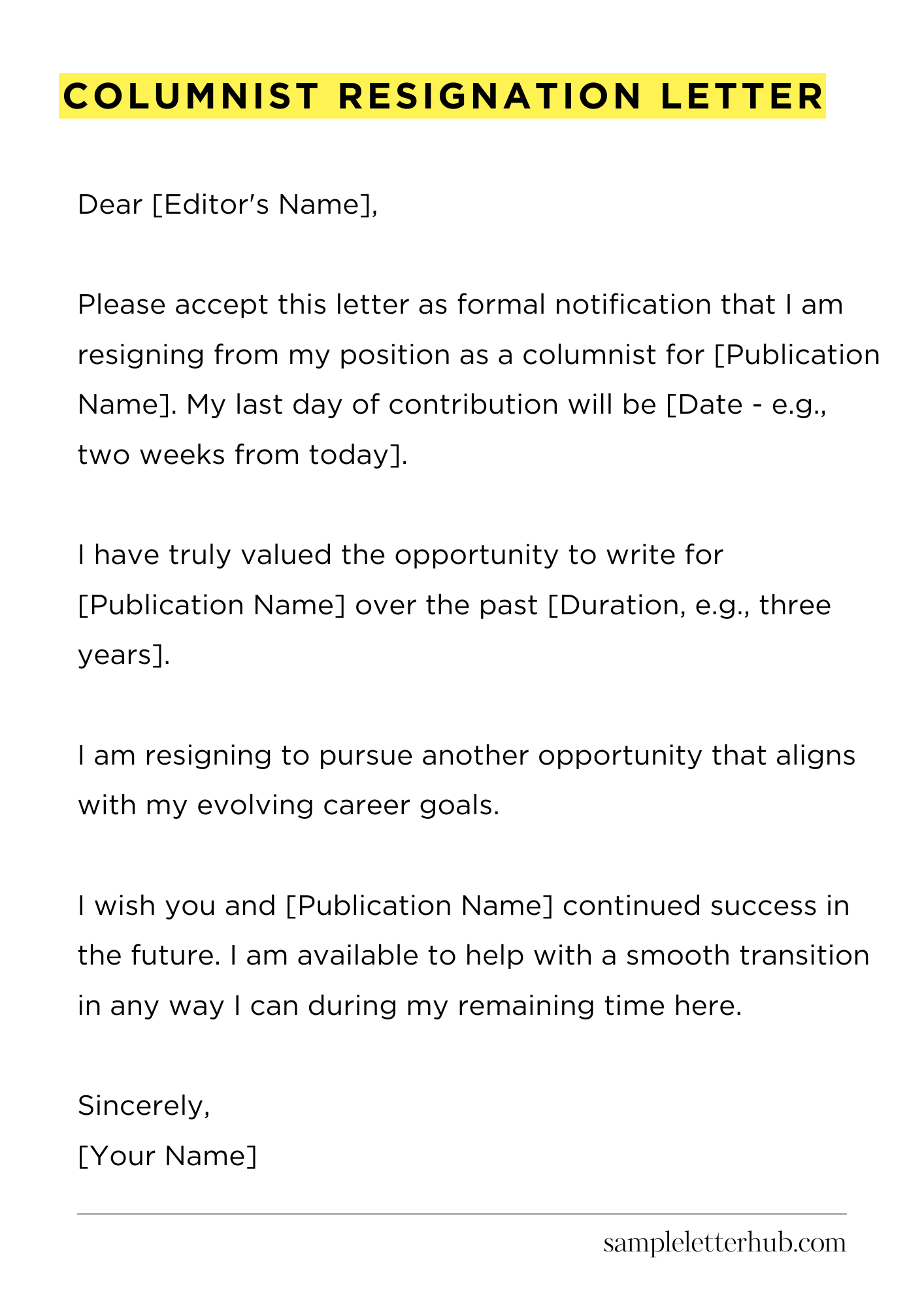
Columnist Resignation Letter
Below is a sample of a Columnist Resignation Letter:
[Your Name]
[Your Address]
[Your Phone Number]
[Your Email Address]
[Date]
[Editor’s Name (or “Editor”)]
[Publication Name]
[Publication Address]
Dear [Editor’s Name],
Please accept this letter as formal notification that I am resigning from my position as a columnist for [Publication Name]. My last day of contribution will be [Date – e.g., two weeks from today].
I have truly valued the opportunity to write for [Publication Name] over the past [Duration, e.g., three years]. I have enjoyed sharing my thoughts and insights with your readership, and I am grateful for the platform you provided me.
I am resigning to pursue another opportunity that aligns with my evolving career goals.
I wish you and [Publication Name] continued success in the future. I am available to help with a smooth transition in any way I can during my remaining time here.
Sincerely,
[Your Name]
How to Write a Columnist Resignation Letter
Why Resign, and Why Does Your Letter Matter?
So, you’re stepping down from your columnist gig. Congratulations on whatever exciting new opportunities await! It’s also a good thing. Before you simply disappear, there’s a crucial step: the resignation letter. This isn’t just a formality; it’s your final professional statement in this role.
It helps ensure a smooth transition, protects your reputation, and can even pave the way for future collaborations. The way you handle this will matter a lot. A well-crafted letter leaves a positive lasting impression.
On the other hand, a poorly written one could burn bridges, so make sure to write it well.
The Essential Components of Your Letter
Let’s break down what your resignation letter *must* include. First, and foremost, is the *formal announcement*. Clearly state that you are resigning from your position as columnist.
Next, you need the *effective date* of your resignation. Be precise. This is the date your employment officially ends. Finally, the *reasoning* is optional, but it’s a good idea.
After you include these basic facts, your letter should always include your *gratitude*. Thank the editor, publisher, or whoever gave you the opportunity. You should also highlight your positive experiences during your tenure. Show appreciation for the chance to contribute.
Crafting the Tone and Structure: Keep it Professional
The tone of your letter should be professional and polite. Even if you’re leaving due to disagreements, avoid negativity. Stick to factual statements. Avoid complaining. Keep your writing style concise, clear, and easy to read. Your letter doesn’t need to be lengthy. You should organize the content logically.
Start with a direct statement of your resignation. Then, offer a brief explanation (if you choose to do so), express gratitude, and end with a positive closing.
Always proofread carefully to eliminate any errors.
What to Include (and What to Avoid) in Your Letter
Include anything positive to make you look good. Mentioning positive experience shows how the company has been a good addition to your life. If it is possible, consider offering assistance during the transition period.
However, avoid anything overly personal. Don’t go into detail about why you’re leaving beyond a general statement (e.g., “pursuing other opportunities”). Avoid any criticism. You don’t want to make enemies or do damage to your relationship, so be very tactful.
Stay away from burning bridges. Focus on the future.
Final Thoughts: Leaving a Legacy of Respect
Writing a resignation letter is a chance to show your professionalism and integrity. You want your former employers and colleagues to remember you favorably.
By crafting a respectful and well-written letter, you are not only ending your current role, but you are also starting something new, and setting the stage for future opportunities. Take the time to do it right. The effort will be worth it.
FAQs about Columnist resignation letter
How do I write a compelling resignation letter as a columnist?
To write a compelling resignation letter, you should start by clearly stating your intent to resign and your last day of employment. Briefly express your gratitude for the opportunity to work as a columnist.
You can then briefly explain your reason for leaving, keeping it professional and positive. If you wish, you may mention any accomplishments you are proud of. Finally, offer to assist with the transition and thank the employer again.
What should I include in my columnist resignation letter?
Your letter should include your clear intention to resign, the effective date of your resignation, a statement of gratitude for the opportunity, and a concise explanation (if you choose to provide one) for your departure. It is also common to offer assistance during the transition period and end with a final expression of thanks.
What are the common reasons for a columnist to resign?
Columnists may resign for various reasons, including seeking new career opportunities, accepting a higher-paying position, or pursuing personal goals. Some may leave due to disagreements with editorial direction, burnout, or a change in company leadership. Personal reasons, such as relocating or family matters, can also lead to resignation.
How much notice should a columnist give when resigning?
The standard notice period for a columnist usually depends on their employment contract or local labor laws. However, a two weeks’ notice is generally considered professional. Longer notice periods are often appreciated, especially for columnists who write regularly and have a significant readership. It gives the publication enough time to find a replacement and avoid disruptions.
Can I provide feedback about the publication in my resignation letter?
You may choose to provide constructive feedback in your resignation letter, but it’s important to do so tactfully. Frame any criticisms positively, focusing on specific areas where the publication could improve or your experiences.
This is not required, and it’s essential to gauge your relationship with the publication. If you have an amicable relationship, providing constructive feedback might be appreciated. If there have been significant tensions, it’s generally best to keep your letter more concise and positive.
Related:
Resignation letter due to rude boss
Resignation letter moving to another state
Resignation letter due to illness of family member
Resignation letter due to study