

A Board of Directors resignation letter is a formal document. It is a notice of departure. It announces a board member’s intent to step down. The letter’s primary purpose is to officially communicate this decision. It also outlines the effective date of the resignation.
Facing the need to resign can feel overwhelming. We understand. This article is here to help. We provide helpful samples for different scenarios. These templates are easy to adapt. They make writing your letter straightforward.
Whether your departure is amicable or not, we have you covered. Find various examples and templates. These examples offer a starting point. Make your resignation clear and concise.
Board Of Directors Resignation Letter
Below is a sample of a Board Of Directors Resignation Letter:
[Your Name/Address]
[Your City, Postal Code]
[Your Email Address]
[Your Phone Number]
[Date]
[Name of Board President/Chair]
[Board President/Chair Title]
[Name of Organization]
[Organization Address]
[Organization City, Postal Code]
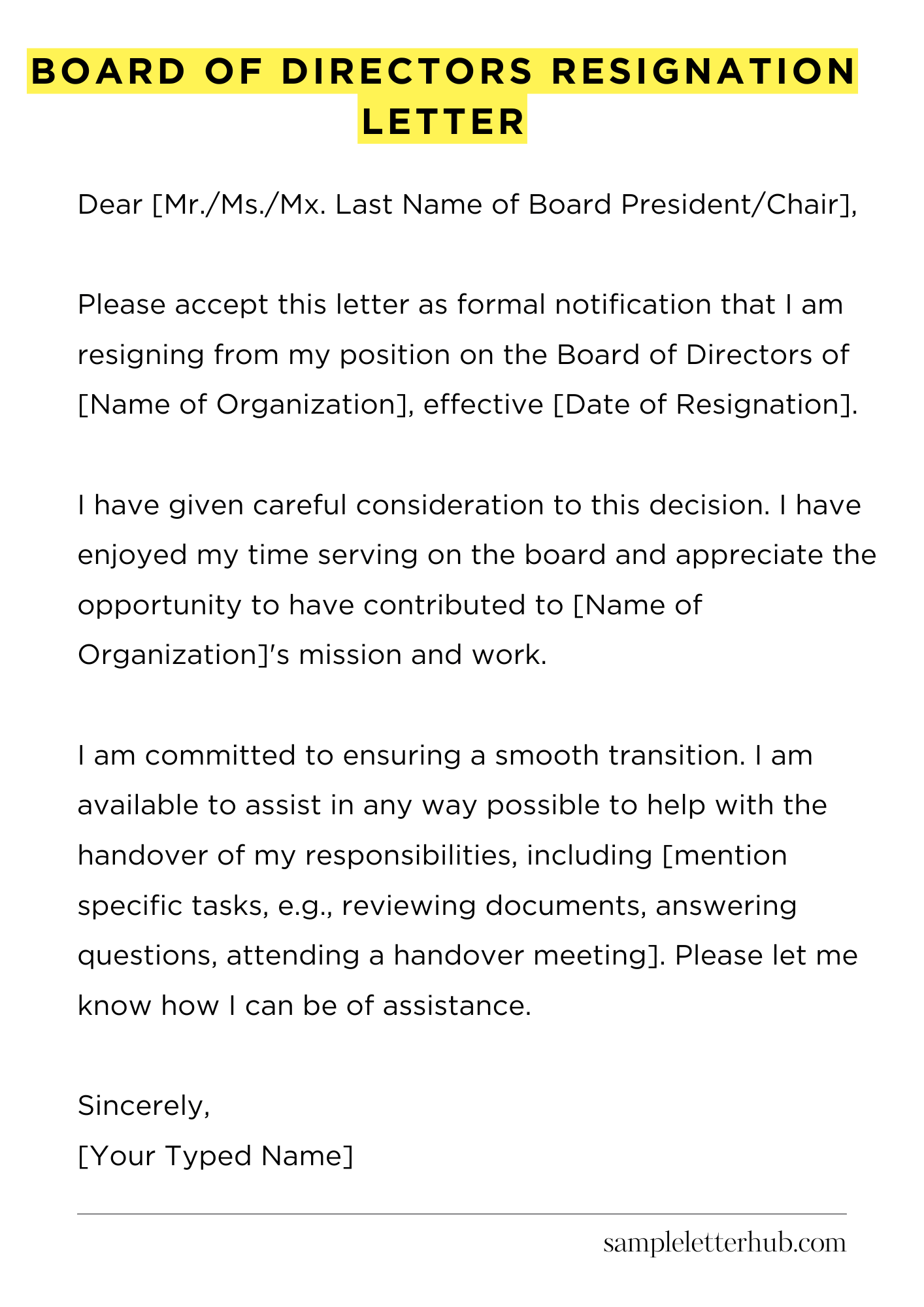
Dear [Mr./Ms./Mx. Last Name of Board President/Chair],
Please accept this letter as formal notification that I am resigning from my position on the Board of Directors of [Name of Organization], effective [Date of Resignation].
I have given careful consideration to this decision. I have enjoyed my time serving on the board and appreciate the opportunity to have contributed to [Name of Organization]’s mission and work.
I am committed to ensuring a smooth transition. I am available to assist in any way possible to help with the handover of my responsibilities, including [mention specific tasks, e.g., reviewing documents, answering questions, attending a handover meeting]. Please let me know how I can be of assistance.
I wish the organization and the remaining board members all the best for the future. I believe in the continued success of [Name of Organization].
Sincerely,
[Your Typed Name]
How to Write a Board of Directors Resignation Letter
Why Resigning Requires a Letter
Leaving a board of directors position is a significant step. It’s not just a casual departure; it’s a formal process. This is where a well-crafted resignation letter becomes critical. Why bother?
Primarily, it creates an official record of your departure. This protects both you and the organization. It clearly states the effective date of your resignation, which eliminates any future confusion.
It provides an opportunity to briefly explain your reasoning, offering valuable insight to the board. It also maintains professionalism, which is always important. Consider it a necessary part of the closing process.
Essential Elements to Include
A good resignation letter isn’t overly complicated, but it must be thorough. Start with the basics: your name, the date, and the name of the organization you are resigning from. Next, explicitly state your intent to resign from your position as a board member. Clearly indicate the effective date of your resignation.
This is super important. Then, you can briefly state the reason for your departure. Be professional and concise; you don’t need to write a novel. Include a polite closing, thanking the board for the opportunity to serve. Offer to assist with the transition, if you are able to do so. Finally, sign the letter. That’s really all there is to it.
Crafting the Right Tone
Your tone matters here. This letter is a professional document, not a personal rant. Keep it respectful, even if your departure is due to disagreements. Focus on the positive aspects of your experience. Express gratitude for the opportunities you’ve been given. Avoid any negative language or personal attacks.
Be polite and maintain a calm and composed demeanor throughout the letter. A professional tone reflects well on you and helps maintain a positive relationship. Remember, the world is small, so you never know what the future will bring. Staying polite is smart.
Tips for Formatting and Delivery
Presentation counts. Use a standard business letter format. Include your contact information at the top. Address the letter to the board chair or the person designated to receive resignations.
Keep the letter concise; one page is usually sufficient. Proofread carefully for any spelling or grammatical errors before sending it. You want to look good, right? Once you’re sure everything is correct, deliver the letter in a timely manner.
Depending on the organization’s bylaws, you may be required to submit it in a certain way. If not, consider delivering it electronically (email) and following up with a hard copy. That’s a good approach.
What to Do After Submitting Your Letter
Once you’ve submitted your letter, your responsibilities don’t completely end immediately. Be prepared to assist in the transition, if requested. Offer to answer any questions the board may have.
Provide any necessary documents or information. Maintain open communication during the transition period. Be proactive and professional in handing over any of your current projects.
Lastly, make sure you receive confirmation of your resignation, in writing, for your records. This provides proof that you are no longer affiliated with the organization. This step is a must.
FAQs about Board Of Directors resignation letter
What is the primary purpose of a Board of Directors resignation letter?
The primary purpose of a Board of Directors resignation letter is to formally notify the company and its relevant parties of an individual’s decision to step down from their position on the board. This letter serves as a legal document, providing a record of the resignation, the effective date, and often, the reason for leaving.
What key elements should be included in a Board of Directors resignation letter?
A comprehensive resignation letter should include: a clear statement of resignation; the specific board position held; the effective date of resignation; a brief expression of gratitude (optional, but often included); any necessary handover details (if applicable); and a signature. Some letters may include the reason for resignation, while others may choose to keep it concise.
Who should a Board of Directors resignation letter be addressed to?
The resignation letter should typically be addressed to the Chairman of the Board, the Board of Directors, or the Corporate Secretary. It’s essential to check the company’s bylaws or governance documents to determine the correct recipient. A copy should also be maintained for the resigning director’s records.
Is it necessary to provide a reason for resigning in the letter?
While not always required, providing a reason for resignation is often considered good practice. This gives the company context and may help in succession planning. The level of detail provided can vary, ranging from a simple statement like “due to personal reasons” to a more elaborate explanation, depending on the circumstances.
What are the legal implications of a Board of Directors resignation letter?
The resignation letter is a legally binding document that officially ends the director’s responsibilities and liabilities associated with their board position, as of the effective date.
It may trigger specific actions such as the appointment of a replacement director and the updating of corporate records. The letter can also be used as evidence in case of any future disputes relating to the director’s tenure.
Related:
Resignation letter due to rude boss
Resignation letter moving to another state
Resignation letter due to illness of family member
Resignation letter due to study