

An Air Traffic Controller resignation letter is a formal document. It informs the employer of an ATC’s decision to leave. The letter officially ends the employment. It’s an important step in the resignation process.
This article offers help. We’ll share several Air Traffic Controller resignation letter samples. They cover different scenarios. These templates make the writing process simple. You can adapt them to your specific needs.
Whether you’re moving on or retiring, we’ve got you covered. These examples will get you started. Craft your letter with confidence and ease. Let’s find the right words together.
Air Traffic Controller Resignation Letter
Below is a sample of a Air Traffic Controller Resignation Letter:
[Your Name]
[Your Address]
[Your Phone Number]
[Your Email Address]
[Date]
[Hiring Manager Name] (If known, otherwise use title)
[Hiring Manager Title]
[Air Traffic Control Department]
[Company Name]
[Company Address]
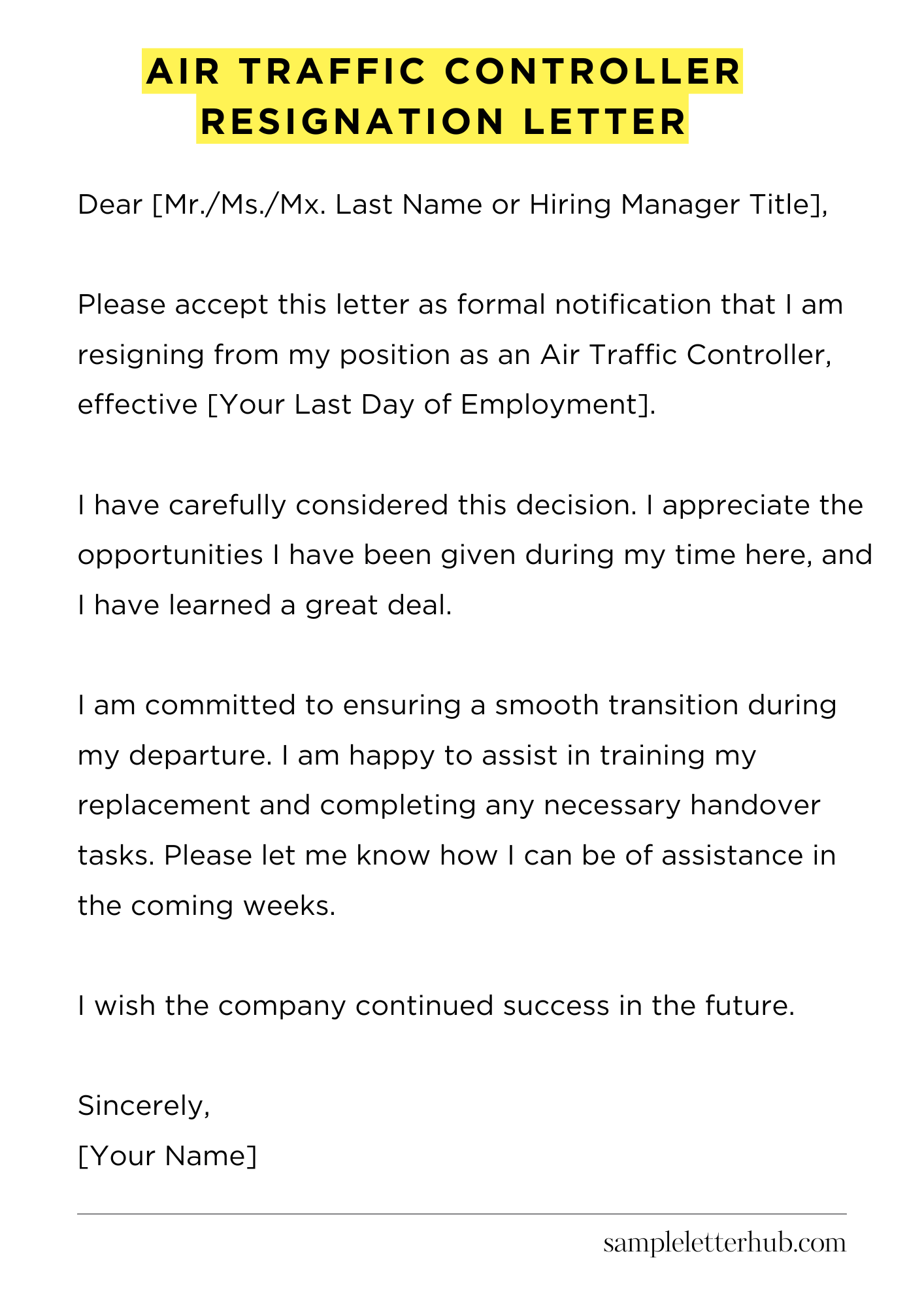
Dear [Mr./Ms./Mx. Last Name or Hiring Manager Title],
Please accept this letter as formal notification that I am resigning from my position as an Air Traffic Controller, effective [Your Last Day of Employment].
I have carefully considered this decision. I appreciate the opportunities I have been given during my time here, and I have learned a great deal.
I am committed to ensuring a smooth transition during my departure. I am happy to assist in training my replacement and completing any necessary handover tasks. Please let me know how I can be of assistance in the coming weeks.
I wish the company continued success in the future.
Sincerely,
[Your Name]
How to Write Air Traffic Controller Resignation Letter
1. Grasping the Basics: Why It Matters
Leaving a job as an Air Traffic Controller is a significant career move, and your resignation letter sets the tone. First impressions matter a lot.
A well-crafted letter can help you in the future. It reflects professionalism, regardless of your reasons for leaving. It is a formal document.
Think of it as a bridge, ensuring a smooth transition to your next adventure. Whether you are moving on to a different role, taking time off, or retiring, your letter is important.
2. Essential Elements: What to Include
Your resignation letter needs key elements. The format is important. Start with your contact information, followed by the date, and the recipient’s information.
Next, clearly state your intent to resign, including your last day of employment. This is crucial for their planning. Then, express your gratitude for the opportunity.
Briefly mention any specific experiences or skills you’ve gained, without going into too much detail. Finally, and this is important, offer to assist with the transition. Be professional, and keep it concise. Always proofread everything. Check the grammar and spelling!
3. Crafting the Content: Saying Goodbye the Right Way
The tone of your letter should remain professional, even if your departure is less than amicable. Keep things focused on your departure and offer help.
Avoid venting any grievances. Focus on the positive. Consider including a sentence of gratitude, acknowledging the experiences you’ve had.
For example, “I am grateful for the opportunities for growth I have received here.” Keep your language clear and direct. For example, “I am writing to inform you of my decision to resign from my position as Air Traffic Controller.” Don’t forget to include the formal closing. This signals your respect for the process.
4. Addressing Specific Situations: Tailoring Your Letter
There might be specific circumstances. Consider these when writing your letter. If you are moving to another role within the aviation industry, you might briefly mention your new position, but keep this information short.
If you’re retiring, acknowledge this milestone with a touch of sentiment, such as “After [number] years of service, I am now retiring”. If you have received training, offer your skills to the team. If your resignation is due to personal reasons, keep your explanation brief and private. Focus on the positive. Customizing your letter makes a big difference.
5. Proofreading and Finalizing: The Finishing Touches
Before submitting, proofread your letter meticulously. Check the spelling, grammar, and punctuation. A small error can make a bad impression. Review the format and ensure everything looks professional. Have a friend or colleague read it over. Fresh eyes can catch mistakes you might have missed.
Make sure you keep a copy for your records. This is helpful. Once you are satisfied, print the letter or send it electronically, per your company’s policy. The final result should convey professionalism, leaving a lasting impression. You’re set to go!
FAQs about Air Traffic Controller resignation letter
Here are some of the most common questions regarding the resignation process for Air Traffic Controllers, along with informative answers.
What are the essential elements of an Air Traffic Controller resignation letter?
An effective resignation letter should clearly state your intention to resign, your official title (Air Traffic Controller), and your last day of employment. It’s also beneficial to include your employee ID and a brief, professional statement expressing your gratitude for the opportunity or summarizing your reasons for leaving.
Ensure the letter is addressed to the appropriate authority, usually your supervisor or the relevant HR department.
What is the typical notice period required for an Air Traffic Controller resignation?
The required notice period for Air Traffic Controllers can vary depending on the employer, employment contract, and applicable regulations. However, a general rule of thumb is to adhere to any specified notice period in your employment agreement, which could range from two weeks to a month or more.
It is crucial to review your contract or consult with your HR department to determine the precise requirements to avoid any potential repercussions.
How should an Air Traffic Controller handle the delivery of their resignation letter?
It’s generally recommended to deliver your resignation letter in writing. You can choose to hand it in person to your supervisor, or in some instances, by certified mail, or through your company’s official electronic system, such as email.
Ensure you keep a copy for your records. Consider scheduling a meeting to discuss your resignation with your supervisor after submitting the letter, providing an opportunity for a professional exit conversation.
What are the potential consequences of not providing adequate notice or failing to follow proper resignation procedures?
Failure to provide sufficient notice or adhere to the correct procedures can lead to various consequences.
These may include forfeiture of any remaining vacation time or benefits, difficulty in obtaining a favorable reference, and potentially being ineligible for rehire in the future. In extreme cases, if you have a contract, you could face legal action. Always follow all rules and regulations.
Are there any specific legal considerations or regulations that Air Traffic Controllers must be aware of when resigning?
Air Traffic Controllers are generally subject to federal and sometimes state-specific regulations.
These may include certain restrictions regarding access to sensitive information or potential conflicts of interest upon leaving the position.
Review your employment contract, any non-disclosure agreements, and any related policy documentation. It’s always advisable to seek legal counsel for clarification of your obligations if needed, especially if you have concerns about post-employment restrictions.
Related:
Resignation letter due to rude boss
Resignation letter moving to another state
Resignation letter due to illness of family member
Resignation letter due to study