

The Director of Security resignation letter formally announces a security leader’s departure. It’s a crucial document. It officially informs the employer of the employee’s intent to leave. The letter typically includes the effective date of resignation. It also often expresses gratitude for the opportunity.
Crafting the perfect resignation letter can be tricky. It needs to be professional and concise. We understand this. We’re here to help make it easier.
This article offers several templates. Find examples to suit various situations. Use these samples to create your own resignation letter. They will help you express your message effectively.
Director Of Security Resignation Letter
Below is a sample of a Director Of Security Resignation Letter:
[Your Name]
[Your Address]
[Your Phone Number]
[Your Email Address]
[Date]
[Director of Security’s Name]
[Company Name]
[Company Address]
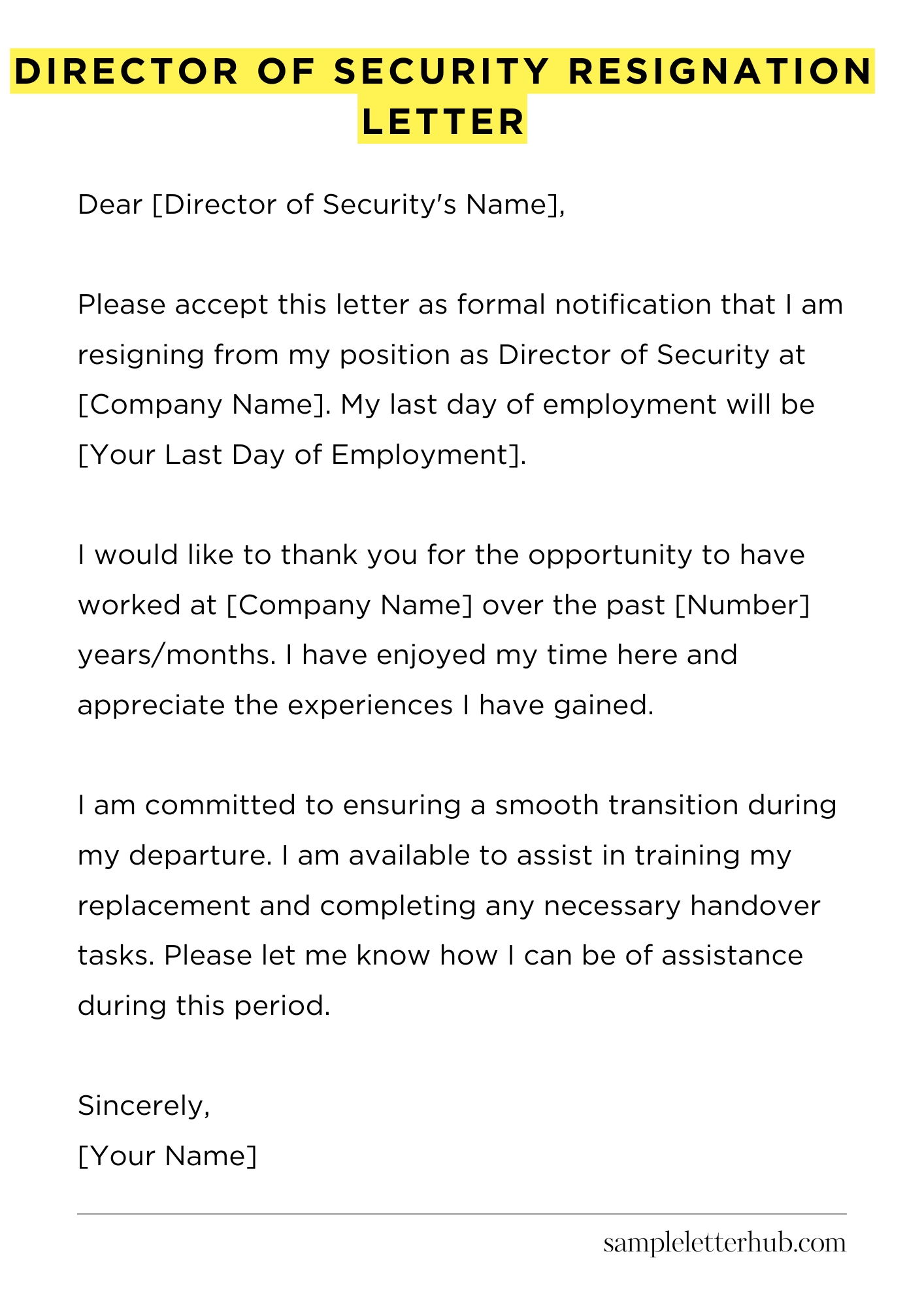
Dear [Director of Security’s Name],
Please accept this letter as formal notification that I am resigning from my position as Director of Security at [Company Name]. My last day of employment will be [Your Last Day of Employment].
I would like to thank you for the opportunity to have worked at [Company Name] over the past [Number] years/months. I have enjoyed my time here and appreciate the experiences I have gained.
I am committed to ensuring a smooth transition during my departure. I am available to assist in training my replacement and completing any necessary handover tasks. Please let me know how I can be of assistance during this period.
I wish you and the company all the best in the future.
Sincerely,
[Your Name]
How to Write a Director of Security Resignation Letter
Getting Started: The Importance of a Professional Tone
Resigning from a Director of Security position requires careful consideration. You’ve held a position of responsibility, and your departure impacts the company.
This demands a polished and professional approach. A well-crafted resignation letter is essential. It’s not just a formality; it’s a reflection of your character. Always maintain a respectful and courteous tone throughout the letter. Avoid any negativity or bitterness, even if your reasons for leaving are less than ideal.
Think about the image you want to project. This letter will be part of your professional record. It can significantly affect how you’re perceived by future employers and colleagues.
Essential Elements: What to Include
Several key elements are crucial for a comprehensive resignation letter. Begin by stating your intent clearly and directly. “This letter is to formally notify you of my resignation” is a common and appropriate opening.
Specify the effective date of your resignation. This date should align with your employment contract and any agreements you have with the company.
Next, briefly acknowledge your time with the company. You could say something like, “I have appreciated the opportunity to work here for the past [Number] years.” Keep this section concise. Acknowledge the experience and opportunities.
Furthermore, consider adding a sentence expressing your willingness to assist with the transition. This simple gesture demonstrates your commitment. This is a very professional approach, and will often be appreciated.
Crafting the Body: Reasons and Gratitude
The body of your letter should generally be brief. This is often the hardest part for many people. You’re not required to provide a detailed explanation of your reasons for leaving.
But you can choose to include a general statement. If you’re leaving for a better opportunity, you might say, “I am pursuing a new opportunity that aligns more closely with my career goals.”
Expressing gratitude is always a good idea. Thank your employer for the experiences and opportunities you’ve been given. A simple “Thank you for the opportunities I’ve been given” can go a long way. This ensures that the overall tone of your letter remains positive.
Formatting and Presentation: Ensuring Clarity
The format of your letter is just as important as the content. Use a standard business letter format. This is a crucial step! Include your contact information at the top. This would include your name, address, phone number, and email. Date the letter and include the recipient’s name and title.
Keep the letter concise and to the point. Aim for one page, if possible. Use clear and professional language. Ensure that the letter is free of grammatical errors and typos. Proofread the letter carefully before submitting it. Ask someone to review the letter as well, for a second set of eyes.
Submitting Your Letter: The Final Steps
Once you’ve written and proofread your letter, it’s time to submit it. Always adhere to company policy. The preferred method of submission is often in writing. This is usually given to your direct supervisor or HR department.
Keep a copy of your letter for your records. Consider sending a digital copy. Also, sending a hard copy via mail or in person ensures that you have a record of your resignation.
After submitting your letter, be prepared to discuss your departure with your supervisor. Be professional and cooperative during the transition period. This ensures you leave the company on good terms.
FAQs about Director Of Security resignation letter
What information should I include in my Director of Security resignation letter?
Your resignation letter should include your formal resignation, stating your intent to leave the position. Specify your last day of employment. Briefly express gratitude for the opportunity, and offer assistance with the transition.
It can be useful to state the reason for leaving (if you feel comfortable doing so), though this is optional. Provide your contact information for any necessary communication.
What is the typical notice period for a Director of Security when resigning?
The standard notice period for a Director of Security is generally between 30 and 90 days, though this can vary based on the employment contract, company policy, and local laws.
Always review your contract and the company’s employee handbook for specific requirements. Longer notice periods are often expected for senior management roles to allow for a smooth handover of responsibilities.
How should I deliver my Director of Security resignation letter?
It is typically best to deliver your resignation letter in writing to your direct supervisor or the Human Resources department. It’s often recommended to provide a physical copy, or an email if this is the company policy.
Ensure you keep a copy for your records. Consider a personal meeting with your supervisor to verbally notify them of your decision before presenting the written letter.
What are some common reasons cited in a Director of Security resignation letter?
Common reasons cited include: pursuing a new career opportunity, personal reasons (such as family obligations or relocation), dissatisfaction with current company culture, seeking better compensation or benefits, and lack of career advancement opportunities. Often, the reason is kept brief and professional, such as “to pursue other opportunities” or “to focus on personal goals”.
Can I negotiate the terms of my departure in my Director of Security resignation letter?
The resignation letter is primarily a formal notification of your intent to leave. While you can mention any requests, negotiations are typically done before or after submitting the letter. It’s best to discuss any terms, such as vacation payouts or transition assistance, with your employer separately before or after submitting the letter to try to negotiate the terms of departure.
Related:
Resignation letter due to rude boss
Resignation letter moving to another state
Resignation letter due to illness of family member
Resignation letter due to study