

You’ve landed a job. Congratulations! Now it’s time to move on. A “Graduate Engineer resignation letter” is a formal document. Its purpose is to officially inform your employer about your departure. This letter is crucial for ending your employment professionally.
The process might seem daunting. Don’t worry, we’re here to help. We’ve compiled various templates. You’ll find different examples. These samples cover diverse scenarios. They will simplify your writing process.
Need to keep things simple? Looking for something more elaborate? We have you covered. Our examples provide structure. They also give you the freedom to personalize. Use them to craft your perfect resignation letter.
Graduate Engineer Resignation Letter
Below is a sample of a Graduate Engineer Resignation Letter:
[Your Name]
[Your Address]
[Your Phone Number]
[Your Email Address]
[Date]
[Employer’s Name]
[Company Name]
[Company Address]
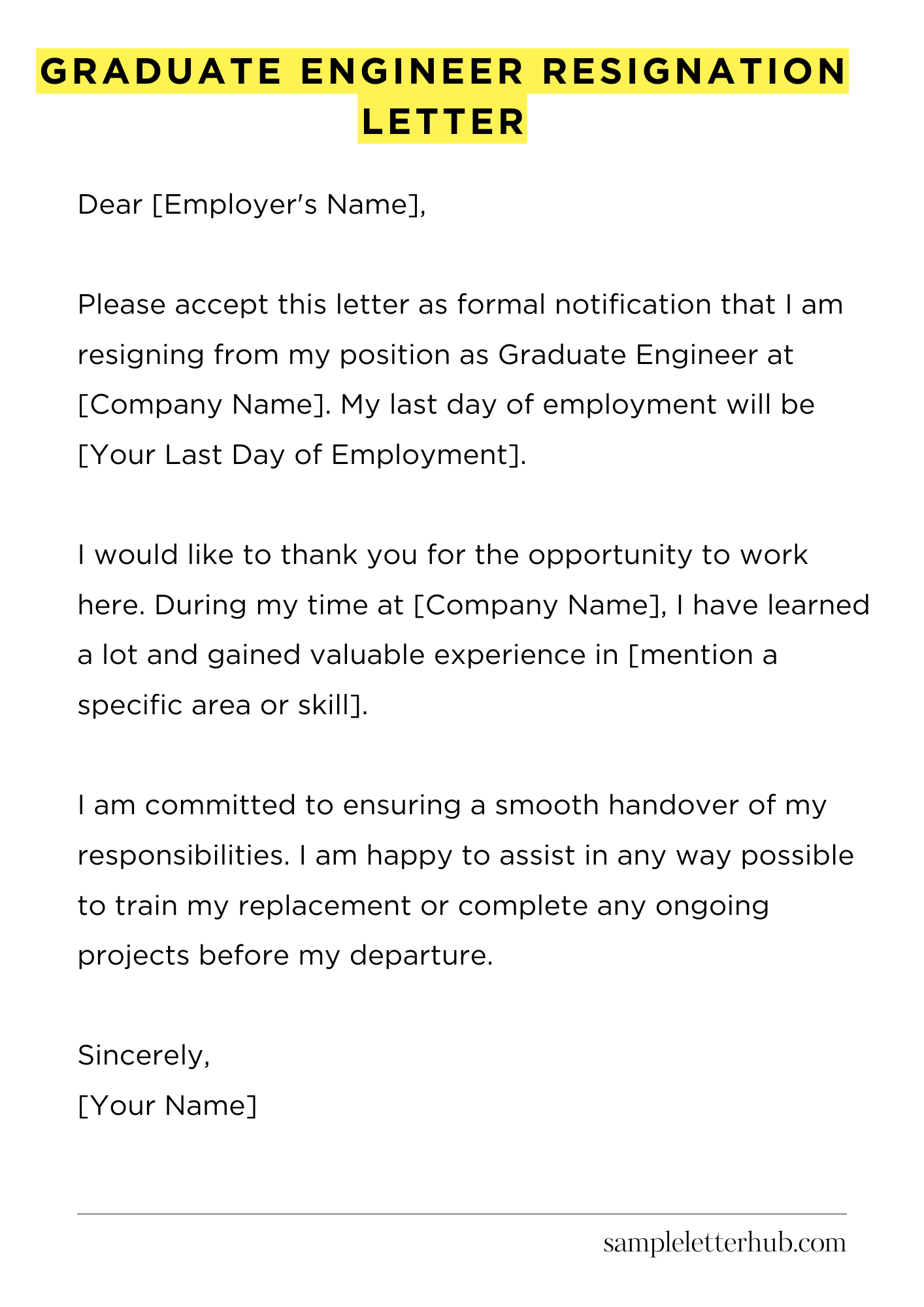
Dear [Employer’s Name],
Please accept this letter as formal notification that I am resigning from my position as Graduate Engineer at [Company Name]. My last day of employment will be [Your Last Day of Employment].
I would like to thank you for the opportunity to work here. During my time at [Company Name], I have learned a lot and gained valuable experience in [mention a specific area or skill].
I am committed to ensuring a smooth handover of my responsibilities. I am happy to assist in any way possible to train my replacement or complete any ongoing projects before my departure.
I wish [Company Name] continued success in the future.
Sincerely,
[Your Name]
How to Write a Graduate Engineer Resignation Letter
Know Your Audience (and Your Contract!)
Alright, so you’ve made the decision to move on. That’s a big step! Before you even think about penning your resignation letter, take a beat to understand who you’re writing to. Who will be your immediate superior?
This is crucial. Check your employment contract. It probably states the required notice period. This is legally important and saves you potential headaches later.
Your contract may specify a particular format or address for your letter. Does HR need a copy? Note down all important details before you get started. Make sure you fully understand any clauses about non-compete agreements or confidentiality. These details will impact your next steps.
Crafting the Core: Brevity and Professionalism
Keep it clear, concise, and professional. Your letter shouldn’t be a novel. A good resignation letter generally runs no more than one page. Open with a direct statement of your intent to resign, stating your position and the effective date of your last day of employment.
Consider how you will state your resignation. For instance, “I am writing to formally resign from my position as Graduate Engineer, effective [Date].”
Include a brief, polite thank you to your employer or manager for the opportunity. This shows respect. Avoid negativity. Don’t burn bridges. Even if you’ve had a less-than-stellar experience, focusing on positives is always the better choice.
The Thank You and Transition Phase
Express gratitude, genuinely, if possible. A simple, “Thank you for the opportunity to have worked here,” is often enough. Now’s not the time to list every single complaint you’ve ever had. Mentioning anything positive about your time there is a nice touch. It shows you’re taking the high road.
Offer assistance with the transition. It’s always good practice, unless you have some specific problem with the company.
Saying something like, “I am willing to assist with the handover of my responsibilities to ensure a smooth transition” demonstrates professionalism and consideration. Provide contact information, if appropriate, for any follow-up questions.
The Details: Formatting and Tone
Pay attention to formatting. Use a standard business letter format. Your contact information goes at the top, along with the date and the recipient’s information. Maintain a professional tone throughout. This is not the place for slang or overly casual language.
Proofread, proofread, proofread! Check for any spelling or grammatical errors. Before you send, have someone else read it over too. A second pair of eyes can catch mistakes you might miss. It also acts as a confirmation of tone and how the communication may be perceived. Remember, this letter is a reflection of you.
Finalizing and Delivering Your Resignation
Once you’re satisfied with your letter, get ready to send it. Consider how you are going to give it. Some companies want a physical copy, or an email. Follow the instructions of the company for proper delivery. Always keep a copy for your records.
Finally, it’s best to schedule a meeting with your manager to deliver the letter in person (if possible). This allows for a more personal conversation. Be prepared to answer questions, but stick to the points you’ve outlined in your letter.
Remember, you can always say you are not at liberty to discuss any further. Now, good luck with your next adventure!
FAQs about Graduate Engineer resignation letter
Resigning from a graduate engineering position requires a professional approach. Here are some frequently asked questions to help you navigate this process effectively:
What is the essential information to include in a graduate engineer resignation letter?
A graduate engineer resignation letter should include your formal resignation, the date of your last day of employment, a concise expression of gratitude for the opportunity, and a professional tone.
It’s also a good practice to mention your willingness to assist with the transition process if feasible. Avoid negative comments about your employer or reasons for leaving, keeping the focus positive and professional.
How much notice should a graduate engineer give when resigning?
Typically, graduate engineers are expected to provide at least two weeks’ notice, as stated in their employment contract or company policy. However, this can vary based on the specific terms of your contract and the industry standards in your region. Always review your employment agreement to understand the notice period required and adhere to it.
What is the appropriate tone to use in a graduate engineer resignation letter?
Maintain a professional and respectful tone throughout the letter. Express gratitude for the opportunities you’ve received, even if you are leaving for another job or for personal reasons. Keep the language clear, concise, and avoid expressing any negativity toward the company or colleagues. A positive and professional tone leaves a lasting good impression.
Should a graduate engineer explain the reason for resigning in the letter?
While it’s not mandatory, you can briefly state your reason for resigning, but keep it concise and neutral. For example, you might state that you are pursuing another opportunity or that you are seeking career development elsewhere. Avoid going into excessive detail or including any negative feedback about your current role or employer.
What should a graduate engineer do after submitting the resignation letter?
After submitting your letter, be prepared to discuss your resignation with your manager and potentially with HR. Offer your assistance in the transition process, such as training your replacement or documenting your responsibilities.
Maintain a positive and productive attitude throughout your remaining time with the company. Ensure you return all company property, and clarify any questions regarding final pay or benefits.
Related:
Resignation letter due to rude boss
Resignation letter moving to another state
Resignation letter due to illness of family member
Resignation letter due to study