

A “Letter To Airline For Suggestion To Reduce Baggage Fees” is a formal way to ask airlines to lower their baggage fees. You might write this letter if you think the fees are too high. You may also write it if they affect your travel plans.
Want to write such a letter? Not sure where to start? We get it.
We will share letter templates. These samples will make it easy. You can write a great letter to the airline. Let’s get started!
Letter To Airline For Suggestion To Reduce Baggage Fees
[Your Name]
[Your Address]
[Your Email]
[Your Phone Number]
[Date]
[Airline Customer Service]
[Airline Address]
Subject: Suggestions to Reduce Baggage Fees
Dear Sir/Madam,
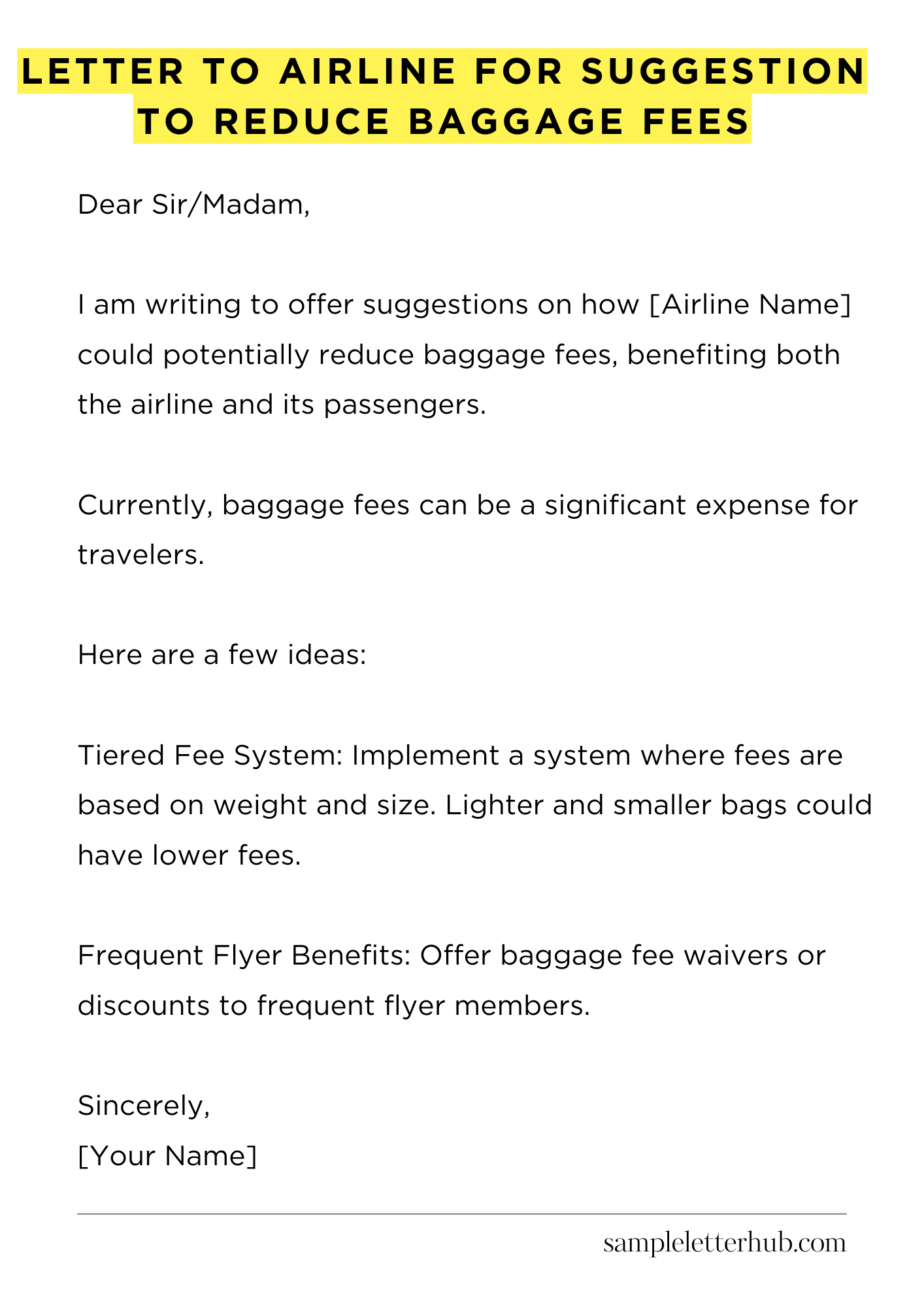
I am writing to offer suggestions on how [Airline Name] could potentially reduce baggage fees, benefiting both the airline and its passengers.
Currently, baggage fees can be a significant expense for travelers. High fees may deter some customers from choosing [Airline Name].
Here are a few ideas:
Tiered Fee System: Implement a system where fees are based on weight and size. Lighter and smaller bags could have lower fees.
Frequent Flyer Benefits: Offer baggage fee waivers or discounts to frequent flyer members.
Pre-Purchase Discounts: Provide discounts for baggage fees purchased online in advance.
Seasonal Promotions: Offer limited-time promotions with reduced baggage fees during off-peak travel seasons.
By considering these suggestions, [Airline Name] could attract more customers and improve overall customer satisfaction.
Thank you for your time and consideration.
Sincerely,
[Your Name]
How to Write Letter To Airline For Suggestion To Reduce Baggage Fees
1. Crafting a Compelling Subject Line
The subject line is your initial foray into capturing the airline’s attention. Eschew generic phrases; instead, opt for something specific and suggestive of your intent. Think “Suggestion for Baggage Fee Reduction – Enhancing Customer Experience” rather than simply “Baggage Fees.” This piques curiosity and signals a constructive approach.
2. The Salutation: Setting a Professional Tone
Begin with a formal salutation. “Dear [Airline Name] Customer Relations Department” demonstrates respect and acknowledges the appropriate recipient. Avoid overly casual greetings. If you know a specific contact person, addressing them directly adds a personal touch, but ensure your information is current.
3. Introductory Paragraph: Articulating Your Purpose
Clearly state your reason for writing in the opening paragraph. Be direct and avoid circumlocution. For instance: “I am writing to propose a potential modification to your baggage fee structure that I believe would enhance customer satisfaction and potentially increase ancillary revenue.” Conciseness is paramount.
4. Detailing Your Suggestion: The Core Argument
- Present your suggestion with meticulous detail. Is it tiered pricing based on weight? Offering discounts for pre-booked baggage? Explore innovative alternatives.
- Provide a rationale for your suggestion. Explain how it benefits both the airline and the customer. Will it streamline the check-in process? Encourage more passengers to check bags instead of carry-ons?
- Use data or anecdotal evidence to bolster your argument. If you have observed a common frustration among travelers, mention it.
5. Addressing Potential Concerns: Anticipating Objections
Acknowledge potential drawbacks or counterarguments to your suggestion. This demonstrates foresight and strengthens your credibility. For example, if suggesting lower fees, address how the airline can recoup potential revenue losses through other means, such as increased volume or premium services.
6. Concluding Paragraph: Reinforcing Your Position
Reiterate your suggestion succinctly and express your hope that the airline will consider your proposal. Maintain a polite and professional tone. A sentence like, “I am confident that implementing this change would be mutually beneficial, and I appreciate your time and consideration,” works effectively.
7. Closing and Signature: Formalities Matter
End with a formal closing such as “Sincerely” or “Respectfully.” Follow this with your full name and contact information. Proofread meticulously for any grammatical errors or typos before sending. A polished presentation underscores the seriousness of your proposition.
Frequently Asked Questions: Reducing Baggage Fees
This section addresses common queries regarding suggestions for airlines to reduce baggage fees. It provides concise answers to help you understand the possibilities and limitations of influencing airline policies.
1. Can a letter genuinely influence an airline’s baggage fee policy?
While a single letter might not directly change policy, collective feedback can influence airlines to reconsider their pricing strategies over time.
2. What specific suggestions are most likely to be considered by airlines?
Suggestions focusing on tiered pricing based on weight, loyalty program benefits, or early booking discounts are often more favorably received.
3. Should I focus on the negative impact of baggage fees in my letter?
While mentioning the impact is acceptable, focus on constructive alternatives and potential benefits for both passengers and the airline.
4. What is the best way to submit my suggestion to the airline?
Check the airline’s website for a customer feedback or suggestion portal. If unavailable, consider sending a formal letter to their customer relations department.
5. Are there any advocacy groups working to reduce airline baggage fees?
Yes, several consumer advocacy groups focus on fair airline pricing. Researching and supporting these groups can amplify your voice.
Related:
Resignation letter due to rude boss
Resignation letter moving to another state
Resignation letter due to illness of family member
Resignation letter due to study